|
Medical trainee abuse reports ‘shut down and silenced’ |
Related newsPharmacy’s road to stigma-free drug dependency care New taskforce to drive ADHD and autism improvements Health and charity leaders join forces for NHS reform Call for ‘urgent’ review of ADHD and autism services Psychiatrists in ‘disbelief’ over cut funding Politicians must take ‘bold’ action on child poverty Law change needed for Scotland’s drug crisis Medics warn pollution is risking children’s health Peer support ‘crucial’ in suicide prevention Glasgow joins street drug-checking scheme Cancer workforce “not on right trajectory” 
|
|

Image Credit: © Rawpixel
|
||
|
||
|
Medical trainees are particularly vulnerable to sexual abuse and are often shut down or silenced when they report incidents, new research from the Universities of Glasgow and Dundee reveals.
The study found that sexual harassment and abuse (SHA) are a persistent concern in medicine, with behaviours especially common toward those entering the profession and during training.
NHS Scotland’s training and education body has responded to the findings, outling work underway and to be taken to tackle the “unacceptable” abuse.
The structure of training can make it a ‘hot spot’ for sexual harassment and abuse, contributing to trainee isolation and exacerbated by a lack of knowledge around reporting procedures across different training placements.
When people do report SHA, this is often an ‘act of citizenship’, motivated to reduce the abuse of others, says the research team – however, medicine’s professional culture contributes to ‘opportunistic silencing’, as some colleagues choose not to hear informal reports.
The researchers say awareness around support schemes be raised, as well as the establishment of a national, anonymous reporting system.
Research co-lead, the University of Glasgow’s Professor Rosalind Searle, said:
“Silence and silencing and the experiences of one individual can have growing damaging repercussions for everyone else in the healthcare system.
“SHA experiences can often derail professional careers, alter speciality choices and undermine workplace policies. And such events create and perpetuate a toxic workplace.”
Levels of SHA in medicine were found to vary, with greater prevalence in psychiatry, family medicine, obstetrics, gynaecology and surgery.
Professor Searle was also involved in a collaboration which found that a third of women working in surgery have been sexually assaulted by a colleague.
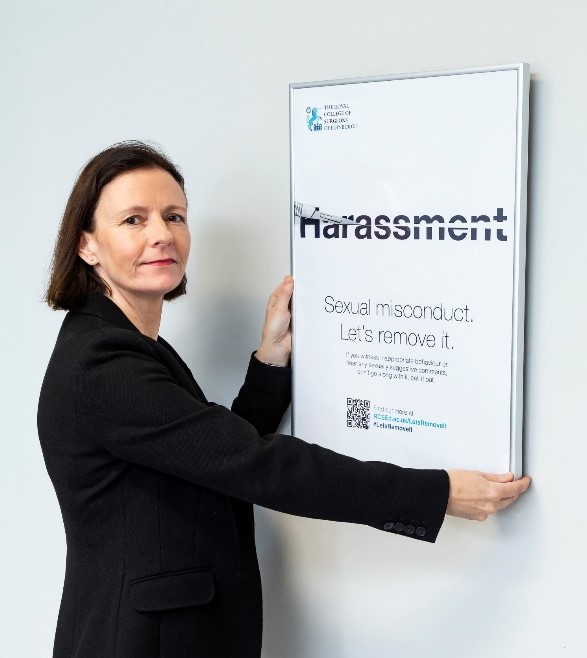
The new research comes a year after that study prompted a Royal College of Surgeons Edinburgh (RCSEd) campaign to spread awareness and send a zero tolerance message in what was deemed a “watershed moment” for healthcare sexual misconduct.
Dr Clare McNaught, RCSEd President-Elect told healthandcare.scot the research highlights the barriers facing survivors of sexual misconduct and shows how damaging the failure to address this “widespread problem” can be:
“Victims of SHA suffer significant psychological harm, and when it occurs at an early career stage, it can have a long lasting detrimental impact on one's life and career.
“A fully anonymous, independent reporting system is required across the NHS to support those affected and ensure that the perpetrators of this unacceptable behaviour are identified and appropriately sanctioned.
“We must learn from other areas of the healthcare profession, such as the ambulance service, where steps have been taken to successfully increase rates of reporting of this kind of behaviour.
“A centralised national anonymous reporting mechanism for sexual misconduct should be established. This independent platform would allow staff to report incidents without fear of bias or retaliation, ensuring that even those in vulnerable positions can come forward safely.”
Dr Nóra Murray-Cavanagh, Deputy Chair of BMA Scottish Council, told healthandcare.scot that the findings are “extremely alarming”, adding:
“It is unacceptable that medical trainees are being shut down or silenced when they do report incidents. Any kind of discrimination must be challenged, called out and addressed.
“There must be a zero-tolerance approach to unwanted verbal and physical conduct, regardless of whether it is a colleague or a patient who behaves in that manner. We need to tackle this kind of behaviour as a society as, of course, it is not just confined to the NHS.
“However, where it does occur in the NHS, we need comprehensive support from employers to make sure it is clear that it will not be tolerated.
“There must be consistent and visible guidance for doctors on what steps to take if they experience or witness this type of abhorrent behaviour, to ensure they are properly protected and do not fear speaking out.
“We can only hope that shining a light on such appalling behaviours will bring the cultural shift and change that is needed to create a more equal, diverse and inclusive NHS.”
Read more: Scotland's doctors ‘trying not to lose hope’; Scots women at the forefront of medical sciences; Organisational change needed for women in healthcare; Inside Scotland’s widening health inequalities;Abortion clinic buffer zones - where are we now?; ‘Substantial’ impact of domestic abuse on brain
|