|
Law change needed for Scotland’s drug crisis |
Related newsDoctors say GP funding boost “just the start” Drug harms on the rise in Scotland Probe into future of NHS Scotland’s doctors underway Call for ‘urgent’ review of ADHD and autism services Change course on GPs, says College Labour: We’ll fix the NHS, starting with GPs Medics warn pollution is risking children’s health Cancer workforce “not on right trajectory” Support grows for LEZs in Scotland Safe consumption rooms key for drug harms Water Safety Scotland calls for caution amid heatwave MSPs’ ‘huge concerns’ over Scotland’s medicines system 
|
|
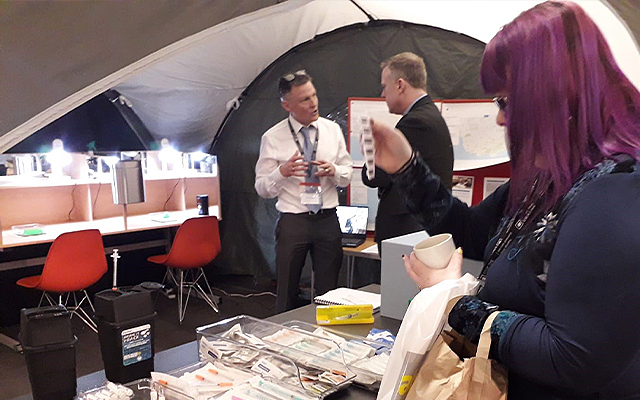
Image Credit: © Scottish government
|
||
|
||
|
A leading Scottish expert in substance use is calling for a change in UK legislation to support people struggling with drug use by expanding the safe consumption facilities being piloted across Scotland.
Professor in Substance Use at the University of Stirling, Catriona Matheson also previously chaired Scotland’s Ministerial Drug Death Taskforce from 2019 to 2021.
She has called for change after the country’s first safer drug consumption room opened last month.
Glasgow opened its facility in January, while others are in the early stages of development in Aberdeen, Dundee and Edinburgh.
However, Professor Matheson is urging MPs to change the Misuse of Drugs Act 1971 to enable more safer consumption facilities to open across Scotland and the UK.
Glasgow’s pilot facility only went ahead after Scotland’s Lord Advocate Dorothy Bain KC confirmed those who visited would not be prosecuted for possession of drugs under the Act while in the facility.
Professor Matheson appeared before the Scottish Affairs Committee in Westminster this month alongside other public health leaders during its inquiry of Scotland’s pilot facilities.
The inquiry seeks to examine the policy and legal challenges of such facilities and its potential impact as part of a public health approach to addressing drug-related harms.
Professor Matheson said:
“The signs from the Glasgow safe consumption site are positive in the very early days but there is a lot of information to be learned from that.
“In the meantime, other areas are still struggling with problem drug use across the UK and this is because of an inability to open safer consumption facilities due to the nature of our Misuse of Drugs Act, which limits the capacity to do that.
“My hope is that this is an opportunity for a new government to consider drug law reform and revisiting reform of the Misuse of Drugs Act to enable us to provide these types of facilities in other parts of the country.”
This comes over a year after Scotland’s former Alcohol and Drugs Policy Minister called on the UK government to decriminalise personal possession of drugs and implement drug policy that prioritises health.
In its policy paper, the Scottish government called for immediate legislative change to allow local areas to more easily establish these supervised safe consumption rooms without people fearing prosecution.
Glasgow’s facility ‘the Thistle’ joins around 100 safer drug consumption rooms in 10 countries globally, which Scottish researchers have shown will be key to tackling drug harms.
Professor Matheson added that the inquiry provides a “new opportunity and fresh eyes” to look not only at the Glasgow site but how these spaces could help people struggling with drug use across Scotland and the UK.
She told the committee that improved funding for alcohol and drug services, including these facilities and wider efforts to address the social determinants of health is needed to effectively address the drug crisis:
“Wrap-around support is crucial. Our drug treatment services really need to be able to provide that and they’re not because they are under-resourced.
“Safe consumption sites will be doing that, but we also need to be offer it to a greater extent within our general services.”
Professor Vittal Katikireddi, Professor of Public Health and Health Inequalities, University of Glasgow, added that an evaluation of Glasgow’s facility will be undertaken over the next few years:
“Often the people the facility is really trying to reach are not engaging with other services so we can get a sense of some of these measures fairly quickly.
“In terms of tracking health outcomes – overdoses and ambulance callouts – that often takes some time to have the numbers needed for analysis.
“You can get early indications of success in terms of the pathway to improvements in a couple of years, but in terms of demonstrating real reductions in drug-related harms will be around three or four years.”
Read more: Safe consumption rooms key for drug harms; Depression linked to poorer physical health outcomes; A team sport: caring from the community up; Families to shape campaign against stigma; Charity: Tax alcohol retailers for the harm they cause; Citizens’ panel to help drugs crisis response; Smashing stigma to save lives in Scotland; Analysis: drugs and alcohol in Scottish health survey
|
