|
Safe consumption rooms key for drug harms |
Related newsDecriminalisation call to support drug deaths mission Pharmacy’s road to stigma-free drug dependency care Scots kidney disease patients urge politicians to act Drug harms on the rise in Scotland Ten-year low in Scots healthy life expectancy Pharmacists urge leaders to act for the profession Law change needed for Scotland’s drug crisis Medics warn pollution is risking children’s health Cancer workforce “not on right trajectory” Support grows for LEZs in Scotland Water Safety Scotland calls for caution amid heatwave MSPs’ ‘huge concerns’ over Scotland’s medicines system 
|
|
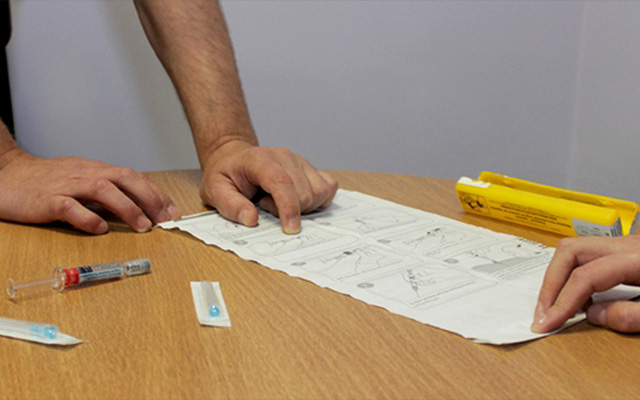
Image Credit: © Scottish Drugs Forum (SDF)
|
||
|
||
|
The capital is a step closer to setting up safer drug consumption facilities and drug-checking after researchers concluded that they will play a “vital role” in tackling the drug deaths crisis.
A study commissioned by the City of Edinburgh Council and Edinburgh’s Alcohol and Drugs Partnership recommends establishing safer drug consumption facilities (SDCF) across the city.
Led by researchers at the University of Stirling, the team included collaborators from colleagues at Glasgow Caledonian University, University of Glasgow and Figure 8 Consultancy.
Researchers say SDCFs across a number of locations, with staff addressed to equip changing patterns of drug use, will be key to tackling drug-related harms.
This comes after the latest national statistics revealed that 1,051 people across Scotland died from drug-related causes in 2022 – the lowest number in five years.
Despite this, the Scottish Drugs Forum called for an emergency response saying more work on early-detection and monitoring of drugs is needed, with the figures still far higher than other European countries.
The researchers point to changing patterns of drug use include the use of multiple drugs at the same time, concerning numbers of people injecting cocaine, and high levels of benzodiazepines use – depressant drugs prescribed for anxiety or insomnia.
The team concludes that SDCFs must accommodate for more than people injecting heroin – highlighting that staff need to be equipped for this “complex and variable” landscape.
Non-judgemental spaces
Focused on Edinburgh’s population, interviewees for the study included 22 people with living experience of injecting drug use. Families and professionals working across health, housing, treatment and other services also engaged with the research.
Responses revealed that they were “strongly supportive of SDCF provision” as part of a wider harm reduction and treatment response.
Participants viewed these as non-judgmental spaces which could provide both immediate help and signpost people towards services and support.
Dr James Nicholls, Senior Public Health Lecturer at the University of Stirling, said:
“While safer drug consumption facilities are not a silver bullet, our study indicates they could provide vital support for marginalised and vulnerable groups in Edinburgh and play an important role in addressing the high levels of drug harms in the city.”
More than 200 SDCFs operate globally in over ten countries and NHS Greater Glasgow and Clyde plans to open one in Glasgow in 2025.
Evidence shows these facilities help lower rates of fatal overdoses, support safer injecting practices which reduces rates of infection transmission and provide harm reduction advice.
Meeting local needs
In a wider report from the University of Stirling team, funded by the Scottish Drugs Deaths Taskforce, researchers revealed that demand is highest for drug-checking facilities in Aberdeen, Dundee and Glasgow.
Conducted in parallel with the SDCF study, researchers identified a need and demand for flexible, accessible and user-friendly drug checking facilities.
Aberdeen, Dundee and Glasgow are all working towards applying for Home Office licenses required to run such drug-checking facilities – with the Scottish government working towards drug policy reforms that prioritise health.
These findings come after Glasgow City Health and Social Care Partnership which is supporting work to implement Glasgow’s pilot SDCF says it wants to hear the views of as many people as possible.
Meanwhile, Edinburgh councillors will meet this March to discuss this SDCF research as well as the feasibility of delivering a drug-checking services in Edinburgh.
Dr Hannah Carver, Senior Lecturer in Substance Use at the University of Stirling said:
“The results of both these studies into DCS show that drug checking services in Scotland need to be adaptable to local needs. There clearly is not a one-size-fits-all solution.”
Read more: Decriminalisation call to support drug deaths mission; Analysis: drugs and alcohol in Scottish health survey; Oversight group for government drug action; RADAR system to spot drug risks; Experts: Drugs deaths need emergency response now
Sign up to our bulletin for key health & social care updates straight to your inbox and you can follow healthandcare.scot on Google News. |