|
Politicians must take ‘bold’ action on child poverty |
Related newsRare condition screening for newborns across Scotland Chief Medical Officer: ‘Critical connections’ priority Fair funding to see Scotland lead dementia research Scotland’s soccer aid spotlights Alzheimer’s risk Austerity policy harm to newborns laid bare Two-child limit scrap could improve children’s health Medical trainee abuse reports ‘shut down and silenced’ Law change needed for Scotland’s drug crisis Medics warn pollution is risking children’s health Peer support ‘crucial’ in suicide prevention Glasgow joins street drug-checking scheme Cancer workforce “not on right trajectory” 
|
|
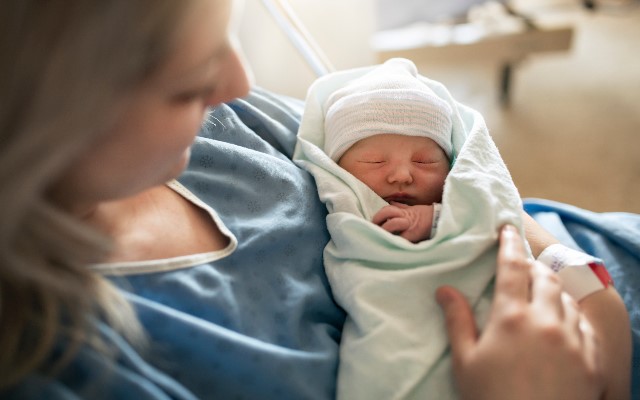
Image Credit: © pololia Adobe Stock
|
||
|
||
|
Nearly one in four children in Scotland are living in poverty, according to the Joseph Rowntree Foundation which says families with one or more disabled members are among those most at risk.
Scotland will miss its child poverty reduction targets by a “large margin” unless political parties deliver radical action in the next Scottish parliament, according to a new Joseph Rowntree Foundation (JRF) report.
At the report launch this week, attendees heard 2025 poverty levels remain “largely the same” as in 2021 despite the Scottish government’s repeated commitments to eradicate child poverty, particularly among ‘priority families’ most in need of support.
These include families where someone is disabled, single-parent families, minority ethnic families, large families or those with a newborn baby.
However, JRF reveals that nearly nine in ten of all children in Scotland who are in poverty belong to at least one of these groups.
This comes more than a year since Glasgow researchers revealed that scrapping the two-child limit on benefits could make a ‘marked difference’ to improving children’s health and reducing inequalities.
JRF Associate Director for Scotland Chris Birt told report launch attendees, over the past year, people have felt “ignored and overlooked” by decisionmakers:
“This report shows the results of today’s failures on tackling poverty, but there is so much we can do to make things better, if our politicians have the courage to act boldly.
“With nearly a quarter of a million children still experiencing poverty, there is much to be done to ensure that every child in Scotland has the childhood they deserve.
“We should be aiming for a country where everyone has a decent affordable home, where work gives us enough to get by on, and where we all have enough to pay the bills.
“Our message to all political parties ahead of the Holyrood election is this: you might try to meet our poverty targets and fail, but it is unacceptable not to try at all.”
The report shows child poverty rates have fallen in 27 out of 32 council areas between 2019/20 and 2023/24, which the charity said could reflect the positive impact of the Scottish Child Payment.
However, researchers also noted a rise in child poverty over the same period in many parts of the central belt – Edinburgh, Glasgow, Midlothian, Falkirk and Clackmannanshire – and in Angus.
Glasgow City has the highest child poverty rate at 36%, followed by Clackmannanshire and Dundee City at 28% and 26% respectively.
Poverty among disabled people also remains particularly high, with more than half of all children living in poverty part of a household where someone is disabled.
JRF’s Chris Birt said improving access to benefits and social care services, rather than waiting until people reach crisis, could make a difference.
JRF also found in-work poverty is increasingly common, with six in ten people living in poverty in a household where someone works.
A total of 42% of people in families in receipt of a low-income benefit like Universal Credit are being ‘trapped in poverty’ as housing costs and rents have soared, according to the researchers.
JRF says Scotland’s political parties must commit to meeting national targets to reduce child poverty to 10% by 2030/31.
To do this, it says social security, particularly Scottish Child Payment, must be increased, alongside a ‘radical overhaul’ of how families are supported into jobs – including an extension of funded childcare places.
Meanwhile, JRF i is urging the UK government to remove the two-child limit on benefit payments and create a more supportive environment for claimants.
The report and recommendations also reflect on how wider austerity policies harm on newborn and children’s health, urging the UK and Scottish government to commit to joint working to improve how the devolved and reserved social security systems interact.
Read more: Medics warn pollution is risking children’s health; Breastfeeding: A collective responsibility; Social deprivation linked to frailty; Stressful childhood linked to ill health; Childhood adversity health impacts felt at 50 revealed; The health benefits of being able to work
Sign up to our bulletin for key health & social care updates straight to your inbox. |