|
Lived experiences must be platformed in NCS debate |
Related newsSceptical response to government’s care proposals Briefing: Social care in the manifestos Bid to block IJB voting rights extension Care can be valued, visible, viable and visionary Holyrood passes Care Reform Bill Carers charities urge greater transparency in reforms NHS staff say data vital to improving care FM commits to £12 an hour for care staff Briefing: Cabinet Secretary plans for health and care Aberdeen team to repurpose COVID test technology Insight: The health benefits of being able to work Watchdogs: Scotland’s IJBs face £124m gap 
|
|
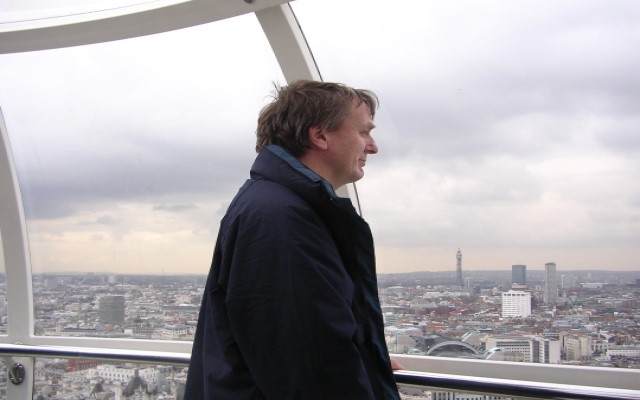
Image Credit: © Martin Robertson
|
||
|
||
|
In response to calls for the National Care Service to be scrapped, Martin Robertson, a person living with dementia in rural Scotland, argues that the proposals represent hope for meaningful change for many people.
He also sits on an International Committee providing advice to help rebuild Ukraine with dementia inclusivity in mind and says Scots whose experiences with the current care system leave much to be desired are keen to see the National Care Service co-developed.
I am writing this article in response to the recent article, ‘Kerley: Don’t talk about a Postcode Lottery’.
As a person with lived experience of social care through having dementia, this article is not written in the same professional vein as the original. Professor Kerley makes several points to which I would like to give the opposite perspective.
Firstly, the piece argues to get rid of the term ‘postcode lottery’, a term it says is fundamentally flawed. This is the easiest point to debate. Even within the same local authority, there are different requirements for the administration of Self-Directed Support. Carers are forced to provide receipts when spending Option 1, but ten miles away within the same local authority they do not have to: if this is not a postcode lottery, then what is? Presumably, the difference is due to care managers within the same local authority interpreting the regulations differently.
Secondly, and most importantly, Professor Kerley says “virtually every organisation involved has told the Scottish government: ‘slow down, hold on, this is not right’”. I would question how many organisations that are led and run by people with lived experience as either an unpaid carer, or a service user, he has actually asked.
Recently, a group of trade unions and charities urged the Scottish government to pause its plans for a national care service to ensure adequate co-design. The 13 co-authors were clear they supported the creation of an NCS in principle but said that more time is needed to ensure the service can provide workable solutions to the challenges facing social care. However many, if not most, people with lived experience still want the NCS by 2027.
I am involved in many organisations run by those with lived experience, rather than “professional” ones that ask for our views and then distill them into a nicely presented report. At the very least these reports can suffer from unconscious bias, and at worst they can highlight the “professional” organisation’s view to the detriment of those with lived experience. From personal experience, some of these organisations do not allow opposing voices to be heard in the first place. Also, there is much research to show that the direct voices of people with lived experience are remembered longer than mere selective quotes.
However, the committee system at Holyrood prioritises smart and “professional” looking reports over the raw and ‘amateur’ look of witness statements from those with lived experience. Therefore, again the true situation is viewed through second hand accounts with all the bias mentioned above.
I have heard from many people with lived experience as a Trustee of national charities with the explicitly intention of enabling our voices to be heard. All the people with lived experience I am in contact with can't wait for the National Care Service, as we all want the same standards across Scotland.
At the moment, each local partnership board decides what to prioritise; some might prioritise children, for example whilst others might prioritise the elderly. It is definitely a Postcode Lottery as to which board you live in and the priorities it sets. It can be two boards side by side – -say in a mainly urban area – that may have very different priorities. Therefore, the argument that the phrase should not be used due to the great variety of types of area is not entirely valid, especially as the funding for rural areas is not enough to cover the fact that the area to be covered by workers is larger and therefore costs more in resources.
Professor Kerley has not even mentioned the Self-Directed Support Improvement Plan led by the Scottish government and COSLA which is currently under consultation. This is being designed to cover the interim period until the NCS is established. Organisations run by us with lived experience are involved in this, as are professional organisations.
Lastly, I would like to question whether scrapping the NCS at this point would save money. Currently civil servants are busy consulting both organisations and people with lived experience. If they were not doing this, what do the people who wish to stop the NCS now think these civil servants could do? They could not solve the resource crisis as everybody understands that social care requires more resources – the only way to save money by scrapping the current consultation would be to make these workers redundant. It would be doubtful that many would become “shop floor” care workers as the pay is so low.
The very fact that there is an ongoing co-design process which gives those with lived experiences hope that our voices will be heard and that human rights will be placed centrally within the NCS as in the Charter of Rights and Responsibilities. For instance, myself (a mere individual not affiliated to any dementia organisation) was interviewed for over an hour one to one with a civil servant.
I am not arguing that there is no difference between rural and urban areas; undoubtedly there is. However, what the NCS can create are national standards to which each board has to (I have deliberately used “has”, not “should”) adhere to, in whatever manner they can, as is appropriate for the area. For instance, rural areas could have mobile centres visiting villages on a rota basis whilst urban areas could have static ones.
I agree it will be resource heavy to create; for instance, the cost of allowing IT systems to be nationally accessible will be high.
In many areas, NHS workers are currently not able to access any of the relevant local authority data, and vice versa, even that which would enable quicker hospital discharge. Back in the 1990s, I was in charge of large benefit IT systems that held extremely sensitive financial information on claimants. Even back then, I was able to create silos so, for instance, housing could see what they were allowed but only for local authority tenants, and the same with council tax. It is beyond my imagination why this is not happening routinely these days. To have an effective National Care Service will cost more resources in the short term, however there are many reports (such as the Dementia’s Centre report focused on two Scottish case studies) that show social return on investment saves money within the electoral cycle.
Therefore, at the very least, there is a constructive debate to be had regarding the postcode lottery and the NCS, without disregarding it altogether.
Read more: Pressure mounts to pause NCS; Communities' role in climate and public health; Embedding voices of experience into NCS plans; Third of carers feel unsupported, survey shows
Sign up to our bulletin for key health & social care updates straight to your inbox and you can follow healthandcare.scot on Google News. |
