|
Warning over CAMHS ‘fragmentation’ |
Related newsHealth and charity leaders join forces for NHS reform ‘Bold action’ needed for children’s health Board recruits big cohort of new midwives Strategy to make mental health services peer-led Pressures on psychiatry leaving posts unfilled 
|
|
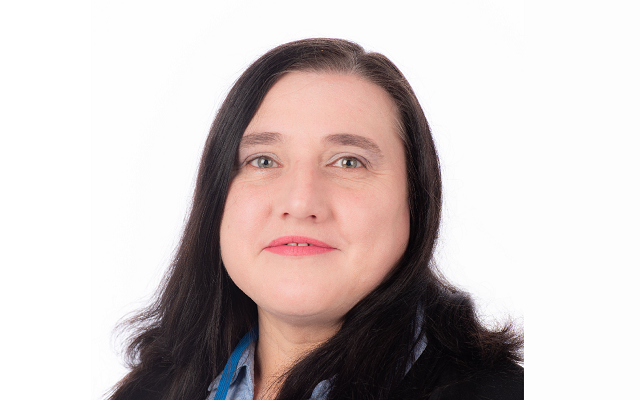
Dr Helen Smith of the Royal College of Psychiatrists in Scotland
|
||
|
||
|
Gaps in the CAMHS workforce could get worse before they get better despite a government push to recruit more specialists, a leading psychiatrist has warned.
Dr Helen Smith, Chair of the Children and Adolescent Faculty at the Royal College of Psychiatrists in Scotland, said some areas still did not have a consultant-led service in hours, let alone out of hours.
The number of whole-time equivalent psychologists in post fell by 5% in the quarter up to September 2021. Overall CAMHS staffing levels have stalled in recent years according to NHS Education for Scotland workforce data, with the number of vacancies rising sharply to 186 WTE unfilled posts.
Speaking at the Westminster Policy Forum conference on mental health services, Dr Smith said: “There has been a lot of investment in CAMHS services recently but we’ve also heard about us all trying to fish from the same pool…there isn’t a whole load of trained specialist mental health staff sat there twiddling their thumbs not doing anything.”
She added: “In terms of the workforce for psychiatry in Scotland, that has not changed, and we’re not training enough people to replace the people that are retiring so that situation may actually become slightly worse.”
Public Health Scotland figures from before Christmas revealed the number of under-18s waiting a year or more for a CAMHS appointment had doubled to just under 2,000 in a year.
Across Scotland 78.6% of young people were seen within 18 weeks, against a government target of 90%.
The College has previously warned that children facing long waits ‘can see their wellbeing potentially deteriorate and have their mental illness exacerbated. This is particularly the case where someone is waiting over a year for care.’
Dr Smith told the conference that referrals to CAMHS were increasing, with roughly one in 100 children now being directed to its services amid growing rates of eating disorders, self-harm and distress.
But she warned of a ‘fragmentation’ of pathways, telling attendees: “There’s different accesses and different pathways into and out of services and it can be difficult for families and young people to navigate that, as well as other people trying to understand what CAMHS services do – it can be a bit like a black hole”.
The conference heard that rural and remote areas faced particular challenges recruiting enough staff to run sustainable services.
Michael Dickson, the CEO of NHS Shetland and NHS Orkney, said the “unusual funding model” for island boards had made recruitment harder in the past.
“We often get a tiny share of a larger [funding] announcement. So, funding might come down to £6,000 when it comes down to local commissioning in Orkney or Shetland. Now, that’s a real challenge because we end up with people often doing three, four, five or six different jobs rolled into one…of course we have the same expectation of what need to provide back in terms of assurance, delivery and output,” he told the conference.
Mr Dickson, who made the move to the Northern Isles from the south coast of England, said a “critical floor” for funding introduced in the pandemic that recognised these challenges had been “transformational”.
Read more: Insight: Why I chose psychiatry; Under-18s routinely sent to adult mental health wards; Young Scots face year-long wait for mental health help
Sign up to our bulletin for key health & social care updates straight to your inbox.
|
