|
Strategy to make mental health services peer-led |
Related newsPharmacy’s road to stigma-free drug dependency care Medical trainee abuse reports ‘shut down and silenced’ ‘Whole-system shift’ needed on ADHD and autism support GPs are the solution to NHS crisis, says College Partnership urges action over Scotland’s mental health Too many doctors hesitant to ask for help 
|
|
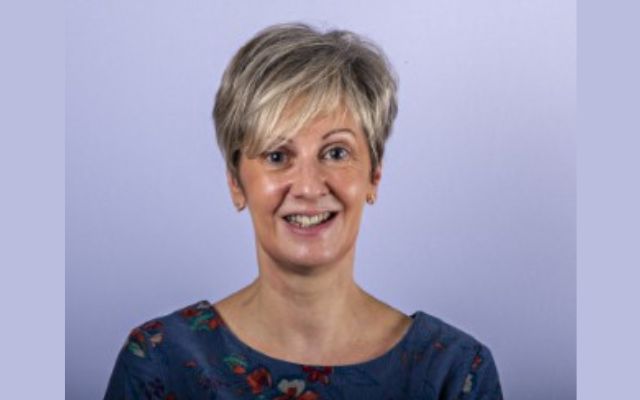
Louise Christie, Director of the Scottish Recovery Network
|
||
|
||
|
Scottish Recovery Network is calling for a rethink of the way mental health services in Scotland are delivered, and the creation of a workforce of peer supporters across the NHS, social services and social care.
The organisation has published a ten year strategic plan ‘Catalysts for Change (2026–2036)’ making the case for investing in people with lived experience to provide specialist mental health support across prevention, crisis and continuing care.
Director of Scottish Recovery Network, Louise Christie has been telling healthandcare.scot that a radical change of direction would get people the support they need to recover – and save the current system from collapse.
“We need to really think differently about what we mean by mental health recovery and listen to what people tell us they need, not just at times of crisis, but long before that and long after that as well.
Scottish Recovery Network was born out of an international movement which believes mental health services are not purely about containment and symptom reduction, but about people being able to live a good life, as defined by them, with or without symptoms.
People's mental health is seriously affected by all types of determinants: poverty, racism, homophobia, family breakdown, relationship breakdown and bereavement, but that doesn't mean any of these people have a diagnosable mental illness.
The current system is very much based on assessing and diagnosing people, funnelling a small number of them into treatments based on those diagnoses, with treatments focused on symptom reduction.
While that is part of the picture, the focus on managing symptoms means many people fall through the gaps. Our mental health support offer needs to be much more than symptom reduction.
It has long been clear that people can gain significant benefit from being with other people who share their experiences – people who can share strength, hope and wisdom based on their own insight and expertise from being at a different stage in the same journey.
Peer support is a specialism, not based on medical knowledge, but lived experience of mental health challenges and recovery. It is a relational approach that provides time, space and compassion which can often be lacking in traditional services.
And it is expertise that the NHS and community services need to use in a systematic way, alongside other professional roles, while preserving the relational and experiential essence that makes it effective – not least because services are struggling to deliver using the current model.
Merging parallel tracks
“We already operate two parallel systems: first the NHS, and, second, a vast network of peer support groups, organisations, and community-based social care mental health services, many commissioned by HSCPs, alongside independent projects and individuals providing support.
An increasing number of peer workers in social care are now paid employees. However, provision remains piecemeal and services provided outside the medical system are fragile. We need these parallel systems to come together to collaborate as one.
Peer support workers need to be recognised for their specialist skills. Here, and across the world, there are many instances of peer support workers providing group work and one-to-one support in clinical and community settings, in perinatal mental health services and veterans’ mental health services. There are peer specialists in early intervention, in psychosis and working with people who have complex emotional needs or who may have a diagnosis of personality disorder.
So, there are enough people with the skills needed to create a peer workforce and, if you treat them and support them as a legitimate workforce, you can have peer workers operating at different levels, not just entry level and services, but in senior and leadership roles making decisions, co-designing services and influencing policy.
Scotland can feel a long way behind the innovation seen in some other countries. I am old enough to say that, for 25 to 30 years we've been talking about the need to move towards prevention and early intervention, towards providing the less medicalised services that people say they want in their communities.
And still this hasn’t happened.
Looking at other countries, we see it has taken government or a national agency – in England that was NHS England – to say that a peer support workforce is a priority and to make that happen.
Research in the Republic of Ireland and in Germany has shown that embedding a peer support workforce has been welcomed by clinicians who soon see the impact on recovery and the benefits to patients and their own practice.
Change won’t happen easily or overnight. But there are peer-led services already in Scotland and we can build on them: 24/7 crisis centres in communities reducing A&E admissions, peer workers in primary care multi-disciplnary teams decreasing referrals to secondary services, and local peer support groups providing immediate and impactful access to support in communities.
Being ‘people and values-led’ are the policy promises in our mental health strategy but to achieve this we need to do things differently.
Improvement of existing services isn’t working. It’s time for transformation and to have a mental health system powered by lived experience and strengthened by peer support.
Read the full strategy: Catalysts for Change (2026–2036)
Read more: Community Link Workers reducing stress on GPs; Pressures on psychiatry leaving posts unfilled; Loneliness: a public health crisis for Scotland
Sign up to receive our bulletin for key health & social care updates straight to your inbox. |