|
Time to Talk Next Steps |
Related newsHealth and charity leaders join forces for NHS reform Community support ‘vital’ to asylum-seeking families CAMHS target met, but long waits remain Youth mental health pilot looks to the future Innovative farm transforms lives on Lewis ‘Bold action’ needed for children’s health 
|
|
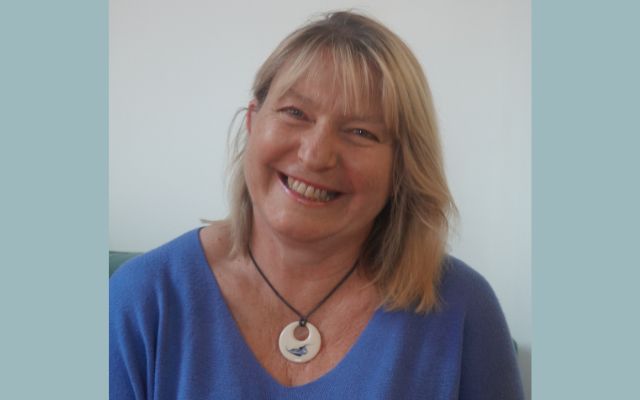
Alice McColl, Programme Lead, Time to Talk Next Steps Scotland
|
||
|
||
|
For many young people in Scotland, the transition to adulthood can feel uncertain, overwhelming and, at times, isolating, particularly for those with additional support needs. Navigating education, employment, health and social care systems is rarely straightforward, and too often young people and families tell us they feel left to figure things out on their own.
That is exactly why, says Alice McColl, Time to Talk Next Steps Scotland exists.
Our programme, funded by the Scottish government and delivered by the National Development Team for Inclusion (NDTi), offers free, personalised, rights-based support for young people aged 14 to 25 with additional support needs.
It is built on a simple but powerful idea. When young people are listened to, supported to understand their strengths, and given time and space to explore their goals, they are far more likely to thrive.
What the programme offers
Time to Talk Next Steps Scotland provides tailored, one-to-one support shaped entirely around each individual. There are no strict criteria and no requirement for a diagnosis.
Young people are matched with a dedicated supporter who works alongside them, over a series of informal online or phone sessions, to build confidence, explore ambitions and plan realistic next steps. This might include preparing for college, exploring employment options, building independent living skills or simply developing the confidence to express what matters to them.
Just as importantly, we support parents and carers, providing them with the information, reassurance and practical tools they need to navigate often complex systems.
What we’ve achieved so far
In our first full year, the programme has supported more than 100 young people across Scotland, alongside around 50 parents and carers and 60 practitioners.
We have worked with young people in urban, rural and remote communities, demonstrating that flexible, relationship-based support can reach those who often miss out.
The difference this has made is clear.
Evaluation findings show improvements in confidence, wellbeing and self-belief, with many young people gaining clearer ideas about their future pathways. Some have moved into college or training, others have secured work placements, and many have re-engaged with education or community life after periods of uncertainty.
Some young people use the confidence they gain from this programme as a platform from which to develop an interest in becoming involved in social action, leadership and developing new programmes to make improvements for others.
For families, the impact has been equally powerful. Parents and carers report reduced anxiety and a greater sense of control, often describing the programme as the first time they felt truly supported in understanding their options.
What young people and families tell us
The feedback we hear every day is what makes this work so meaningful.
Many young people come to us feeling unsure of their future, lacking confidence and, in some cases, believing they have little to offer. Through regular conversations and encouragement, that begins to change.
One young person summed it up perfectly:
“My weekly meetings built up my confidence… I’m truly excited for the next steps in my life.”
Others have told us how having a consistent, trusted person to talk to has helped them feel heard, sometimes for the first time. For some families, engagement has been transformational, with parents sharing that they have “never seen” their young person participate so fully in planning their future.
Why it works
The success of Time to Talk Next Steps Scotland lies in its relational, person-centred approach.
Rather than focusing on systems or services, we focus on people. We take time to build trust, to understand each young person’s strengths and aspirations, and to support them at their own pace.
This matters because transitions are not just about processes. They are about identity, confidence and belief in what is possible. When young people feel listened to and valued, they are more able to take control of their futures.
Our approach also connects the dots between services, helping families navigate what can often feel like fragmented systems.
Looking ahead
We are delighted that Time to Talk Next Steps Scotland has secured continued funding into 2027, allowing us to expand our reach and support even more young people and families across the country.
Over the coming year, our focus will be on deepening our impact, reaching those who may not yet know this support is available, strengthening partnerships with local services, and continuing to learn from the experiences of young people themselves.
We also want to build on the wider change the programme is already influencing. The learning from this work shows that effective transitions support doesn’t necessarily require new systems. It requires better, more consistent, more human ways of working.
We’re open for referrals
Most importantly, this support is available now, and it is free.
If you are a young person aged 14–25 in Scotland with additional support needs, or a parent, carer, teacher or professional supporting someone who might benefit, you can request support directly. Groups can also access support through Planning Live group sessions.
You don’t need a diagnosis. You don’t need to have everything figured out. You just need a willingness to start a conversation.
Because sometimes, the most powerful first step is simply having the time, and the support, to talk.
To find out more and request support follow this link.
Articles on similar topics: Highland children hit by poverty and geography; Pressures on psychiatry leaving posts unfilled; Inpatient CAMHS care too variable
Sign up to receive our bulletin for key health & social care updates straight to your inbox. |