|
111 delays risk A&E call-ahead plan |
Related newsPlea to rescue ambulance service’s stranded asset Edinburgh GP to chair BMA in Scotland Island paramedics get new point of care diagnostics Glasgow A&E introduces digital triage check-in Thrombectomy limitations laid bare Ambulance staff facing daily violence and abuse NHS governance must be strengthened, says watchdog Long 111 waits still issue for A&E call ahead reforms Phage therapy approved for resistant infections 580% rise in mental health calls RCN calls for urgent investment in nursing Renewed campaign to divert people from going to A&E 
|
|
|
||
|
||
|
Major reforms to how the public access accident and emergency are being held back by long waits to speak to an NHS 24 call handler at weekends.
Plans announced last year asked members of the public who would normally take themselves to A&E to call 111 first so they can be directed on to the most appropriate form of care.
An evaluation of the first four months of the ‘redesign of urgent care’ reforms warns call handling delays at NHS 24 are a ‘key risk’ to the success of the scheme, with average waits of nearly half an hour to speak to someone on Saturdays and a significant proportion of callers hang up while on hold.
NHS 24 should assess whether it can cope with more calls before any more national marketing campaigns are launched to direct patients to the new service, the document goes on to say.
[The] report is quite concerning, identifying many risks, underlines why we wrote to [the Cabinet Secretary] last summer advising against this," said Dr Andrew Buist on twitter.
The evaluation, which looked at the redesign of urgent care programme from its national introduction on 1 December to 31 March, was authored by Professor Derek Bell and Sir Lewis Ritchie and published this week.
When a trial of the redesign programme was announced at NHS Ayrshire & Arran in October 2020 it was pitched as a way of reducing overcrowding in emergency departments over winter.
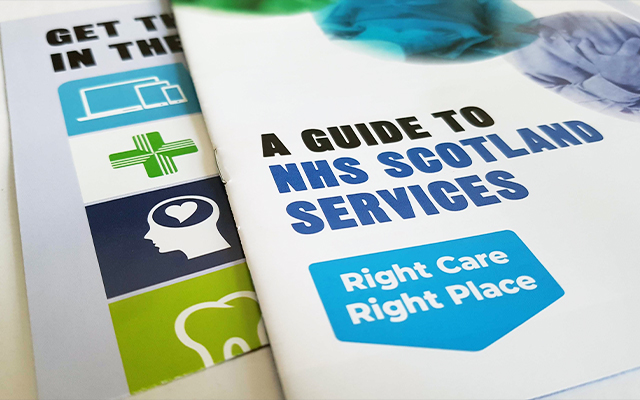
A marketing campaign saw leaflets delivered to every household telling those with an urgent problem that they would usually visit A&E for, which is not life-threatening, to call NHS 24.
If appropriate, they will be directed elsewhere, such as a minor injuries unit, their GP or community pharmacist. If there is an emergency, the advice remains to call 999 or go straight to A&E.
Boards have set up ‘flow navigation centres’, where a senior clinical decision maker will decide on the most appropriate pathway. Data quoted in the evaluation showed 36% of callers being referred to emergency departments and minor injuries units, 30% to self-care and around 16% to primary care.
The evaluation says the impact of the new pathway is ‘difficult to assess’ but it might be contributing to a fall in A&E attendances of 5%.
An early concern that the new approach would heap pressure on already stretched out of hours primary care services has not materialised, according to the report, which says a lack of staffing will still have to be addressed during further expansion.
Capacity at NHS 24 emerges as a key concern in the report, which recommends the board should undertake a ‘readiness assessment and impact modelling…to provide assurance on their ability to manage the additional demand’.
‘While NHS 24 111 have largely managed the weekday call demand, weekends have remained problematic,’ it states.
Median time to answer calls was between 25-29 minutes on a Saturday during January to March this year, compared to 12-16 minutes on a Sunday and 0-2 minutes during working hours in the week.
On a Saturday the average proportion of calls that are abandoned by patients was as high as 27%.
Read more: A&E call-ahead changes go live across Scotland; Patients face "inhumane" A&E ambulance queues; ‘Extreme caution’ urged over A&E call-ahead changes
Sign up to our bulletin for key health & social care updates straight to your inbox.
Tags: Emergency & Unscheduled. |
