|
Long 111 waits still issue for A&E call ahead reforms |
Related news“Mayday”: voices from NHS emergency departments Doctors: ‘Shocking’ A&E figures require action Less than full-time – behind the NHS trend Doctors invited to shape medical workforce reforms Government to act on A&E failures Charting Scotland’s future health and hospital demand NHS governance must be strengthened, says watchdog Phage therapy approved for resistant infections 580% rise in mental health calls RCN calls for urgent investment in nursing Renewed campaign to divert people from going to A&E Latest pay offer for NHS “deeply insulting” 
|
|
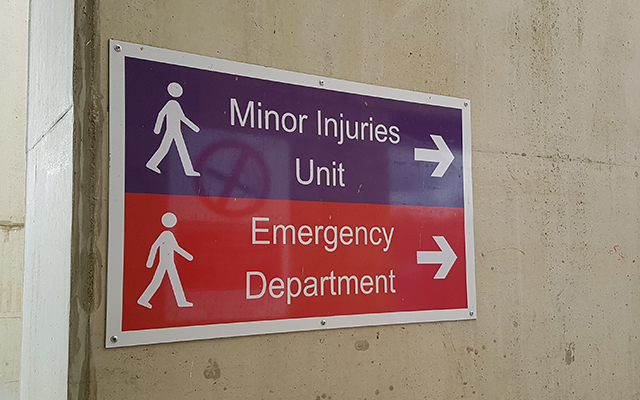
Minor Injuries Unit and Emergency Department sign
|
||
|
||
|
An evaluation of the Scottish government’s Redesign of Urgent Care programme has found that long waits remain the most common reason for people seeking urgent care to give up waiting to speak to someone on the NHS 24 helpline.
Under the programme, people with non-life-threatening health concerns are invited to call 111 before going to A&E or a minor injuries unit.
The study found that 42% of the people surveyed who called 111 to access urgent care who ended their call early did so because they were left waiting too long.
One third of respondents who contacted NHS 24 out of hours (weekday evenings and weekends) reported a wait of 30 minutes before ending their call, with 10% of respondents saying they were stuck waiting for more than an hour.
Around 16% (71,985) of all urgent care calls made to 111 were discontinued between June 2023 and May 2024.
While people who successfully got through to an NHS 24 call handler reported having a positive experience, people calling on a weekend evening or night similarly reported waiting too long to be put through.
The study found those who were given an A&E and minor injuries appointment by NHS 24 waited for a shorter time than people who had gone there direct.
These findings echo previous evaluations, which have warned about call delays at NHS 24 since the Redesign of Urgent Care programme’s launch in December 2020.
Consultancy firm Stantec, which conducted the most recent evaluation of the programme, has recommended that NHS 24 funding be increased to bring down call waits, especially during weekends.
It has also recommended the development and promotion of national standards to better support healthcare professionals working in Flow Navigation Centres to refer patients on to the most suitable care, after finding significant variation in the way these virtual triage services are run across Scotland.
Health secretary Neil Gray said he welcomed the report and that it gives valuable suggestions into how to better manage demand for urgent care services – some of which are already being put into place:
“Work is already underway to implement the recommendations of this report, including increasing staff numbers at NHS 24.
“This winter there are a record number of NHS 24 call handlers available to direct people to the most appropriate care, helping reduce unnecessary A&E attendances. Our Right Care Right Place campaign, launched ahead of winter, is continuing to give guidance to the public on the best way to access services, and I thank everyone who is following that advice.
“The Scottish government’s draft budget, if passed by parliament, will provide a record £21bn for health and social care, including £200m to reduce waiting lists and improve capacity further. All of this will help to improve the flow of patients through hospital, and reduce pressures on urgent care.”
Read more: £40m spent on "small" impact urgent care reforms; A&E call-ahead reforms having “no impact”; 111 delays risk A&E call-ahead plan
Sign up to our bulletin for key health & social care updates straight to your inbox. |