|
Glasgow A&E introduces digital triage check-in |
Related newsAI to help take pressure off A&E Thrombectomy limitations laid bare Why you can’t miss the UK Stroke Forum 2025 NHS is working to address “unacceptable” abuse Doctors: ‘Shocking’ A&E figures require action AI for lung cancer care to help tackle “hidden killer” 
|
|
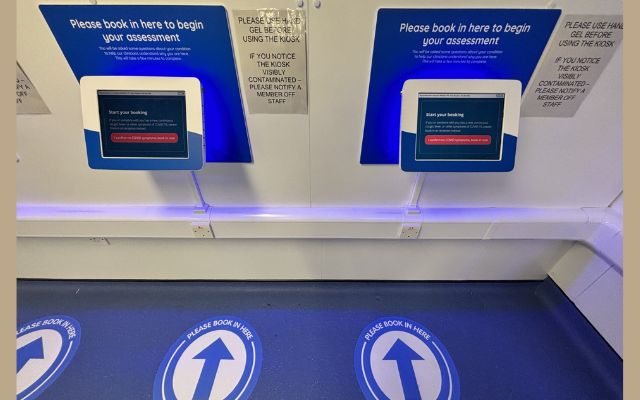
Image: © NHS Greater Glasgow and Clyde
Digital triage check in terminals at the Queen Elizabeth hospital A&E
|
||
|
||
|
Patients arriving at the emergency department at Glasgow’s Queen Elizabeth University Hospital are to be asked to check-in using a digital triage terminal to register who they are and what’s wrong with them. NHS Greater Glasgow and Clyde says the new system will support faster, safer patient care by helping to prioritise patients with the most urgent need.
NHS Greater Glasgow and Clyde (NHSGGC) says the responses people provide using the screens will be sent instantly to the clinical team, giving staff a fuller picture of each patient’s condition within minutes of arrival so that, by the time a patient sits down in the waiting area, staff already have essential, detailed clinical information to allow them to prioritise those who need to be seen first.
NHSGGC says the eTriage, which is also due to be rolled out at Paisley’s Royal Alexandra Hospital, Glasgow Royal Infirmary, and Inverclyde Royal Hospital in Greenock, will not replace the staffed A&E reception desk for any patients who prefer to use it, or who need additional support.
The board says the introduction of digital triage forms a key part of its Virtual Hospital programme to ‘improve patient flow, reduce delays and ensure people receive care in the right place’.
Director of Interface for NHSGGC, Lorraine Cowie says the new system gives emergency teams a real-time picture of exactly who is waiting and how urgently they need to be seen:
“Introducing digital triage across our A&E departments is an important step in improving how quickly and safely we assess patients.
“By giving clinicians immediate access to high quality information, we can prioritise those in most urgent need and reduce delays.”
Digital check-in
In its explanation of the new system, NHSGGC says that patients who use the digital kiosk will be guided through a short set of clinically‑designed questions about their symptoms using a touchscreen.
The board says digital triage won’t work for everyone and ‘front door reception staff remain essential’, but using a screen will be more private as people can input sensitive information directly rather than having to talk about it in a busy public area.
Ms Cowie says digital triage will also, in due course, support patients to be directed to alternative services if their illness or injury is not serious or life-threatening:
“As part of our wider Virtual Hospital programme, this approach will also help us guide some patients to more appropriate services, including offering advice, virtual support or booked appointments elsewhere when it is safe to do so.
“This means A&E can focus on the most serious conditions, while other patients are seen more quickly in the right setting.
“Patient safety will always remain our priority, and anyone who needs emergency care will continue to receive it.”
NHSGGC has produced a video about digital triage and answers to Frequently Asked Questions about the system.
Read more: Aberdeen A&E first to offer routine HIV tests; “Mayday”: voices from NHS emergency departments; Government to act on A&E failures
Sign up to receive our bulletin for key health & social care updates straight to your inbox. |