|
A&E frailty services ready for winter |
Related newsCharting Scotland’s future health and hospital demand Scotland’s frailty services to help address NHS waits Scotland at the table with UN healthy air commission Pharmacy’s road to stigma-free drug dependency care Politicians must take ‘bold’ action on child poverty ‘Whole-system shift’ needed on ADHD and autism support Boards hail Golden Jubilee waiting time support Scotland’s frailty services to help address NHS waits Agency staff paid as high as 400% to fill NHS gaps Tourist lets make rural NHS recruitment harder Cancer patient support bolstered by new funding Health boards given deadline to cut agency nurses 
|
|
© NHS Dumfries and Galloway
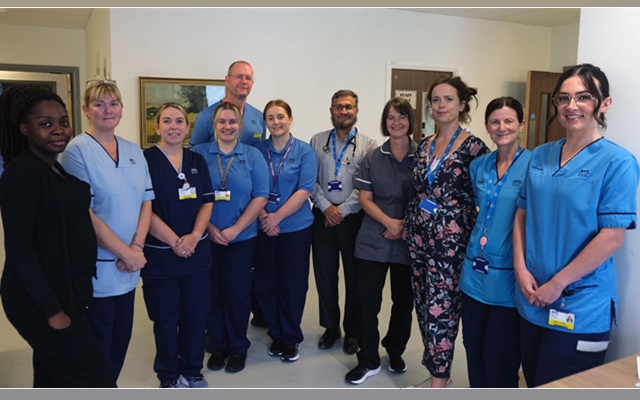
NHS Dumfries and Galloway acute frailty team
|
||
|
||
|
All Scotland’s emergency departments now have frailty services supporting older patients as soon as they arrive to hospital.
A pledge made in the NHS renewal framework to allow frail patients to skip A&E and spend less time in hospital is now a reality, says the Scottish government.
The services have been expanded across Scotland over the last few months, backed by a portion of £200m.
NHS Dumfries and Galloway board members said at a recent meeting its new Acute Frailty Unit a ‘standout success’, leading to significant improvements across the emergency department.
Since opening earlier this year, two-thirds of frail patients admitted to hospital have been discharged directly home, with an average stay of just 3.5 days compared to the 17.5 days typically seen previously – with no increase in readmissions.
The board’s Chief Operating Officer, Nicole Hamlet, said the frailty service is making “a real and measurable difference”:
“By reducing unnecessary time in hospital, we’re helping people get home or to a homely setting safely and sooner. It also frees up vital capacity in the hospital, which helps us deliver better care across the board. I’m very proud of what the team has achieved.”
The frailty services provide specialist, multidisciplinary assessment and care for older patients where required in emergency departments.
They are designed to accelerate early discharge, reduce delays, and shorten hospital stays – helping patients recover more quickly and return home sooner.
Health Secretary Neil Gray MSP was able to see firsthand the impact the service is having on patient care, at his recent visit to Dumfries and Galloway Royal Infirmary Acute Frailty Unit.
Mr Gray said:
“The success of the frailty service here in Dumfries and Galloway is something we are replicating across Scotland. By shifting the balance of care from acute hospitals to community-based services, we can ensure that people experiencing frailty are supported earlier – whether through GP referral or direct access via the Scottish Ambulance Service.
“Improving patient flow is a key priority, and services like this show how targeted, well-coordinated care can lead to better outcomes.”
NHS Dumfries and Galloway are not the only board reporting improvements thanks to the integration of frailty services into A&Es.
NHS Lothian board papers say bed days for patients aged 75 and over reduced by 12% in August, which is directly linked to the service as well as the new frailty offering in primary care.
Other boards have reported the expansion of frailty services will form an important part of preparing for winter.
Read more: GPs to lead on frailty in new NHS improvement plan; Scotland’s frailty services to help address NHS waits; Government to act on A&E failures
|