|
Agency staff paid as high as 400% to fill NHS gaps |
Related newsNHS chief execs agree 15-point plan to cut costs ‘Bleak picture’: health leaders react to NHS review Psychiatrists in ‘disbelief’ over cut funding Concern over drop in nursing student numbers Urgent workforce reforms needed for Scotland’s NHS New ‘record’ pay offer for 160,000 NHS staff Cancer patient support bolstered by new funding Piecemeal approach to serious NHS errors handling NHS problems ‘still need fixed’ despite pandemic focus Scots warned not to assume virus immunity Scotland reaches testing target & expands eligibility NHS whistleblowing champions appointed 
|
|

Image Credit: © sudok1____
|
||
|
||
|
NHS Scotland continues to pay over the odds for agency staff, with some boards paying nurses more than four times the normal hourly NHS wage to cover staffing gaps.
NHS boards point to ‘critical staffing gaps’, with rural health boards highlighting particular struggles to recruit due to location, with ‘hard to fill vacancies’ resulting in agency reliance.
Figures show NHS Dumfries and Galloway reported some of the highest costs, paying some agency nurses as much as 462% of the standard rate for nursing cover.
The health board said that agency use is ‘always a last resort’, with cover offered first to existing staff, but highlighted long term vacancies and sickness means this is not always possible.
It reports that 59% of shifts requested for agency workers from July to September 2024 are related to vacant posts.
The Scottish government said, despite agency nurses only making up a small fraction of total NHS staff costs, it is working to reduce its reliance on agencies.
Agency nursing and medical staff are usually employed by private companies, and given temporary NHS roles to fill staffing gaps, usually at an enhanced rate.
They differ from ‘bank’ staff, which are pools of temporary NHS staff hired directly by the NHS at the Agenda for Change pay scale.
NHS Western Isles reported multiple agency nursing posts were needed in July to September 2024 to support a complex patient.
For the same period, it also paid 233% of base pay for the agency pharmacy ‘required to maintain services’.
Scotland’s largest health board, NHS Greater Glasgow and Clyde paid 205% the standard rate for Registered Mental Health Nurse enhanced observations cover during April to June 2024.
Meanwhile, NHS Lanarkshire reported five short-notice absence posts where patients would otherwise be at risk, seeing agency nurses paid 160% of the standard rate.
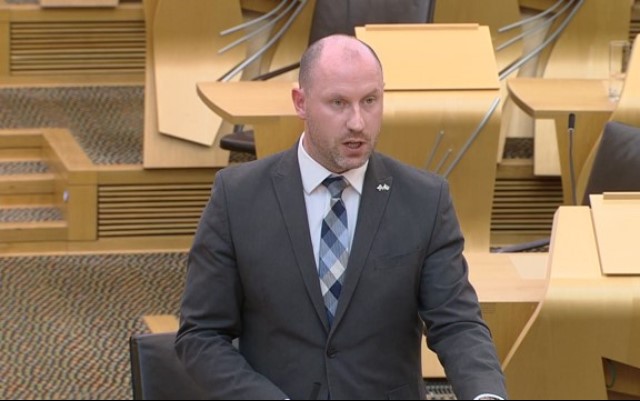
Scotland’s Health and Social Care Neil Gray Secretary told healthandcare.scot:
“The use of temporary staff in an organisation as large and complex as NHS Scotland will always be required to ensure vital service provision during times of unplanned absence, sickness and increased unforeseen activity.
“It is however critical that we seek to secure best value whenever we are delivering services within NHS Scotland, allowing us to maximise the impact that our investment has on the quality and availability of patient care.”
This follows a warning for health boards to cut agency nurses by the Scottish government, stating that the use of agency nurses must stop by November 2024.
Long-term solutions
Colin Poolman, Director of Royal College of Nursing Scotland, told healthandcare.scot these latest figures come as “no surprise”, but are “clear evidence” of the sustained high level of pressure on health services:
“Some investment in temporary staffing will always be needed to cover unexpected events and ensure safe patient care but it is not the long-term solution to the nursing workforce crisis.
“It’s true that some nursing staff will be attracted by the higher rates of pay agencies offer and the greater flexibility in being able to choose when they work that nurse banks and agencies allow.
“But the gaps in the permanent workforce are having a significant impact on continuity of patient care and staff morale.
“The bottom line is that Scotland does not have the nursing staff required to deliver care to all who need it.
“We need action now to retain experienced nursing staff and to make nursing an attractive career choice.”
NHS Ayrshire and Arran, NHS Dumfries and Galloway, and NHS Highland all reported spending more than £4m on agency staff from July to September 2024.
NHS Arran and Ayrshire has seen high-cost agency staff spend reduced but says it is still required meet staffing needs in its intensive care unit and emergency department.
NHS Highland reported over 1,000 agency nurses were paid from July to September 2024 for vacancies and sickness while NHS Arran and Ayrshire only needed five nursing shifts covered.
Scotland’s health secretary Mr Gray said that while he is committed to reducing agency spend, it represents a small proportion of the total NHS Scotland staffing costs:
“NHS Scotland’s staffing pay bill is over £10bn a year, with spending on agency nursing a tiny fraction of this.
“We are working with colleagues across NHS Scotland to explore how we can reduce our reliance on agency staffing.”
Medical staff spend increasing
Although NHS Arran and Ayrshire outlined a reduced reliance on agency nursing, it reported almost 1,000 agency consultants and hundreds of allied healthcare professionals were needed for long-term vacancy and sickness cover.
NHS Dumfries and Galloway reports spending over 210% to cover registrar and consultant posts, also citing staff shortages and long-term sickness.
Meanwhile, statistics released to Scottish Labour following a freedom of information request show more than £900m spent by health boards between 2019-20 and 2024 on locum consultants and agency nursing staff.
Scottish Labour’s health spokesperson Jackie Baillie MSP said these figures lay bare the “huge pressure” the NHS is under, emphasising the need to create more medical and nursing training places.
BMA Scotland has warned that NHS Scotland spending on agency medical staff has increased by 8% over the last five years.
Dr Joanna Bredski, deputy chair of the BMA's Scottish consultants committee, told healthandcare.scot:
“While it’s true that temporary staff may sometimes have to be brought in to cover unexpected gaps in services, the huge sums being spent on agency staff show there is a worrying reliance on locums in NHS Scotland.
“This is an expensive ‘sticking plaster’ approach which is not a long-term solution to the workforce crisis.
“Permanent staff are not only a far more cost-effective option, they also provide the stability and continuity of service that best serves patients.
“We need to see action taken by the Scottish government to improve the recruitment and retention of senior doctors and to plan for the long-term future of the NHS, particularly against the backdrop of rising demand for services.
“The money being spent on locums would be far better invested towards staffing the service properly instead of relying on temporary doctors to plug the many gaps that exist.”
Read more: Corridor care ‘the norm' in struggling hospitals; NHS will “struggle to see out” 2025, say doctors; NHS Scotland: waiting lists and beyond; Highland to end unique health and care model; Watchdog: action needed now on NHS reform; Less than half NHS PFI bill has been settled; Youth mental health pilot looks to the future
|