|
Tailored support needed for stroke survivors |
Related newsPharmacy’s road to stigma-free drug dependency care Dementia campaign success to inform government actions Holyrood ADHD and autism inquiry launched High-fat diet could help bipolar patients Depression linked to poorer physical health outcomes Fair funding to see Scotland lead dementia research Medical trainee abuse reports ‘shut down and silenced’ Politicians must take ‘bold’ action on child poverty Glasgow district nurses ready to strike NHS and Glasgow rethink routes into healthcare ‘Major’ update to One Health AMR register Glasgow LEZ success sparks call for expansion 
|
|
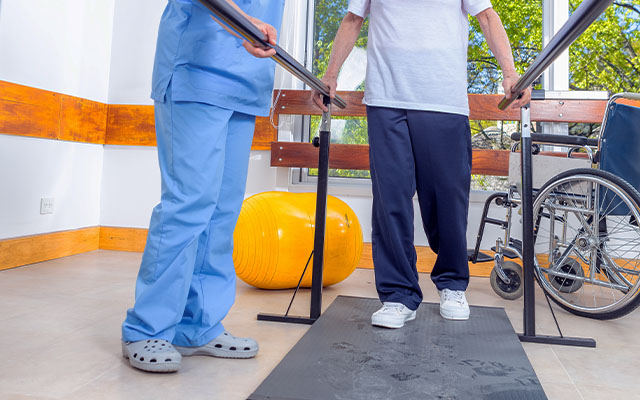
Image Credit: © jovannig
|
||
|
||
|
Stroke survivors need tailored support for their psychological wellbeing to help them cope with the significant long-term disruption to their lives, a new study reveals.
Glasgow and Dublin researchers have collaborated on a new study to hear directly from people who are in rehabilitation after having a stroke.
The researchers have called for the focus of treatment and support plans to capture stroke survivors’ individual circumstances and how the psychological impacts of a stroke, including hopes and dreams, are linked long-term recovery.
Lead researcher, Glasgow Caledonian University’s Dr Joseph Hall on the study told healthandcare.scot that person-centred care is the “gold standard” of what current health services strike to achieve.
However, he said that pressures on staff delivering stroke care mean that psychological impacts are “often overlooked for a focus on medical and physical outcomes”.
The study draws from the experience of 30 people from across the UK who shared their stories of how recovering from a stroke impacted their personal and social lives.
Aged from 31 to 86, the stroke survivors were interviewed about the disruption having a stroke has had on their sense of identity.
Dr Hall added:
“Stroke survivors were often unprepared for the sustained challenges they may face following stroke, as their personal and social worlds can be significantly disrupted.”
He explained that the research reinforces previous calls for psychological wellbeing to be a priority within stroke care, adding:
“It calls for the stroke survivor, their identity, and the long-term challenges to their sense of self to be the focal point of the delivery of person-centred stroke care that is delivered consistently from initial stroke onset right through to long-term adjustment post-stroke.
"The physical, psychological, and social realities of each survivor must be taken into account to truly understand and address the long-term impact of stroke on identity.”
One participant, Ewen aged 47, reflected on losing his autonomy and his ability to do what he once could.
After regaining his ability to walk, Ewen still had weakness down his left arm meaning that household tasks he previously found simple became “really fatiguing” and difficult to complete.
He said the sudden reliance on his wife and children felt confronting to his sense of independence – and is something he is “still struggling with”.
Participants also reported a complete change in how they perceive themselves, relate to the world and engage socially.
‘Powerlessness’ in post-stroke care
Helen, aged 60, explained that it felt like “having your life pulled out from under you”:
“Your brain is your sense of identity: what you can do, how you can read, how you can think. I was proud of that.”
She said that in the aftermath of her stroke, she was most worried to not feel like herself again in both her personal and work life.
Helen and other participants also reflected on the current support in the aftermath of a stroke, and the ‘power imbalance’ between patients and those who care for them.
While some participants found that healthcare staff made time to talk to them and provided a sense of shared control, others struggled with their voice not being heard.
Despite many medics and healthcare staff telling her about what was happening and the next steps, Helen found that in terms of her care “no one actually asked me what I felt”.
She said there was a huge feeling of powerlessness in the process, particularly when it came to mental wellbeing and her psychological needs:
“I knew I needed some kind of psychological help and there was no one available.
“They just say “Oh you’re very low. You mustn’t be low.” It was really unhelpful. And these are wonderful people – they were very kind and they tried.”
Dr Hall explained that the research shows how adapting to life after a stroke leaves many caught between pre- and post-stroke identities and that this uncertainty affects their recovery:
“Unfortunately, many survivors report feeling unsupported or abandoned following discharge as they experience a reduction in the care and support they receive.
“Yet, it is often the moment that stroke survivors return home, that the reality of the impact of stroke sets in. We found that this challenge was often at the centre of stroke survivors’ recovery journey.
“To better support stroke survivors’ long-term recoveries across the UK, psychological well-being and support must be made a priority within stroke care.”
Care long after hospital
Joanne Graham, Director of Service Delivery at Chest Heart & Stroke Scotland (CHSS), told healthandcare.scot that person-centred care must extend beyond a hospital stay:
“A stroke can be life changing – leading to serious language, cognitive impairments and physical disabilities.
“While immediate hospital care is immensely important, there is also a great need for support for people after they leave a hospital setting.”
To support this post-stroke care, CHSS piloted a self-management programme in NHS Grampian earlier this year which spans symptoms from fatigue and pain to stress, and includes goal-setting and communication advice.
Ms Graham said this programme “vastly” improved stroke survivors’ wellbeing, helping them live full, happy lives managing their health “knowing they are in control of their condition and what matters to them.”
Read more: Stroke services at risk from cuts; Care management ‘on its knees’; Families to shape campaign against stigma; ‘Unprecedented' crisis in community health and care; New collaboration to tackle health inequalities; Number of carers grows by more than 25%; Scotland can lead tailored alcohol policy; Chief medic: Innovate to tackle health & planet crises
|