|
Uncovering the hidden role of carers in Scotland |
Related newsDementia home care tech collab invites partners Scotland’s NHS and social care app timeline unveiled All public bodies must focus on health, urges charity Chief Medical Officer: ‘Critical connections’ priority Health and charity leaders join forces for NHS reform IJBs’ design shuts out key voices Treatment-resistant cancer focus of new study Enhancing independent living with robotics Law change needed for Scotland’s drug crisis Libraries offer light lift for low winter mood Medics warn pollution is risking children’s health Peer support ‘crucial’ in suicide prevention 
|
|
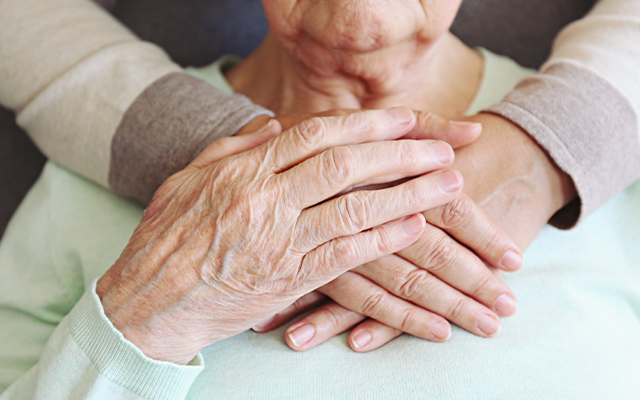
Image Credit: © Evrymmnt__
|
||
|
||
|
A new collaborative research project between academic and third sector groups is seeking to ‘shine a light’ on the work and challenges facing unpaid carers across Scotland.
The ‘Scotland Cares’ project is funded by the Royal Society of Edinburgh Young Academy of Scotland and will hear directly from carers to uncover the uncertainties and barriers they experience.
Led by the universities of Glasgow, Strathclyde, Edinburgh Napier and West of Scotland, the project will be undertaken by researchers alongside partners in Carers Scotland and the ALLIANCE.
Understanding the role and experiences of unpaid carers has ‘never been more important’ with an ageing population and evolving models of health and social care, the team says.
Dr Josie Fullerton, Scotland Cares project lead for the University of Glasgow, says:
“While caring represents some of the most remarkable elements of the human spirit – the innate compulsion to look after others – it is also synonymous for many with a wide array of challenges such as stress, uncertainty and a loss of identity.
“In addition, it now seems certain that, as our society continues to age and our healthcare models continue to move health out of hospitals and into the community, those who care for others will take on a greater breadth and depth of roles in delivering care in the years ahead.
“That is why is it vital that we hear directly from unpaid carers, about their experiences and challenges. The Scotland Cares project will enable us to do that, amplifying the voices of unpaid carers so that we can better inform public health policy for the benefit of all.”
The first part of the study involves a now-launched survey of Scotland’s unpaid carers which asks for their ‘honest experiences, challenges and hopes for the future’.
The second part will focus on engaging with expert storytellers to bring to life these carers’ experiences and hopes in a relatable and dynamic way.
The team will arrange in-person events across the country and online events, with the ultimate aim of creating booklets and exhibitions.
Carers’ struggles
Last year, Carers Scotland called for urgent investment in both physical and mental health support for unpaid carers, as it reported the ‘devastating’ impacts felt by carers amidst a strained health and care system.
The charity revealed that more than half of carers say that their physical health suffered because of their caring role and 25% said that delays in NHS appointments meant they had not accessed mental health support, stating:
‘Despite their huge contribution to the Scottish economy, our communities, and to the lives of the people they care for, carers are facing deteriorating physical and mental health, loneliness and isolation with too many driven to deep mental despair as they are denied the support they need to maintain a healthy life.’
Last week saw legislation come into force that extends employment rights to carers, with up to five days of unpaid leave a year for caring responsibilities.
This new project will collect snapshots of carers’ lived experience across health, care and employment, with the team saying it is optimistic the work will ‘act as a catalyst’ to drive transformation.
The researchers hope to raise the voices of unpaid carers to help form a narrative that will both inform and shape public policy.
Kieren Egan, Scotland Cares project creator, from the University of Strathclyde, says:
“It's crucial that we continue to shine a light on the role of informal carers and celebrate their efforts. Plus, it brings together researchers from different places and fields to work together in a welcoming and creative space.
“We hope that by working together, we can help make carers' voices louder and share some important messages on their achievements and hopes as we look to the future."
Read more: Carers at a health and poverty tipping point; Employment support needed for Scotland’s carers; Self-directed support organisations boosted; Economic change key to Scotland's health inequalities; ‘Invaluable' impact of mental health volunteers
Sign up to our bulletin for key health & social care updates straight to your inbox and you can follow healthandcare.scot on Google News. |
