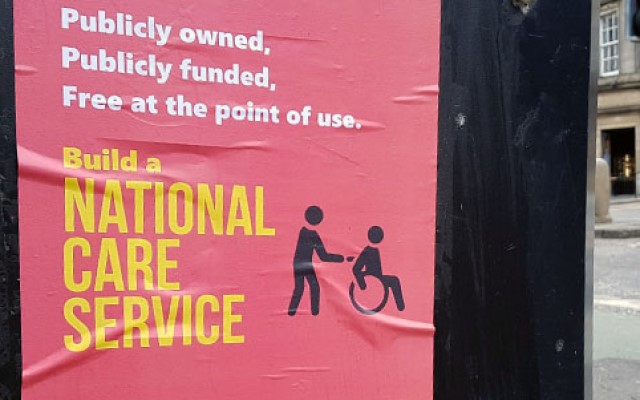
The journey to create a National Care Service in Scotland has been fraught with delays, revisions, and opposition. healthandcare.scot has been tracking the progress of the policy and the legislation to deliver it since it was first mooted.
Ahead of the health and care committee’s scrutiny of the government’s new proposals for the service at stage 2, we look back at our last three years’ of coverage.
Government plans for the National Care Service went out to consultation. Proposals for the service include children’s services, social work and criminal justice provision – far beyond the recommendations of Feeley’s review.
The legislation was originally meant to be in place by the end of this parliament in 2026.
Analysis of the results of the consultation later revealed 72% backed the idea that ministers should be accountable for the NCS, though concerns were raised over missing details, a short consultation period and the speed at which the government was looking to deliver the change.
The Bill was presented as enabling legislation to begin the process of creating a National Care Service, with the detail to be enacted through secondary legislation.
A network of care boards were to be created, replacing Integrated Joint Boards (IJBs) to oversee social care and NHS primary and community health provision.
The Bill included provisions to enact Anne’s Law and a right to breaks for carers.
The incorporation of children’s and justice social work services was not included but a consultation on whether they should be was promised for later.
The government committed to fully ‘co-design’ the new service with those working in the sector and those currently receiving or in need of support.
Holyrood’s Health, Social Care and Sport Committee was designated as lead scrutiny committee.
It was met with a cool reception from trade unions and councils, which said the Bill failed to address the central challenge of the workforce. Opposition MSPs characterised plans as an ‘expensive power grab’.
A ‘coalition of concern’ composed of organisations across the social care sector and beyond called for major changes to Scottish government plans to set-up a national care service.
Representatives from UNISON Scotland, COSLA, Coalition of Care Providers Scotland, Common Weal, Quarriers, Parkinson’s UK, and Social Work Scotland raised concerns about the co-design process, governance arrangements, and the ability of parliament to scrutinise the proposals.
A first step in the government’s co-design process of co-designing a new national care service took place with the creation of a panel to help ensure the new service would meet the needs of all.
October2022 – Parliament agreed that stage 1 would be complete by 17 March 2023.
November2022 – Holyrood’s health committee called for views on the Bill.
Holyrood’s Finance and Public Administration Committee, tasked with scrutinising the financial memorandum accompanying the Bill, urged the government to provide ‘much needed clarity’ by bringing forward fully costed plans ahead of the stage 1 debate.
December2022 – Local Government, Housing and Planning Committee
The committee raised concerns to the lead committee about its ability to fully scrutinise the Bill because the bulk of the detail of the NCS was still to be developed.
Writing to the health committee, the local government committee called for clarity about power transfers and how much it will cost local authorities.
December2022 – Education, Children and Young People Committee
The committee said a lack of critical research and detailed financial information meant they “cannot form a clear view” on whether children’s services should be included in the new service.
December2022 – Social Justice and Social Security Committee
Became the fourth committee to raise concerns around scope of the legislation to the lead (health) committee.
In a letter to the lead committee, members of the committee said the use of secondary legislation risked setting a “dangerous precedent”, with all but two members agreeing the Bill as it stood should not progress.
February2023 – Criminal Justice Committee
A report to the lead committee raised issues about the lack of detail of the Bill and its future impact on criminal justice social work and the potential transfer of services.
More than a dozen trade unions and charities came together to call for a pause to the progress of the National Care Service, highlighting ‘serious concerns’ about the Bill.
It came as opposition MSPs used a parliamentary debate to launch a concerted attack on what they called a “hollowed-out unfunded mess” of a Bill.
A deal was struck between the government and local government organisation COSLA agreeing that Scotland’s local councils and NHS boards would share accountability for people’s care in the NCS.
Key stakeholders later shared discontent with not being consulted on this decision. A disabled group told the health committee they felt “used” by the co-design process, as a result.
October2023 – A National Care Service National Forum took place.
The forum heard from leaders across government and the social care sector as well as those with lived experience. Breakout sessions were held for attendees to discuss and provide feedback key topics for the National Care Service, including prevention work, care changes, stigma and decision-making.
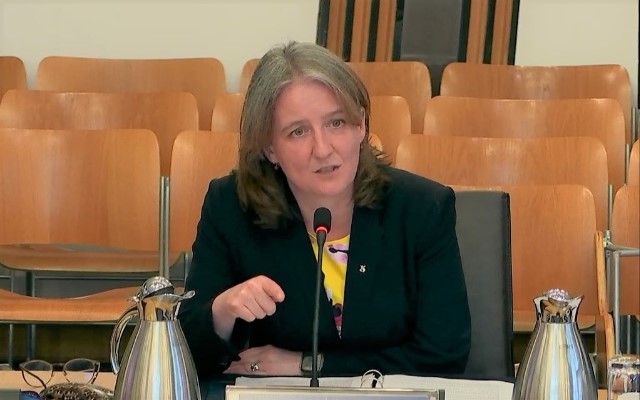
Social care minister Maree Todd MSP told the health committee that the government was still fine-tuning exactly how the integration of social and health care, ethical commissioning, sectoral bargaining, and national oversight would work within a new National Care Service.
Maree Todd MSP sought to assure the parliament’s finance committee that a more phased and careful approach to the development of the National Care Service had not made government plans for the sector any less bold or transformational.
The health committee told the minister it was unable to continue its scrutiny of the Bill with the information it had currently, saying the shared accountability agreement would considerably change the original proposals for the service.
In her letter to the minister, convener Clare Haughey asked for more information on planned amendments to the Bill, how co-design will be used and future anticipated costs.
A major rethink of the original proposals was revealed in a letter from Maree Todd MSP to the convener of the health committee.
The government said it would no longer look to pursue creation of separate care boards or the transfer staff and assets, but would instead invest time in reforming IJBs.
A refreshed financial memorandum indicated proposed changes to the Bill would result in implementation of the service costing between £631m and £916m over the next decade – ‘substantively’ less than the original plans.
Scottish government-commissioned research on children’s services from CELCIS concluded that ‘effective, sustainable change’ must go beyond structural transformation to make a difference for young people and families.
Social care leaders speaking at a policy conference raised concerns about the decision from ministers to share accountability with NHS boards and local councils, which they say they were not consulted on.
The Finance and Public Administration Committee told the social care minister that they were concerned about the context of financial pressure, and that their scrutiny of the proposals continued to be hampered by a lack of detail around economic benefit.
Maree Todd told the Finance and Public Administration committee that stakeholders have “nothing to fear” from the proposals though acknowledged the uncertainty they expressed concerns about.
She confirmed that details of the reformed integration authorities have not been decided upon – including how they will be funded, their membership and voting rights – though indicated she would support an independent chair.
The parliament’s health and care committee, which is leading scrutiny of the Bill, agreed to back its general principles if the government meets certain conditions – including agreeing to facilitate further scrutiny of the Bill at Stage 2 and addressing MSPs’ concerns around the services’ operational model.
The committee also urged the government to consider setting up an expert legislative advisory group to guide the co-design process.
MSPs voted 65 to 50 in favour of the government’s stage 1 proposals, with social care minister Maree Todd committing to give more information to MSPs as soon as possible.
Chair of the adult social care review that first recommended the establishment of a National Care Service in Scotland, Professor Derek Feeley, told attendees at an ALLIANCE event that he sometimes regrets ever putting a National Care Service in the final report as it where all the energy of policymakers has gone.
More than 60 organisations are chosen by the Scottish government to help make 'comprehensive and robust' changes to the National Care Service Bill.
The terms of reference for the group say it will act as a ‘sounding board’ and advice-giving body for the Scottish government, with a focus on stage 2 amendments.
The Scottish government publishes its long-awaited amendments to the Bill. They include details of a National Care Service Board, made up of representatives from the Scottish government, local authorities, health boards, carers, people in receipt of care and staff, which will take on responsibility for oversight and improvement.
Social care minister Maree Todd also makes clear that it is still her intention that all children’s services will eventually be included in the National Care Service
Some members of the expert legislative advisory group say they feel let down by a ‘deficient process’ that has left them none the wiser as to whether the new provisions will deliver improvements to Scotland’s social care system.
Think-tank Common Weal, the voice of not-for-profit providers the Coalition of Care and Support Providers in Scotland (CCPS) and UNISON Scotland all say they had no opportunity to feedback on government amendments before they were published.
In an unusual step, the lead scrutiny committee of the Bill gives interested parties another chance to share their views on the Bill, in light of proposed government amendments.
The Accounts Commission says uncertainty around the direction of National Care Service plans has contributed to the difficult context faced by integration joint boards in planning and delivering effective services.
Nine members of the expert legislative advisory group rejected Scottish government claims of broad support for its changes to the Bill.
A letter sent by them to the health and care committee says the members are neither in support nor opposition to the amendments, though raise issue with the way their participation in the expert group has been portrayed by government as an endorsement.
Finance Secretary Shona Robison announced £13.6m will be cut this year from adult social care, including a ‘refinement’ of non-staffing spend linked to delivering the National Care Service.
The time for people to respond to the health and care committee’s consultation on the government’s proposed changes to the National Care Service Bill is extended – it will remain open until the 20th of September.
NOTE: first published in 09/02/2024, updated on 06/09/2024.
Sign up to our bulletin for key health & social care updates straight to your inbox and you can follow healthandcare.scot on Google News.