|
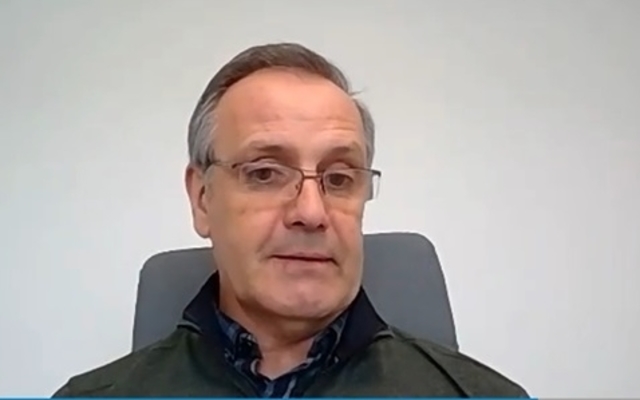
Feeley: Social care change can happen now |
Related news“Relentless focus” on health inequalities Highland to end unique health and care model Action for social care workers “can’t wait” Unpaid carer: Funding is vital to delivering the NCS NCS Lived Experience Panel Launched Sceptical response to government’s care proposals Scientists to help cut NHS medical device waste Edinburgh IJB faces judicial review over cuts Scotland’s new Chief Nurse appointed Urgent plea to safeguard advocacy amid local cuts New gene study offers arthritis treatment insights New Edinburgh hub set to transform global healthcare 
|
|

|
||
|
||
|
Many of the gaps in Scotland’s social care could be fixed now without the need for a National Care Service, according to the chair of the review that recommended its creation.
Reflecting on developing the landmark 2021 social care review, Professor Derek Feeley said lived experience was vital to the work – gathering the perspectives of carers and those who rely on social care support.
Professor Feeley told attendees at an ALLIANCE event last week that many core challenges identified in the 2021 review, like the pay gap, power imbalances, ethical commissioning and implementation shortcomings could be solved now.
Professor Feeley said the review’s recommendations for social care went well beyond the setting up of a National Care Service (NCS):
“You’d be forgiven for thinking that the National Care Service was the only recommendation we made – it wasn’t. And some of these other things are also really, really important.”
He said that many of the key outcomes people from what people shared could be achieved now.
He explained that the people wanted to be heard, for social care to recognised as a human rights’ issue – and for those rights to be honoured.
Beyond this, improving access and assessment for social care was identified as vitally needed, alongside people receiving care to been involved in action to solve to Scotland’s social care crisis:
“One person described the assessment process for social care support as ‘brutal’, that’s not how it should feel – it should feel supportive.
“People want to be seen, not as a problem but as part of the solution in the truest sense of codesign and coproduction.”
From these foundations, Professor Feeley says, the report recommended a few core changes for Scotland – starting with a new narrative. He told attendee that Scotland needs a new way of thinking about and representing social care support to the public.
Professor Feeley added that amplifying the voice of lived experience at every single level, not just where the service user meets the social care worker but across the system.
He said that people were tired of hearing that social care spending was a burden and instead it should be viewed as an investment in society:
“There is no question that investing in social care is a good investment. Spending more money to invest in social care is a good investment, and we need to stop talking about it as if it’s some kind of burden on society.
“So a new narrative is essential – and in my view, the most important of our recommendations.
“Unless we start to think differently about social care and social care support, we’re not going to be able to successfully redesign it. We’re going to impose better designs on a basically bad system.”
Gaps across social care
While recognising that the NCS is still an opportunity for transformation – and many things could be improved and accelerated through this – Professor Feeley said that for many vital social care changes “we don’t have to wait”.
While recognising “a lot of good ideas and policy around social care support”, he said another key recommendation was around how poorly these were implemented – with the report calling for a strengthening of those foundations.
He reflected on Scotland’s self-directed support system as an example of good intentions with poor implementation, with a Holyrood committee now scrutinising its delivery 10 years on after continued challenges and inequalities in access.
Professor Feeley highlighted that many of the gaps identified by the review – like the pay gap, gaps in the level of power held across the system and the implementation gap – did not need a NCS to fix.
A fairer deal for social care
Professor Feeley told attendees that one thing everyone involved in the review agreed on was the need to rethink how social care services are commissioned, saying: “It wasn’t working for providers and it certainly wasn’t working for the people needing support.”
He said that the nature of investment follows on from the language and narrative used too, and without changing the language around disabled people, older people and unpaid carers and the social care sector “we won’t make the right investments.”
He said that budgets, spending and pay for frontline staff must reflect that value for the social care sector and the contribution it makes to people’s health and wellbeing across Scotland.
He added that ethical commissioning could improve delivery of care across Scotland:
“We should stop thinking about social care that has anything at all to do with profit and start to think about as something that is designed for the public good.
“And so that's where our notions about ethical commissioning came from, and fundamentally we saw social care as about relationships, not in about transactions, not in 15-minute visits but in people feeling a sense of being supported.
“Most of those things, we could do now.”
Read more: Carers facing full force of health and care crisis; Feeley: NCS still an opportunity for transformation; Outstanding questions stall NCS scrutiny; Independent Living Fund to reopen; Millions less needed to deliver NCS; Addiction and recovery employment scheme grows
Sign up to our bulletin for key health & social care updates straight to your inbox and you can follow healthandcare.scot on Google News. |