|
Still lots to ‘work out’ with National Care Service |
Related newsSceptical response to government’s care proposals Bid to block IJB voting rights extension Holyrood passes Care Reform Bill Carers charities urge greater transparency in reforms National Care Service plans scrapped Minister: NCS has exposed "polar opposite" views 
|
|
|
||
|
||
|
The Scottish government says it is still fine-tuning exactly how the integration of social and health care, ethical commissioning, sectoral bargaining and national oversight will work within a new National Care Service, as the deadline for the first debate of the Bill draws closer.
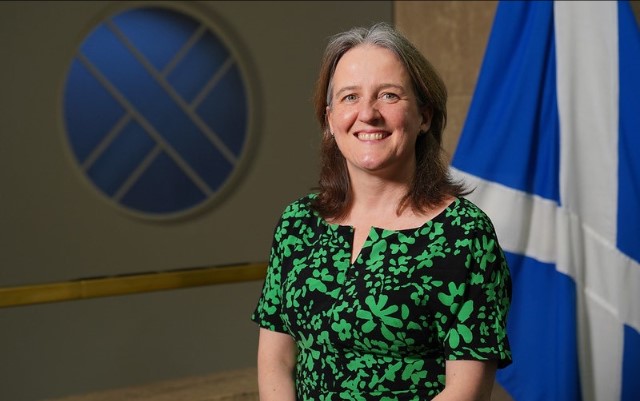
Following a ‘summer of co-design’ which has seen the Scottish government engage with more than 500 participants across Scotland, Minister for Social Care and Mental Wellbeing Maree Todd MSP says it is “still in the thick of discussions” around governance arrangements for the new service.
She told the Scottish parliament’s Health, Social Care and Sport Committee last week that a recent agreement between Ministers, health boards and local authorities to share accountability for social care will provide the “best combination” for oversight.
However, she said detail around the national care board is still being worked out and while she “envisions” Integration Joint Boards being retained and strengthened, this is yet to be finalised:
“We are still working out the detail around the national care board, but I do not think that it will be just the three of us. There will be more people around that table.
“I expect that there will probably be an independent chair. I think that the voice of lived experience will be absolutely vital on that board, and I think that it should include representation of the workforce and the national social work agency.
“Those are the things that will give that board teeth and make sure that it delivers an impact.”
Donna Bell, Director of Social Care and National Care Service Development, told the committee that the Bill will place duties on Ministers and care boards to produce ethical commissioning strategies, but exactly what these will look like is yet to be decided.
Sectoral bargaining – which Maree Todd MSP says is ‘probably the toughest area to deliver’ – is also yet to be finalised in any detail.
Trade unions have previously told the committee that they have been waiting “years” for the introduction of collective bargaining – where social care workers will be able to come together to negotiate wages and terms and conditions locally and nationally.
Unions are now working directly with government on amendments to the bill, but Donna Bell told the committee they have “not yet reached any conclusions”.
On the advice of these unions, Ms Todd says the government has approached academics for support in making sense of the ‘very complex ‘ sector.
Reaching consensus
She told MSPs she is ‘reasonably confident’ that the government will now begin to make progress.
MSPs are set to debate the initial proposals for a National Care Service by the end of January 2024.
This will come after a ten month pause to the Bill, which the Scottish government said would be used to ‘reach consensus with those who have raised concerns’.
Figures sent to Holyrood’s Finance Committee the week before show more than £1.026m was spent on NCS ‘engagement’ in the last financial year – £551,000 more than was originally envisaged.
Dr Sandesh Gulhane MSP at the evidence session accused the government of ‘treading water’ with what he said is proving to be an expensive delay.
Ms Todd responded that the government faced an impasse and had no other choice than to take a step back:
“We were pretty much in a situation in which we could not move forward because the level of opposition to the Bill was so great.
“Therefore, I am really pleased that we have achieved consensus and that we are moving forward now.”
Co-design
The government, in a review of its regional co-design sessions, says that input during the sessions will ‘inform early improvements, as well as the future structures and policies of the NCS, including the Bill itself’.
Its findings from regional forums will also be used to inform the creation of charters for the workforce and people who access care across Scotland.
Rachael McGruer, Deputy Director of Social Care and National Care Service Development told
MSPs last week that a charter of rights and responsibilities – described by Paul Sweeney MSP as the “linchpin” of how the service will operate – is an example of directly working together on design:
“We took the draft charter out to individuals in those sessions, and they have helped us to make sure that it is meaningful to them and that they feel that it has teeth.”
“We are currently in the sense-making phase of the co-design process. We will work through the different phases of the process, and then at a point when we feel that we have reached agreement as to the solid status, we will look to codify it.”
She confirmed a draft charter will be shared in early 2024, but it is unlikely to be enshrined in primary legislation, as co-design of the document will continue indefinitely.
Over the next 18 months the government says it will continue to co-design with people who have experience of accessing and delivering social care support to design the National Care Service.
A second national care service national forum will take place on the 30th of October.
Read More: National Care Service: ‘Revolution to evolution’; NCS civil service costs head for £10 million; National care service delayed again; Ministers refuse to update NCS costings;
Sign up to our bulletin for key health & social care updates straight to your inbox and you can follow healthandcare.scot on Google News. |