|
Column: Work for disabled people still a barrier |
Related newsNavigating ‘next frontier’ of AI in medical devices Patient and Public Involvement 2027 showcase Accelerating digital innovation in social care Glasgow A&E introduces digital triage check-in Webinar: The healthcare ecosystem for innovators 
|
|
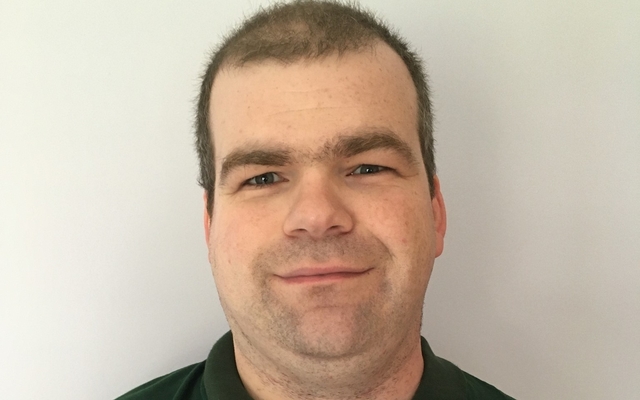
Michael McEwan
|
||
|
||
|
In his latest column, Michael McEwan calls for employers to look past the disability and see the person to enable disabled people to find meaningful employment.
We need to see more people with a disability in employment and close that gap. I was talking about this in my last blog, that it's hard to believe we're still talking about this issue in 2022.
Of all the barriers faced in everyday life, this one has been there for longest time. The Office of National Statistics states that 53% of disabled people in the UK are in employment, compared to 82% of non-disabled people/
The UK’s new disability minister has admitted the government "has scope to do better" when it comes to getting people into work.
Tom Pursglove, Minister of State for Disabled People, Health and Work made the announcement whilst launching a new disability action plan earlier this month. He's the third MP to hold down the position in as many months.
Talking to the BBC podcast Access about how he hoped to improve the experience of disabled people getting into work, all he said was "digitising the access to work scheme".
Access to Work schemes aim to help disabled people start or stay in work, and it provides grants to pay for practical support like transport or interpreters for British Sign Language users, but it's currently paper based.
More than 25,000 disabled people are currently waiting for their access to work application to be processed. The time taken to process an application has almost doubled in the last year from 32.5 day to 63.1 days.
We must look past the disability and look at the person. Disability is just a label. Many people would love to get into employment but haven't been given the opportunity.
Employment helps confidence. When I got my first job at the Scottish Consortium for Learning Disabilities, it helped me to meet new friends and it can also help mental health. I worked on a project called Employment Champions, which involved travelling across Scotland, sharing my journey into employment, and talking about the barriers that people face day to day.
There are a number of programmes designed to help people into work. One of these is Project Search, a transition programme for young people aged between 16 and 24. The model was developed in Cincinnati Children's Hospital Medical Centre in 1996.
It's since gained worldwide recognition, now expanding across Scotland with strong backing from the Scottish government and sponsorship from the Scottish Commission for People with Learning Disabilities.
The first trial site was in Lanarkshire and there was a 100% success rate of moving individuals into mainstream employment. It's good to see programmes like this, and more growing out there. It would just be great to see people in work without these types of programmes, but that will require a great sea change in society.
Sadly, we are a long way off seeing the person, and not the disability.
Michael McEwan is a freelance journalist.
Read more from Michael: Column: We still have to fight for our rights; Column: Young people finding their voice; Representation matters for Cerebral Palsy; Self-Directed Support still a lottery;
The views of columnists and people who write other guest insights articles are their own.
Sign up to our bulletin for key health & social care updates straight to your inbox and you can follow healthandcare.scot on Google News. |
