|
Unions: Social care workers need action now |
Related newsSceptical response to government’s care proposals Briefing: Social care in the manifestos Bid to block IJB voting rights extension Care can be valued, visible, viable and visionary Holyrood passes Care Reform Bill Carers charities urge greater transparency in reforms 
|
|
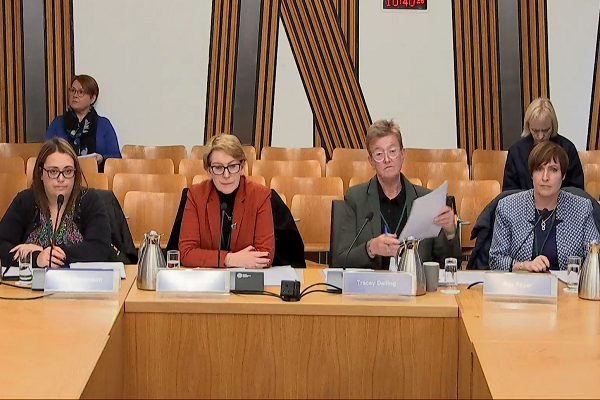
From L-R: Cara Stevenson, union organiser, GMB;
Mary Alexander, deputy regional secretary, Unite the Union, Scotland; Tracey Dalling, regional secretary, UNISON; Roz Foyer, general secretary, the Scottish Trades Union Congress (STUC) |
||
|
||
|
Union bosses have raised concerns about plans within the NCS Bill to transfer social care staff contracts away from local councils, in a move that could risk pensions and degrade terms and conditions – provisions they say they were not consulted on prior to the Bill’s publication.
The Scottish parliament’s Health, Social Care and Sport Committee has heard from union representatives that progress in implementing fair work and collective bargaining has been too slow.
Union leaders across Scotland told MSPs yesterday that “hundreds” of meetings about social care improvements must now culminate in real action for staff.
The Fair Work Convention’s Fair Work in Scotland’s Social Care Sector and the Independent Review of Adult Social Care – both of which consulted widely with providers and staff – provided a series of recommendations to improve social care.
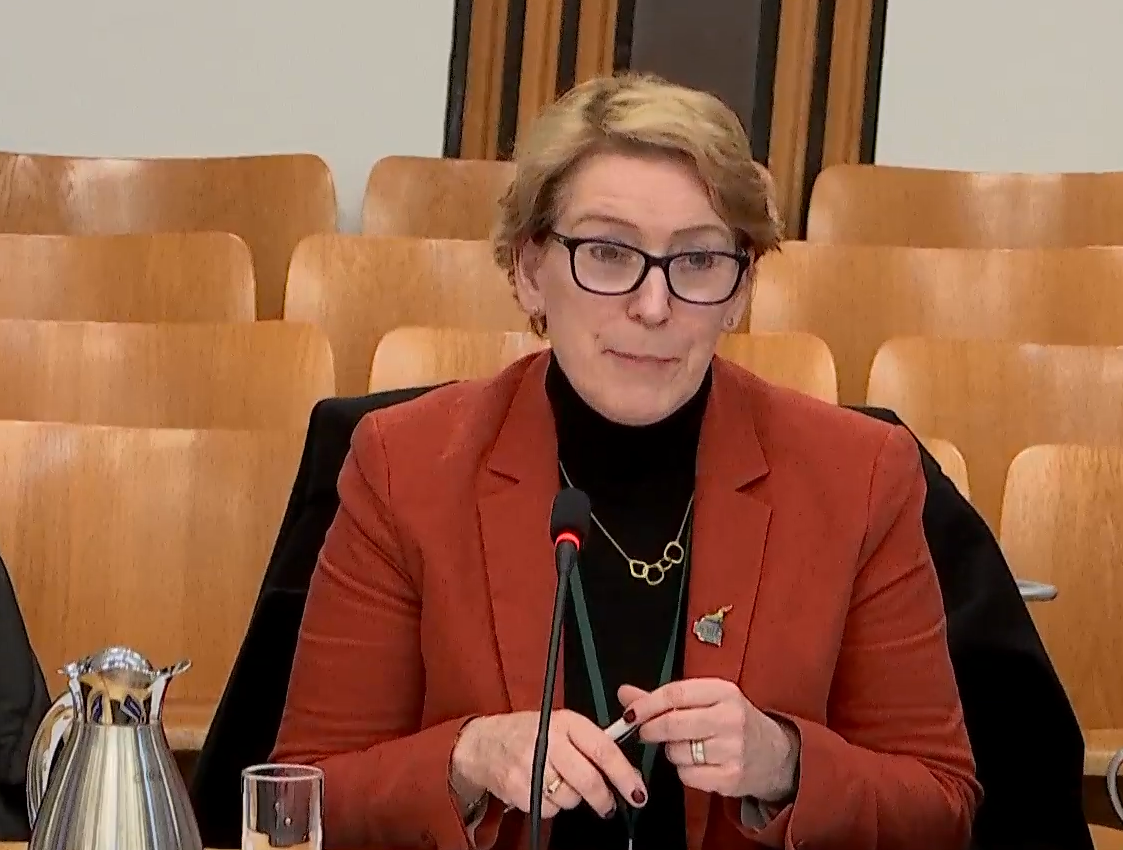
Mary Alexander, deputy regional secretary of Unite the Union, Scotland, said the government has collected enough evidence of changes needed within the sector– rather than waiting for the outcome of a lengthy co-design process:
“We knew what the problems were, we identified those problems, and we’ve had all this time in between to look at establishing a sector-level body [to establish minimum standards for fair work terms and conditions to underpin commissioning] and that hasn’t happened.
“Co design is then going over a lot of the stuff which we’ve already sat in numerous meeting and gone through all the challenges and issues.
“It’s very frustrating because there’s a lot of talking going on over the last five years [since the Fair Work Commission began its inquiry] and from our members’ point of view they’re frustrated beyond belief that nothing concrete is happening to their day-to-day job role.”
The National Care Service (Scotland) Bill, introduced to the Scottish parliament in June, proposes new care boards will replace councils as the commissioning body for social care services.
Up to 75,000 council employees across social work and social care could be moved across into employment with the new agency under the provisions.
However, Tracey Dalling from UNISON Scotland said the Scottish government had not approached unions about these plans first – a decision committee member Paul O’Kane MSP called “extraordinary”.
According to the regional secretary, council staff could see the loss of their pensions and favourable terms and conditions.
She called for a full impact assessment of the proposals on social care staff be carried out:
“If we look at the construct of this as it stands, there’s a huge propensity for people to be contracted out. And the minute you do that – there’s empirical evidence of this – you see the terms and conditions start to drop, so the pay rates go down, the mileage rates go down. And then there’s then this internal market so people will jump around so there’s no security around any of that for the future.”
Roz Foyer, general secretary of the Scottish Trades Union Congress (STUC), said that while co-design is a great concept, a lack of key driving principles in the bill means it is unclear how this will be evaluated.
She also said that workers had been waiting “years” for collective bargaining to be taken forward and that there is nothing in the Bill about tackling private providers profiteering:
“Around 30% of the fees paid into care in some of our more profitable care homes are going out the door, they’re not being used to improve the service. This is a huge leakage of funding.”
A report by STUC published in the summer found that £8.45 of every £100 received by the ten largest for-profit providers goes on costs other than providing care – double that of their non-profit counterparts.
The union also found that wages are, on average, £1.60 an hour lower in private care services compared to public.
Ms Foyer told MSPs that profit has no place in social care and it’s part of the current model that must be changed within the NCS:
“There’s no point having a national commissioning service. Let’s take the time to do the name
justice in terms of what we deliver, and that means bringing the workforce with you and really
working to get it right and listening to the concerns that workers are raising.”
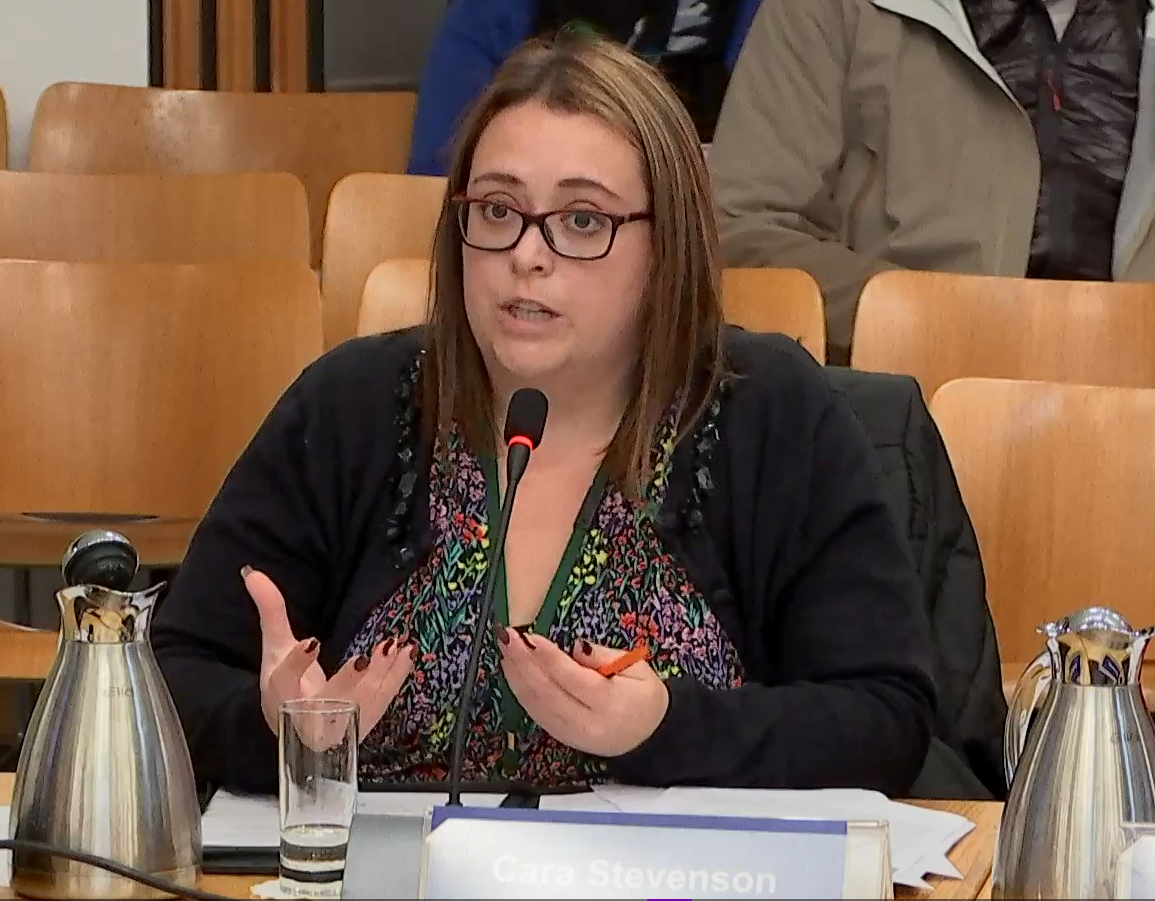
Cara Stevenson, a union organiser with GMB, told the committee that the Bill does not go far enough in improving the situation for staff, who are being asked to take “a leap of faith” that the service will deliver much-needed improvements:
“Social care staff are broken. They are exhausted and the spotlight is now off them. Now we’re giving them a Bill that doesn’t give them any sort of job security, any sort of value or feeling of worth after the nightmare they’ve been through over the past two years.
“We want reform, we want to make social care better, but we feel what they’re being offered now is not good enough.”
Read more: Calls to pause national care service legislation; Legal experts: NCS Bill too vague on human rights; Cuts will delay national care service plans; Joint call for major National Care Service rethink;
Sign up to our bulletin for key health & social care updates straight to your inbox
You can now follow healthandcare.scot on Google News. |