|
Joint call for major National Care Service rethink |
Related newsSceptical response to government’s care proposals Briefing: Social care in the manifestos Scotland’s IJBs becoming "financially unsustainable" Bid to block IJB voting rights extension Users to get voting rights at IJB meetings Care can be valued, visible, viable and visionary 
|
|
UNISON Scotland
|
||
|
||
|
A ‘coalition of concern’ made up of organisations across the social care sector and beyond are calling for major changes to Scottish government plans to set-up a national care service.
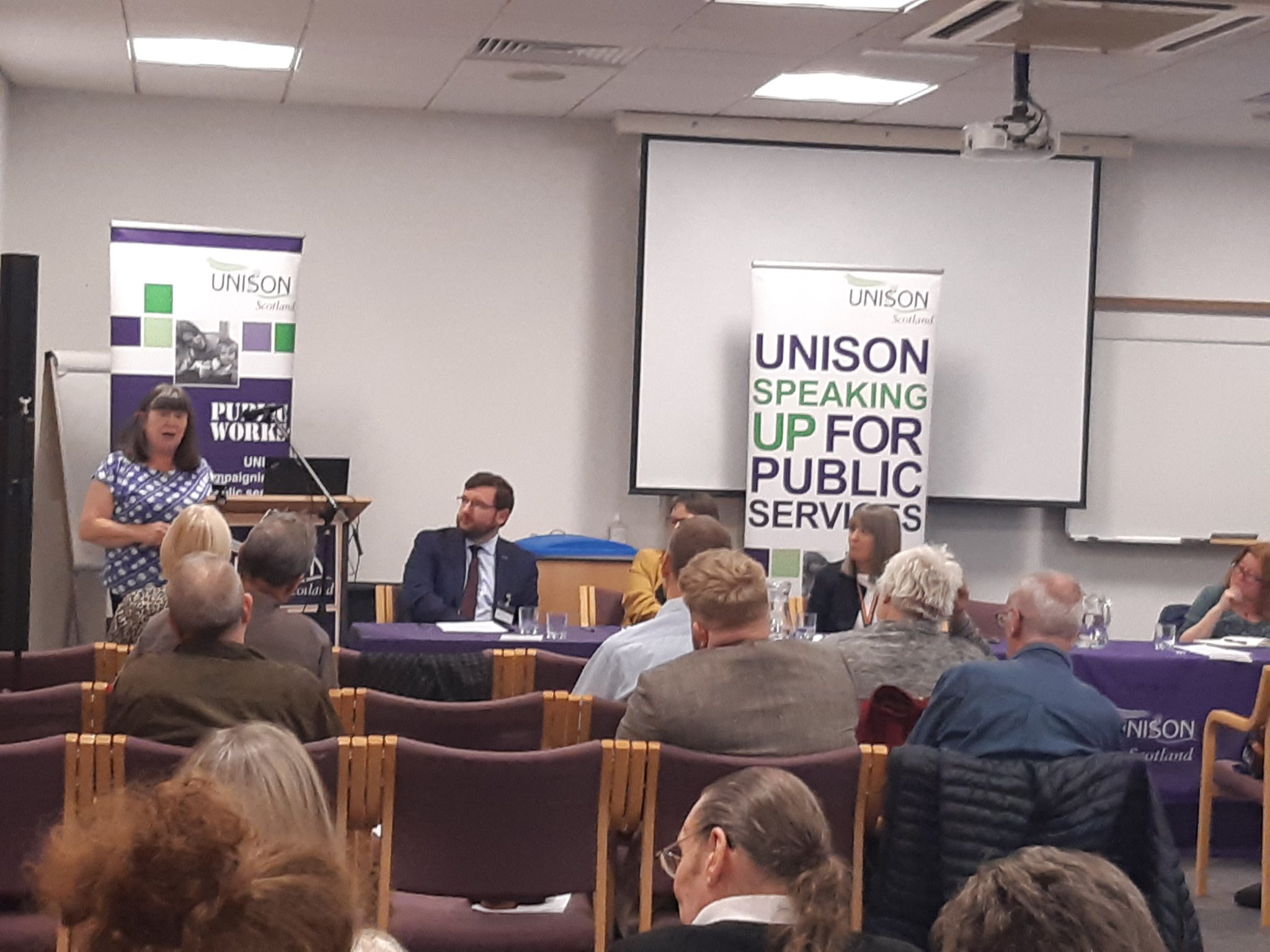
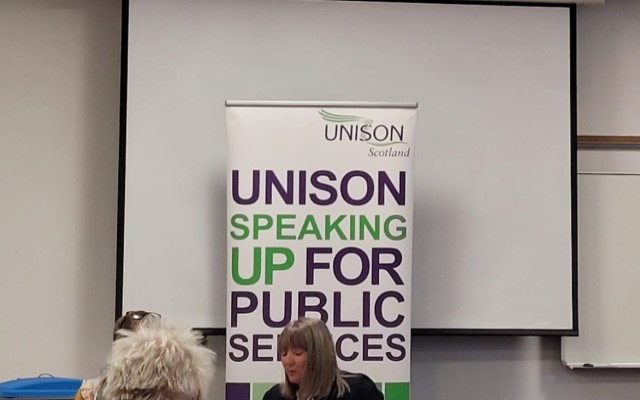
Trade unions, local authorities’ group COSLA and organisations representing people receiving care, providers and those working in services have met to voice concerns over the direction the Scottish government has taken towards setting up a national care service.
During the summer the government published a framework bill to start the legislative process. However, the absence of fundamental details about how the national care service will work has left MSPs unable to fully scrutinise the bill, according to the group, with the government’s chosen incremental approach to legislation described as fundamentally flawed.
UNISON Scotland, who assembled the group and convened its first meeting yesterday afternoon, has called for the Bill to be immediately withdrawn while Social Work Scotland is calling for it to be paused.
Other organisations that make up the coalition, including the Coalition of Care Providers Scotland (CCPS) and think tank Common Weal, say the bill in its current form is unfit for purpose and that working with the Scottish parliament on significant amendments is the way forward.
Lack of detail and ineffective legislative process has backed stakeholders into a corner
Tanith Muller, Parliamentary and Campaigns Officer for Scotland at Parkinson’s UK, said that the bill amounts to little more than ‘a pile of blank paper’ which has major implications for the parliamentary scrutiny process:
“We’re really concerned about that because, frankly, if we’re going to have the biggest public sector reforms since devolution, our parliament needs to be scrutinising that. But, on the basis of what’s being presented right now, our parliament can’t scrutinise what the proposals are going to be because we don’t know what they are.”
Much of the detail of how a national care service will run, including its structure and the scope of responsibility, is to be laid out in secondary legislation with the current bill acting as overarching enabling legislation.
The Director of Social Work Scotland (SWS), Ben Farrugia, said this approach is an ineffective way of making policy; it stifles open debate, and implementation of secondary legislation is often poor.
In its consultation submission to the Scottish parliament, SWS has called on the government to withdraw the bill, though the organisation does support reform.
“We’ve asked it be paused for a flipping round of the process effectively,” he told delegates.
“We want to lower the stakes in this discussion as it has to be built in partnership. And that is difficult to do in situations where the stakes for our local government colleagues are extremely high, forcing a defensive position. That means we cannot have the conversations that we need to about what reform looks like.
“What we should be doing is debating, getting into the details of parliamentary scrutiny: that is absolutely essential.”
The Scottish parliament will begin its scrutiny of the Bill after the October recess, with the Health, Social Care and Sport Committee designated to lead.
Rachel Cackett, Chief Executive of CCPS, said that a lack of detail in the bill means the government is expecting people to take “a huge leap of faith” in secondary legislation that will then be subject to a lower level of parliamentary scrutiny:
“We understand that government wants room to manoeuvre by having a framework bill with details after secondary legislation, which is much easier to change. And there is a real place for that. But there is so much that is unclear that we are being asked to make a huge leap of faith and, with too much left unanswered, many of us will be looking to amend the bill with good reason.
“We probably will be among them, with the risk that we end up with an unworkable patchwork of provision.”
Codesign concerns
A Scottish government spokesperson told healthandcare.scot that it has established a “robust and open co-design process to allow us to build on the high level principles set you in the Bill”.
A Lived Experience Experts Panel and National Care Service Stakeholder Register have been established so those with living experience of social care services and those involved in delivery of services can be involved in planning and development of the NCS.
However Ms Muller said it is unclear how varied interests in such a complex system will be fairly balanced during this process.
“Codesign is really important, but it’s not completely subordinate to accountability and transparency. We also need a system where the co design that is on the table is actually subjected to some kind of analysis afterwards, rather than trusting it to suddenly emerge with magical solutions that will be able to balance what are competing needs and competing priorities of all the people that make up this complex system.
“Who is going to test that the interests of everybody in that system are being properly balanced?”
Is the government focusing on the right things?
Mary Madden, an adult social care worker and UNISON activist, told the meeting that the government needs to focus on underfunded services and ensuring staff are valued and fairly paid, rather than structural upheaval.
“We're fighting over the future of social work and children's services when all we need is better jobs and better and better care. And we're fighting over the future of public services while tax dodging companies and private consultants breathe easy because the new system places profit before people.
“The whole point of a national care service is to improve the quality of care in all services and to get that offer to more of the people that need our support. It’s really not any more complicated than that. The obvious solution that the government has forgotten is Fair Work.”
A Scottish government spokesperson responded that a key objective for the new body will be “supporting and valuing our unique workforce”:
“By rewarding and valuing the workforce fairly we deliver the best possible service for the people of our country, we will make the sector fit for the future and more attractive to people coming into the profession.”
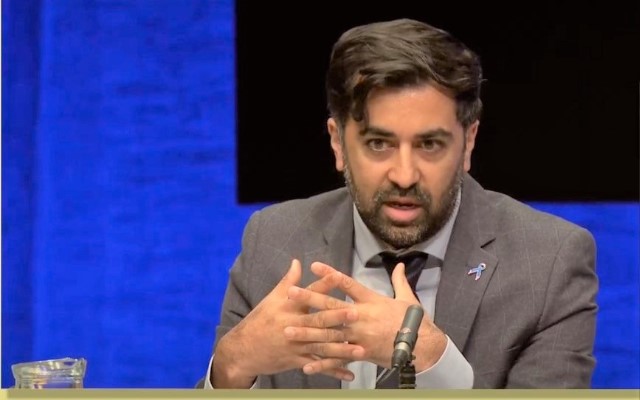
At the SNP Annual Conference earlier this week, Scotland’s Health and Social Care Secretary, Humza Yousaf, said that he is “tired” of private care companies profiteering as he reiterated commitments to cement ethical commissioning within the NCS.
Nick Kempe from Common Weal appealed to attendees at yesterday’s UNISON seminar “to get out of the box” and work together to improve services for all:
“That means some councils need to actually start admitting all the things they’ve done wrong and to talk about how they devolve or create some subsidiarity.
“We need the voluntary sector to admit that, sometimes actually, in terms of treating staff and so on, they’re as bad as the private sector. We need trade unions to stop seeing this as being a matter of pay and conditions only and think “actually if our members are going to be codesigning services, we probably should get interested in all these other things too”.”
Governance
Under provisions in the bill, new bodies called care boards – answering to the Scottish government – will take over IJBs’ role in planning and commissioning community health and social care and take on a more direct role in procuring and delivering social care services.
Dr Ron Cully, Chief Executive of Quarriers – who, during his career, has headed up both Western Isles HSCP and COSLA – told delegates that relationships between the NHS and councils will become increasingly challenging under these new governance arrangements.
Derek Feeley, in his independent review of adult social care, recommended the establishment of a diverse national board, made-up of people with living experience, workforce and providers.
The government has instead proposed an executive agency staffed by civil servants, which Mr Cully described as a “cop-out”, arguing that a much more inclusive approach should be taken:
“It’s about citizens coming together to work within this NCS so we can make it ours and not something that belongs to someone else.”
Are you for us or against us?
The main rationale given for the Scottish government’s reforms is that a national service will help to
end the ‘postcode lottery’ in social care, strengthen integration and embed human rights and ethical commissioning.
Common Weal’s Nick Kempe says these ‘shibboleths’ have dominated discussions about social care, but it is unclear, based on the Scottish government’s track record in these issues, how the NCS will fix these issues.
CCPS’s Rachel Cackett highlighted the importance of difference in opinions during the legislative process in moving forward to get the best possible outcomes for the NCS:
“I remember in that period of the integration agenda going through, we got to a point where if you raised the question about integration, it was a little bit, “If you're not for us, you’re against us,” or that, “You’re just a vested interest.” I’ve heard that language said to me already.
“I think there’s a real risk that there is an artificial division being made between those who commission, fund, and provide services and those people with lived experience of using services or carers.
“I think it’s a false dichotomy. Diversity really matters in getting to a good conclusion.”
“What we need to be doing is saying, “we have we have the attention of politicians to do something. Let's help them do the right thing”.”
Read more: Yousaf: No place for tax haven firms in NCS; Analysis: Scotland’s new care boards; Fear it is "too little too late" for social care; Insight:
Sign up to our bulletin for key health & social care updates straight to your inbox and you can follow healthandcare.scot on Google News.
Tags: National Care Service; Social Care. |