|
National Outcome on Care campaign gains momentum |
Related newsSceptical response to government’s care proposals Briefing: Social care in the manifestos Scotland’s IJBs becoming "financially unsustainable" Bid to block IJB voting rights extension Users to get voting rights at IJB meetings Care can be valued, visible, viable and visionary 
|
|

© Evrymmnt__
|
||
|
||
|
A campaign to add a dedicated National Outcome on Care to Scotland’s Performance Framework has now found support from more than 30 organisations, as the coalition behind the ‘Scotland Cares’ campaign says progress to improve care in Scotland has been “too slow and too shallow”.
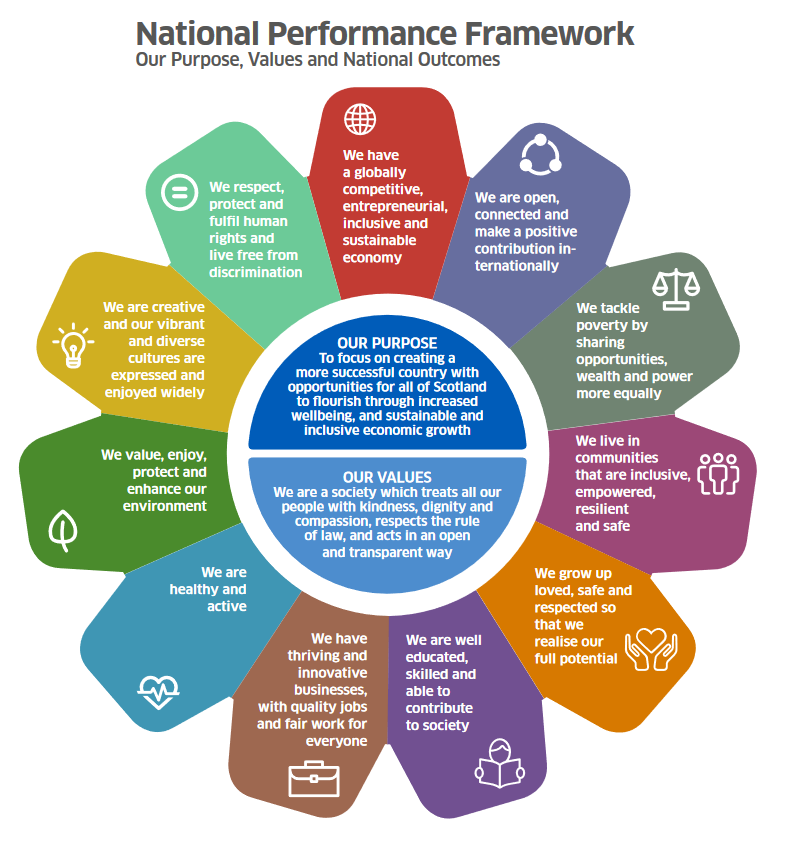
Oxfam Scotland, Scottish Care, One Parent Families Scotland and the Scottish Women’s Budget Group say care is ‘almost invisible’ within the 11 existing Outcomes through which the Scottish government describes ‘the kind of Scotland it aims to create’.
More than 30 organisations, including care providers and groups working in the third and voluntary sector, are supporting the coalition’s call for the Scottish government to include a National Outcome specifically focused on care.
The Scottish government introduced National Performance Framework (NPF) in 2007 to measure ‘how the country is doing’ through 11 National Outcomes, such as poverty, health and education.
The existing Outcome on Health includes an Indicator on ‘quality of care experience’, but the coalition argue this is ‘wholly inadequate’ as it is narrowly measured by perceptions of GP practices and does nothing to capture financial or personal wellbeing of carers.
A blueprint for a new National Outcome on Care, developed by the University of the West of Scotland, says insufficient consideration of carers, care workers, and those experiencing
The researchers have proposed that the National Outcome Statement ‘we fully value and invest in those experiencing care and all those providing it’ should be included in the next iteration of the NPF due next year.
Its inclusion would allow for greater scrutiny of progress, and will ensure that all types of carers and those receiving care benefit from initiatives and funding, according to the coalition.
Access to education and training of unpaid carers, care workers and those experiencing care as well as financial wellbeing and quality of life of these groups, have also been proposed by the researchers as possible indicators against which to measure progress.
The NPF will undergo a comprehensive review process beginning this year, which supporters of the ‘A Scotland that Cares’ campaign say presents a perfect opportunity for Scotland to be one of the first countries to anchor a new outcome specifically on care.
Scottish Labour and the Scottish Green Party have already backed these calls, and Nicola Sturgeon confirmed in December 2021 that the views of carers will be considered within the upcoming review.
The coalition says the Scottish government have introduced ‘a range of positive initiatives’ that could support greater investment in care, including better social security entitlements, the expansion of publicly-funded childcare, and the development of a National Care Service, but that progress is ‘too slow and too shallow’.
The government’s most recent health and care experience survey found that almost a third of carers in Scotland do not feel supported to continue caring.
One Parent Families say the situation is worsening for many carers and the time is right to formally recognise and value their contribution:
“From covid-19 to the cost-of-living rise, the inequalities faced by carers have intensified. Most single parents are women who have sole care of their children and almost one in five cares for at least one child with a disability, many also work in the care sector.
“People, mainly women, who care for others, have been unappreciated and under paid for far too long. For many that results in personal and economic costs, including desperate poverty.
“We must ensure Scotland is a caring country.”
Carers Scotland, a charity backing the Scotland Cares campaign, has called on the Scottish government to make an additional double payment of Carers Allowance Supplement, amid deepening concerns carers will not be able to meet the costs of looking after their loved ones.
The Minister for Social Care, Kevin Stewart said a carers strategy, aiming to improve support for carers in a “meaningful and sustainable way”, would be launched by the end of spring but has still not been published.
Short-term action to boost investment in care and carers will also be necessary alongside this transformative change, says campaign co-creator Scottish Women’s Budget Group:
“We want Scotland to fully value and invest in those experiencing care and all those providing it because care is the backbone of our society, yet for too long it has been under-valued and suffered from chronic under-investment.
“Now is the time to change this by immediately injecting funds into care services while putting in place longer-term measures to ensure care is properly valued.”
Read more: Unpaid carers invited to have their say; Cool reception for NCS legislation; NCS Bill published;
Sign up to our bulletin for key health & social care updates straight to your inbox. Tags: National Care Service; Social Care. |