|
New prostate cancer treatment expanded |
Related newsAncestry clues to lottery of who gets cancer Discarded bowel tests offer ‘unparalleled’ insights Scottish radiologist shortage harming patients Call for prostate screening for all Black Scots Conference to build on cancer research partnerships Link to research for breast cancer patients Piecemeal approach to serious NHS errors handling NHS problems ‘still need fixed’ despite pandemic focus Scots warned not to assume virus immunity Scotland reaches testing target & expands eligibility NHS whistleblowing champions appointed Nine NHS boards predicting deficits 
|
|
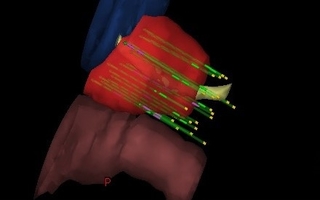
high-dose-rate brachytherapy (HDR-BT)
|
||
|
||
|
Patients in the south-east of Scotland are to be the first to benefit from the new radiation treatment.
The Edinburgh Cancer Centre (ECC) will offer the new high-dose-rate brachytherapy (HDR-BT) for treatment of aggressive but localised prostate cancer, following a successful introduction by NHS Lothian earlier this year.
A higher dose of targeted radiation is provided by the treatment option, which reduces potential side effects as risks of radiation exposure to non-cancerous tissue is diminished.
Dr Aravindhan Sundaramurthy, Consultant Clinical Oncologist at the Edinburgh Cancer Centre, said:
“We have been successfully delivering low-dose-rate brachytherapy (LDR-BT) for prostate cancer with over 1000 men throughout Scotland benefitting from the service. However, men with more advanced or aggressive disease would not be eligible for LDR-BT on its own.
“The start of the new HDR-BT service opens a very important therapeutic option for men with high-risk prostate cancer features. It brings together the skills and expertise of staff across our radiotherapy, oncology and anaesthetic teams to deliver another treatment option.”
Up to 1 in 10 men in Scotland are affected by prostate cancer, the most common cancer among this group, with more than 3,000 diagnoses each year.
But increasing the radiation dose in treatments, alongside early detection, has been shown to improve long-term cancer control and increase survivability explains the consultant.
Currently, the additional treatment approach is only available for suitable patients within NHS Borders, NHS Dumfries & Galloway, NHS Fife and NHS Lothian, but there is an aim to expand the service to other patients across Scotland.
Read More: Supply chain tech benefits Scottish blood service; Scottish doctors at forefront of heart care
Sign up to our bulletin for key health & social care updates straight to your inbox
Tags: Cancer. |
