|
Scottish radiologist shortage harming patients |
Related newsWe “cannot be complacent” on breast cancer rise Future of genomic medicine report published Scotland must prioritise new bladder cancer test Call for prostate screening for all Black Scots Calls mount for Scottish lung cancer screening Charities spotlight early blood cancer symptoms 
|
|
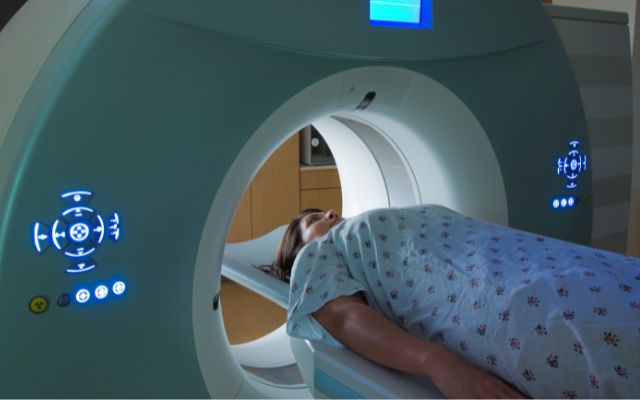
Image: © Mark Kostich / Adobe Stock
|
||
|
||
|
Patients at every cancer centre in Scotland have had their treatment delayed because of a shortage of specialist doctors with the skills to interpret scans and manage cancer. Workforce data and survey responses from its members published today by the Royal College of Radiologists show that everywhere in Scotland has too few radiologists, with the shortage in the North of Scotland the worst of any region in the UK.
The Royal College of Radiologists (RCR), the professional body for radiologists and clinical oncologists, says the picture is one of ‘dangerous delays’ to diagnosis and treatment of cancer and other serious conditions.
The College is calling for urgent action to boost the workforce so that patients ‘do not suffer as demand rises’.
The RCR is publishing workforce censuses today for clinical radiology and clinical oncology based on survey responses from every cancer centre.
Six in 10 radiology and cancer service leaders reported that staff shortages are causing patients’ conditions to worsen and are driving delays to diagnosis and treatment of cancer and other serious conditions.
They cite a study showing delays in diagnosis and initiating treatment can worsen health outcomes – particularly for people with cancer, where every month’s delay to starting treatment can increase the risk of death by around 10%.
Scotland’s new health secretary says she recognises the pressures facing cancer services and is promising a national NHS workforce plan.
The RCR defines clinical radiologists as specialist doctors who are experts in interpreting medical imaging including CT and MRI scans, and delivering image-guided minimally invasive procedures, including stroke treatment. Clinical oncologists are described as specialist doctors who manage cancer by prescribing, planning and overseeing the delivery of drug-based treatments such as chemotherapy and radiotherapy.
One cancer centre leader told the census:
“[Staff shortages are causing] delays in patients starting both chemotherapy and radiotherapy treatment.”
Another stated:
“Workforce shortages in diagnostics, especially radiology and pathology, are critical and lengthening pathways which is leading to patient harm.”
Meanwhile a clinical director for a radiology reported:
“Significant delays in [scan] acquisition and reporting of a wide range of patients have negatively impacted prognosis, potential treatment options and resulted in harm.”
The RCR says all regions of Scotland have vacancies in clinical radiology and oncology, the gap being smallest in the South East of Scotland and greatest in the North of Scotland where there are only half the number of radiologists that are needed.
The college says this is being exacerbated by the fact that many clinicians are expected to retire soon – one respondent told the census that 20% of clinical oncology consultants at their cancer centre are due to retire in the next two years.
Over the past five years, the average age for clinical radiologists on retirement was 49 years while clinical oncologists on average retired at 52 years.
Dr Stephen Harden, President of the Royal College of Radiologists says alarm bells are ringing:
“For the first time, our census shows that patients’ conditions are deteriorating because of workforce shortages. Delays to diagnosis and cancer treatment are extremely dangerous, particularly in deprived and rural communities where shortages are worst.
“Despite our members’ extraordinary efforts, we simply don’t have enough clinical radiologists and clinical oncologists to meet rising demand. Recruitment freezes and growing reliance on outsourcing are making the situation worse not better.
“Alarm bells should be ringing for governments across the UK. Without urgent action to train, recruit and retain more doctors, more patients will suffer.”
Plugging the gap
Already this month, the Royal Collage of General Practitioners and the Royal College of Nursing have repeated their calls for the Scottish government to prioritise the publication of an effective workforce strategy to attract, train and retain staff.
The RCR says that instead of ‘haemorrhaging money on short-term fixes’, the Scottish government should create new permanent consultant and training posts for radiologists and clinical oncologists.
It says last year Scotland spent a record £21 million on temporary solutions to fill the radiology workforce gap, which it says would have been enough to pay 179 radiology consultants’ salaries – more than the total shortfall of 149 consultants in Scotland.
The RCR calculates that training 10% more radiologists a year would save NHS Scotland £10 million after ten years.
In common with the Royal College of General Practitioners in Scotland, the RCR says government must count, and allocate training places, by whole time equivalent (WTE) rather than by headcount. They say that, if a trainee who works part-time were to be counted as 0.6 WTE instead of 1 training post, the remaining 0.4 WTE funding could be reallocated to another trainee, providing more training posts with the same amount of funding.
Workforce plan promised
In a statement, the new Cabinet Secretary for Health and Care, Angela Constance said:
“Whilst we are treating more patients with cancer on time within both standards compared to 10 years ago, I recognise oncology services are continuing to face pressure.
“We will be developing a national workforce plan with the NHS and in the meantime we have seen an increase in consultant oncologists and consultant radiologists in recent years. We are also investing up to £10.5 million per year by 2027 in chemotherapy and oncology services to ensure we build a sustainable workforce.
“The number of diagnostic tests being carried out has increased and we will continue to make progress to ensure patients get the right care, in the right place as quickly as possible.”
Read more: New NHS staff data makes case for workforce plan; Nursing pressures creating high risk of harm; Early career help for Scottish GPs; Pressures on psychiatry leaving posts unfilled
Sign up to receive our bulletin for key health & social care updates straight to your inbox. Tags: Cancer; Diagnostics; Staffing & Workforce. |