|
Fears diabetes tech rollout is about to stall |
Related newsScottish health research collaboration extended Health Secretary commits to kidney action First phase of obesity meds to prioritise highest BMIs New service to bolster Scotland’s health research NHS dentistry "challenging but not totally broken" Adopting innovation can be ‘Once for Scotland’ 
|
|
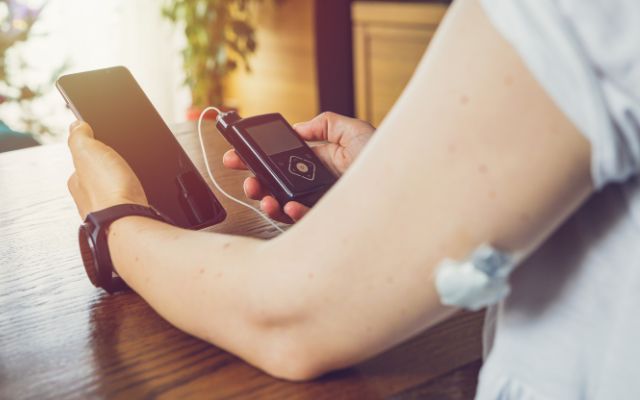
Image: © lukszczepanski / Adobe Stock
|
||
|
||
|
A move to end central funding for life changing diabetes technologies, adding it instead to the annual budgets of Scotland's NHS boards, is being described as devastating by a campaign group, while a medical Royal College says it could leave thousands of Scots unable to access technologies that could improve both the quality and length of their lives.
The Royal College of Physicians of Edinburgh (RCPE) says advanced diabetes technologies, including insulin pump therapy and hybrid closed-loop systems, are transforming the lives of people living with Type 1 diabetes and have the potential to significantly reduce the risk of health complications such as kidney failure and sight loss.
Despite growing momentum created by a ringfenced national funding, the RCPE says only 25% of adults with Type 1 diabetes are currently funded to receive these technologies, with people waiting several years.
At the beginning of this month the national programme that had seen the Scottish government invest £8.8 million in 2024-25 to support some 2,100 people to received technologies such as so-called ‘closed loop’ systems – combining automatic monitoring with a reactive insulin pump – came to an end.
The Scottish government says more than three quarters (77%) of those who benefited that year were people under the age of 18 with type I diabetes.
The government says in the financial year just ended, the programme paid health boards a total of £14.4 million, nearly £7 million of which was to support 2,500 more people to receive the technology.
But the RCPE says it is been told that funding from now is to be wrapped into the overall budget for NHS boards which, given the significant financial pressure on boards, the College says could risk the money being spent elsewhere.
Massive backward step
Scottish-based diabetes technology campaigning and information group, IPAG Scotland says a UK wide consensus that everything should be done to provide innovative equipment to people with type I diabetes who will benefit from it, will be undermined by the change in the funding model.
Founder member, Mary Moody told healthandcare.scot:
“This is devastating news.
“IPAG Scotland has been campaigning for increased access to diabetes tech for the last 18 years. Now that the centralised funding appears to have ended, we are extremely worried and outraged that, with no ring-fencing, fewer people will have access to this life-changing technology.
“Waiting lists are excessively long in some health board areas with some predicted waits as long as 10 years.
“People have already told us that their appointments have been cancelled and are very upset and anxious.
“This is a massive backward step for people with this serious condition. We all want to have the best possible treatment available so we can lead happy, healthy and productive lives.
“Despite the centralised funding model, a postcode lottery still exists, and this will only worsen now.
“Decision makers don’t understand the burden of life for people with a 24/7 condition like type 1 diabetes, their carers and families.”
In 2022, the Scottish Health Technologies Group published a recommendation to NHS Scotland stating:
To minimise inequalities in accessing diabetes technologies, clinicians should pro-actively initiate meaningful discussions with all patients with type 1 diabetes about the suitability of a closed loop system for their individual circumstances.
This was followed in March 2024 by SIGN 170, a clinical reference guide for the management of type 1 diabetes published by the Scottish Intercollegiate Guideline Network after a lengthy review of published evidence.
“Both of these recommendations provide explicit reasons for the adoption of technological solutions for managing Type 1 diabetes,” says Mary Moody.
“Health boards are expected to follow guidelines, but this does not happen consistently. Our vision for the future has been compromised by this funding decision.
“We need a plan for the way forward, similar to the NHS England 5-year implementation strategy for diabetes tech in England, with expenditure tracked and targets set for each health board.
“We also need legislation which will require health authorities to implement technology appraisal findings in the same way as is applicable for NICE in England.”
National monitoring
The Royal College of Physicians of Edinburgh says, if there is to be no further central funding, the next Scottish government must set out clear national targets and timelines to ensure boards continue the roll-out, without which the RCPE says, there will be no way to measure progress or hold boards to account – suggesting that what it says is unacceptable variation in access across Scotland already, will persist or get worse.
Professor Mark Strachan, President of the Royal College of Physicians of Edinburgh and a diabetes consultant said:
“We know that technologies like insulin pumps and closed loop systems are not just innovative – they are life-changing. They help people live safer, healthier lives and reduce the risk of serious long-term complications such as kidney failure and blindness.
“The investment made by the Scottish government in recent years has been very welcome and has made an enormous difference. But with approximately only a quarter of people currently able to access these technologies, we cannot afford for progress to stall.
“If national funding is no longer expanding, then we urgently need clear targets and timelines so that health boards can deliver equitable access. Without that, variation will grow and too many people will be left behind.”
The RCPE says the issue reflects a wider challenge facing Scotland’s health system.
The College is repeating its call for a “national conversation” on the future of the NHS in its manifesto for the Holyrood elections, calling on politicians to be transparent with the public about the scale of the funding challenges faced by the NHS – and that ensuring fair and timely access to proven, life-improving technologies must be a central part of that discussion.
Due to the election, the Scottish government was unable to comment on the concerns being raised by the college and IPAG beyond confirming the amounts spent under the programme, which sits within the overall policy commitments of helping people manage their own care with access to high-quality treatment at the right time in the right place, adding that the 2026 to 2027 Scottish budget includes record funding of £17.6 billion for Scotland's NHS boards.
Read more: Heart failure being missed in diabetes patients; Parties must explain how they’ll save the NHS; Government boosts health innovation funding; Health and care in the Scottish budget (2025)
Sign up to receive our bulletin for key health & social care updates straight to your inbox. |