|
Health Secretary commits to kidney action |
Related newsAdoptees: the family void in our medical history College: Invest in digital transformation for GPs Childhood adversity health impacts felt at 50 revealed Charting Scotland’s future health and hospital demand How data insights will help deliver NHS reform Rapid cancer diagnostic network improves outcomes 
|
|

|
||
|
||
|
Scotland’s Health Secretary and Public Health Minister have pledged to work with the kidney community to ensure those at greatest risk of chronic kidney disease (CKD) are reached early.
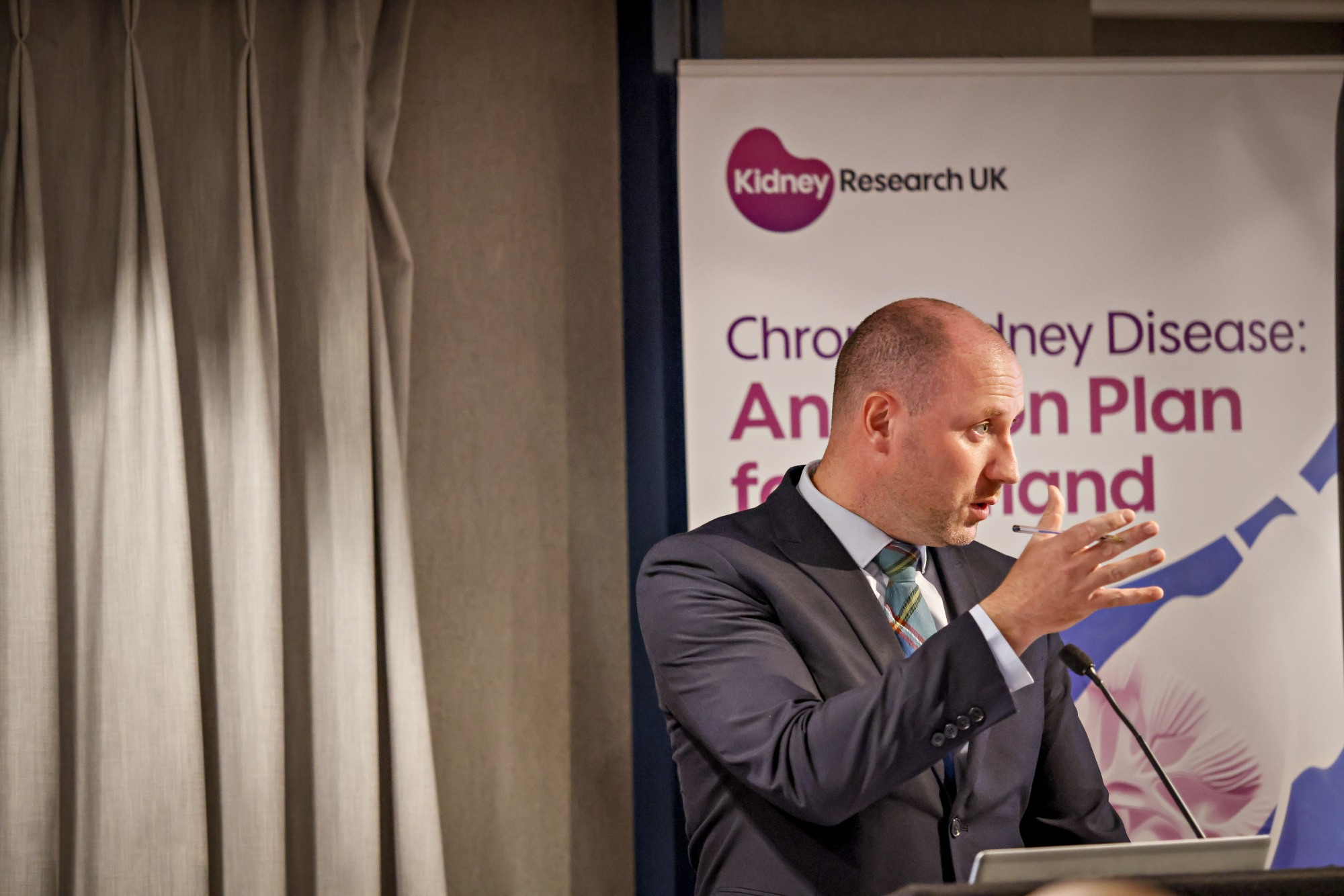
Speaking at what is thought to be Scotland’s first-ever summit on kidney health, Health Secretary Neil Gray said he is “united” with patients, clinicians and charity representatives in the need to improve the lives of people with CKD.
The summit heard that a lack of focus on prevention, early intervention and patient education within CKD means almost half of those with the condition are being diagnosed in the later stages of disease.
With treatment for one patient’s dialysis alone costing the NHS around £34,000 a year, the benefits of reaching people sooner were laid before the health ministers and spokespeople in attendance from Scotland’s other major political parties.
They heard that greater investment in data systems, digital tools and GP capacity could help tackle inequalities and save both patients’ lives and the NHS money.
Both the Health Secretary and Public Health Minister committed to engaging with kidney community around how Scotland can bring about specific changes needed for kidney disease.
Mr Gray said the government’s new population health and service renewal frameworks will make a difference – but committed to ensuring kidney health is high on the agenda, both now and after the election.
“I want to be delivering in government now and post-election on the areas we’ve spoken about.
“So delivering primary care investment, delivering additional data and support, delivering in terms of the diagnostic capacity going through the system – and that doesn’t require a manifesto.
“It’s incumbent on us in government, in society and the health service that we make sure we’re moving forward.”
Despite affecting around one in 10 Scots and costing NHS Scotland around £300m a year, kidney clinicians say CKD has been historically ignored in policy and NHS improvement work.
As many risk factors overlap with other conditions, Public Health Minister Jenni Minto said the government’s proposed long terms conditions framework could bring about real change in kidney care.
Ms Minto said ensuring GPs have the time to discuss risk factors like smoking, nutrition and physical activity is “incredibly important” and told the summit she will “certainly” be raising CKD in parliament moving forward.
An opportunity for Scotland to lead
As many of these cluster with work launched this year for GPs to lead a heart disease prevention scheme, the summit heard calls for this to be expanded to include kidney function testing.
Experts also told MSPs that the lack of data on people living with kidney disease in Scotland has held back progress.
Currently, the national Scottish Renal Registry only has information about the 6,000 or so people in receipt of a transplant or dialysis treatment for kidney failure.
There are around 600,000 people living with earlier stages of CKD who are being missed, meaning they cannot access the early monitoring, treatment and care they need to potentially slow progression of the disease.
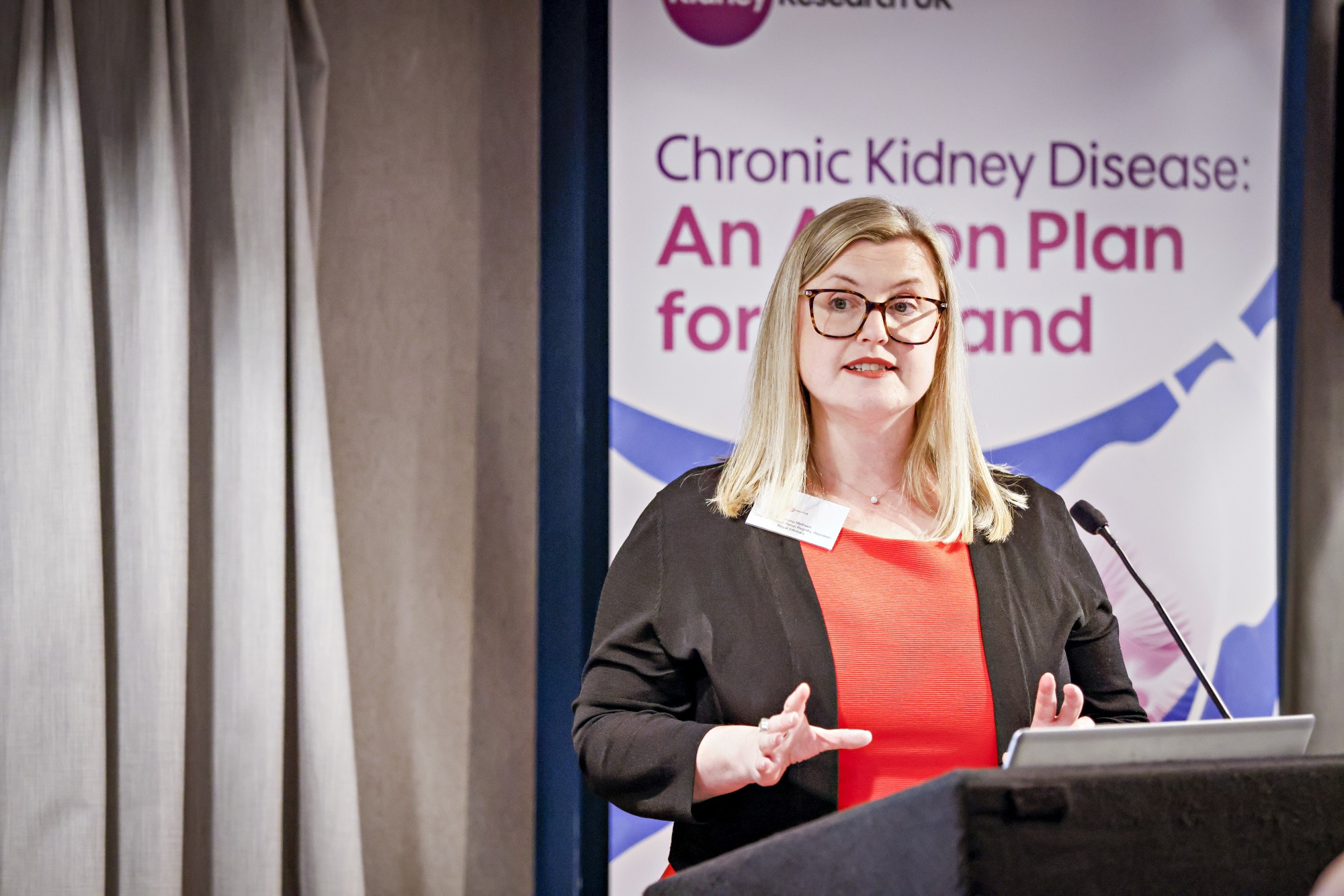
Chair of the Registry, Consultant Nephrologist Dr Shona Methven, explained if CKD diagnoses were recorded consistently and GP systems were upgraded, her team could better support early intervention efforts:
“It would help us recognise people suitable for novel treatments, identify health inequalities, and ultimately facilitate service-planning.”
The lack of early-CKD data is particularly stark, she explained, when compared to diabetes.
Primary and secondary care teams across Scotland have access to a fully integrated, real-time, electronic patient management system – SCI-Diabetes, Dr Methven said:
“At the touch of a button, the diabetes community can tell us how well the care for people with diabetes in their area is
“We’ve got nothing like this in kidney disease and if we did have something similar to SCI-Diabetes, we’d be able to increase the recognition of CKD, record those with a diagnosis, allow risk-stratification and ensure people are receiving appropriate monitoring and treatment.”
Dr Methven said with investment in the IT system and a relatively small funding to staff a kidney health data platform, Scotland could provide “world-leading” kidney care.
The Public Health Minister said as part of further engagement around long term conditions, the government will be looking into the potential of delivering SCI-CKD.
healthandcare.scot is pleased to be working in partnership with Kidney Research UK in Scotland through our communications consultancy, Ettrickburn.
Read more: Investigating inequalities in kidney care; Deprivation gap in cancer “unacceptable” says charity; Less than full-time – behind the NHS trend; Action needed on women’s brain health; We “cannot be complacent” on cancer rise; Charting Scotland's future health and hospital demand
Sign up to our bulletin for key health & social care updates straight to your inbox. |