|
Playing politics while social care support burns |
Related newsA timeline of Scotland’s National Care Service Review: More social care staff should be regulated Social care wage settlement branded ‘derisory’ National Care Service cannot be ’mini-NHS’ Sceptical response to government’s care proposals Scotland’s IJBs becoming "financially unsustainable" 
|
|
|
||
|
||
|
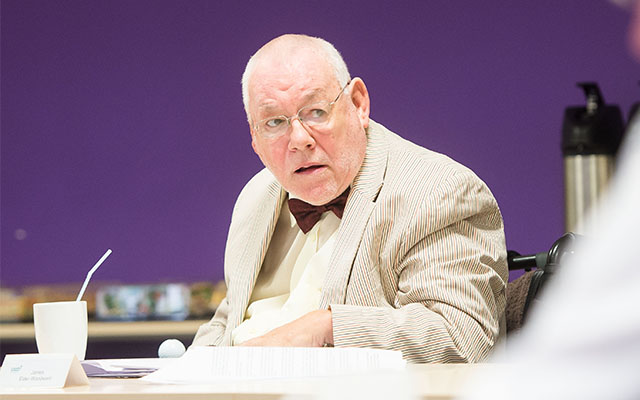
Politicians and trade unions wrestled over the National Care Service Bill until there was nothing left to fight for, according to disabled activist Dr Jim Elder-Woodward OBE writes for healthandcare.scot of the betrayal felt by those who have given years to shape social care reform, only to see their voices ignored and their hopes discarded.
With trust in the system shattered and no clear path forward, Dr Elder-Woodward says the Scottish Independent Living Coalition are now actively considering whether to engage with those it holds responsible – until such a time they make a genuine commitment to meaningful change.
There is some debate over whether Nero played his fiddle whilst Rome burned; and whether that showed concern over the plight of his citizens. However, that charge may now be placed in front of the politicians and trade unionists, who have played politics over the National Care Service, whilst the actual service burns itself into oblivion, leaving the citizens they serve to live in purgatory – sightless of the gates of heaven
In November 2024, SILC (Scottish Independent Living Coalition), comprising the leaders of the Disabled People’s Movement in Scotland (the Movement) wrote an open letter, urging politicians and organisations opposing the National Care Service Bill to listen to people with lived experience of receiving social care support.
It was hoped their power-thirsty opposition to the Bill might be blunted by the horrendous experiences of those in receipt of the present system.
Not only have SILC’s pleas been ignored, but their expressed views on the need for reform have been cast aside, by both bodies, with nothing meaningful ever offered as an alternative.
At that time, SILC had been in the process of arranging a meeting with COSLA to discuss their concerns about the changes to the Bill following COSLA’s decision, alongside that of trade unions and the Scottish Greens, to withdraw their support of the Bill.
Following the recent decisions to scrap Part 1 of the Bill, in the New Year, the Movement, and its membership were incredibly disheartened that their voices had been discarded yet again.
Disabled people, their leaders and supporters, from across communities and representative organisations in Scotland have spent so much time and energy in this co-design process.
This has included emotional investment in relation to the need for structural reform. Hours and hours have been spent with other stakeholders developing what was going to be a structure, based on the principles of human rights and centred on the needs and views of those in receipt of social care support.
Now all of that is in danger of being lost, as there is no indication that COSLA and the trade unions will agree to anything.
And there’s the rub! Both have shown so little concern for those they serve, that the trust in them and their ways has disappeared.
Both must learn from Professor Onora O’Neil of Cambridge University that for organisations to be trusted, they must show themselves to be trustworthy.
That has definitely NOT been the case here.
COSLA and the trade unions have shown more concern about their power and prestige, than the quality of life of those they serve.
They have also driven a horse and cart through the co-design process, such that there is now little trust in any forthcoming co-design events.
SILC, alongside the many Disabled People’s Organisations throughout Scotland, are now considering the relevance of their contribution to this process, given that their views have been dismissed.
This is despite what had been said: the central place, within this new service, would be that of those with lived experience of receiving such a service.
Members of the Movement are devastated. Some were drawn to tears when they heard that Part 1 of the Bill had been scrapped.
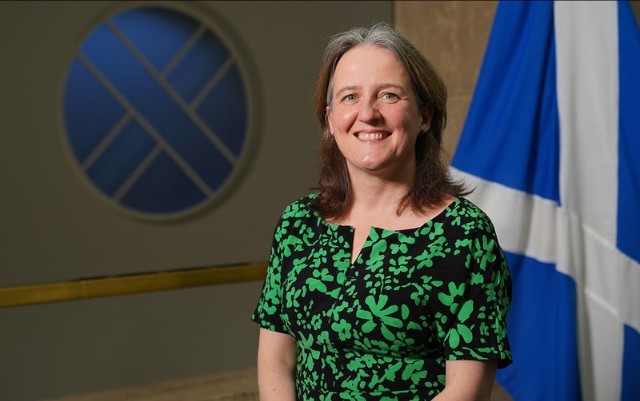
In her statement to parliament, the Minister for Social Care, Mental Wellbeing and Sport, Ms Maree Todd, said:
“Despite the best efforts of many, our social care system is not delivering the care and support that people require to live and thrive. There is an overwhelming need for change now.”
SILC agrees with this statement. The social care support system needs to be reformed.
SILC firmly believes that social care and support staff should be paid £15 per hour – now! That there should be equity in conditions of employment between social care support staff and personal assistants.
So, there is support from the Movement of the trade union position, but that support has definitely not been reciprocated.
However, investment alone would only take us so far, as the current structure, culture and practices in social care support are unable to support or uphold human rights.
There needs to be an immediate focus on human rights-based, alongside relationship-based practice.
Gone should be the Resource Allocation System and social workers acting as gatekeepers to the goods disabled people need to activate their citizenship.
Gone should be the compartmentalism of “time and task” intervention, in favour of 'outcome focused' provision.
Gone should be people having to sit in their wheelchair all day; sitting in urine soaked and stool laden pads, waiting for someone to come and change them in the evening; leading to social isolation due to loss of dignity and shame to enter public spaces.
Gone should be inconsistent services and care charges across Scotland. In fact, gone should be care charges.
There are so many questions to be asked, now that there will only be an ‘advisory board’ to oversee social care support in Scotland. We know, as with guidance papers, advisory notes may just be ignored; and local authorities will carry on in their same disjointed, dysfunctional, dehumanising way. And we do know, there is absolutely no evidential proof that social care support is best controlled by local authorities.
Over the past two and a half years of co-designing the National Care Service, COSLA and local authorities have taken no measures to improve local services.
They have not even acknowledged the research, which has shown the amount of harm and neglect their neoliberal management (where the pound comes before the need) of social care support has inflicted on service users. Finally, they have made no attempt to explain to the Movement, or any other group of people, why they oppose a National Care Service.
The Social Work (Scotland) Act, of 1968 created Social Work Departments throughout Scotland.
Childcare, adult and elderly care, mental health services, blind and deaf services, as well as probation and care inspection, were united into one body.
Throughout the nineties and noughties, probationary services and care inspection have been nationalised, without much opposition from local authorities. So, why the rumpus now? Is it one service too far? Are local authorities just digging in their heels, to protect their own power-base? Why do we need to be confined to the Poor Law of 1599, which stated paupers need to return to the parish where they were born, to receive Parish Relief?
Disabled people are still living in crisis, whilst politicians and trade unions argue over who should have the power over the social care support they so desperately need.
The Independent Review of Adult Social Care described social care support as an investment in Scotland’s people, culture and economy.
Indeed, two research reports, one in Northern Ireland and another in Scotland, have shown that for every £1 the Independent Living Fund in Scotland spent there was a return of £13 in terms of social improvement, not just for the person getting the funds, but their families and surrounding community, within which they were able to contribute.
So, social care support, especially in terms of independent living should be considered as a springboard to accessing choices and rights, which is necessary for exercising citizenship, and the growth of community inclusion and cohesion.
In view of the demise of the National Care Service, SILC has decided to delay speaking to COSLA, until such time as it provides details of its plans to work in a constructive and propitious manner with the Scottish government, and those with the lived experience of receiving social care support, to improve the current deplorable delivery of service provision across Scotland.
Dr Jim Elder-Woodward OBE is the independent chair of the Scottish Independent Living Coalition.
The views of columnists and people who write guest insights articles are their own.
Read more from Dr Jim Elder-Woodward: Council care failures echo Shakespearean tragedy; Ready to fail - or already failed?; Where is lived experience in care regulation review?; £153 a week for bread and jam; The right to have needs met by the NCS; A rebuttal to NCS discontents; Don’t let ILF wither on the vine
Sign up to our bulletin for key health & social care updates straight to your inbox. |