|
National Care Service cannot be ’mini-NHS’ |
Related newsSocial care wage settlement branded ‘derisory’ National Care Service Forum 2025 Playing politics while social care support burns Smart houses ‘paving way’ for independent living A timeline of Scotland’s National Care Service Nurses call for care service bill to be abandoned 
|
|
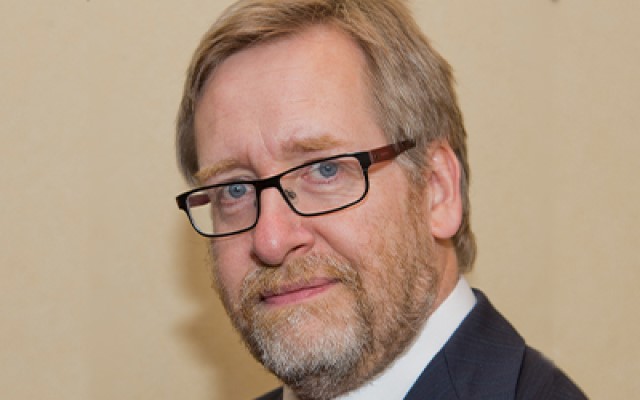
Dr Donald Macaskill
|
||
|
||
|
The chief executive of the organisation representing the independent care sector says it is crucial that relationship building and connection are not lost within social care as Scotland moves to create its national care service.
At an online event hosted by GCVS, Dr Donald Macaskill told attendees from the third sector that he is concerned that the Scottish government’s framework legislation to create a national care service is starting from the wrong place:
“The social has to be reinvested into the national care service.
“I don't want a national care service. I want a national social care service and to bite all the defence of senior government officials that say this is social care when this is not social care.
“What I read and what I see is not social care. It is a mini version of the National Health Service.”
The legislation will set up a network of care boards, which will be responsible for delivering social care locally. Dr Macaskill says the omission of ‘social’ from their title is a worrying sign of what is to come.
“I want to argue that care is not the same as social care and social care is more than simply care,” he continued.
“Social care is so important because it is social, it is connectedness, citizenship, discovering abilities and celebrating diversity.”
A recent BBC documentary showed some people with learning disabilities and autism have been locked away in secure hospitals and psychiatric wards for decades, with their families struggling to return them back to their communities.
Dr Macaskill says that there is a fundamental bias against those benefiting from social care support services, and that adults with learning disabilities are deprived of being able to live their lives freely as they are instead treated as children.
Dr Macaskill says:
“For me social care is about connection and relationship, about belonging and being, independence and community. It is for me, something which is profoundly about enabling people to be and become fully human to realise their potential and to flourish until the last gasps of living and loving.”
A report commissioned by Enable showed the sector contributes more than £5.1bn Gross Value Added (GVA) to the country’s economy and supports some 300,000 jobs.
The report also showed that that social care’s direct economic impact is more than £3.3bn GVA and its indirect economic impact, through supply chains and supporting industries, contributes £800m
Despite this evidence, Dr Macaskill says politicians still fail to recognise the economic value of social care in Scotland and have excluded the sector from the government’s national economic strategy.
Another key issue facing social care is understaffing, with social care workers left without appropriate staffing and worrying about who is going to cover shifts each night. Both workers and people receiving care feel the burden, according to the Scottish Care chief executive.
At the end of last year, funding was not increased to implement safe staffing rules in the health service.
However Scottish ministers have recently announced a 21-month programme of work, which will see the Health and Care (Staffing) (Scotland) Act in full force by April 2024.
Dr Macaskill says people who work in social care and who rely on services continue to face an extremely challenging outlook:
“A lot of people who use social care supports, and a lot of people who work in social care, they're drowning, they have very little capacity or time or space to imagine better, and to do differently. And the whole system doesn't help to give them that space and reflection that you know, in which they can do that.”
Read more: National Outcome on Care campaign gains momentum; Unpaid carers invited to have their say; £500,000 scheme helps thousands of new carers
Sign up to our bulletin for key health & social care updates straight to your inbox
|
