|
New collaboration to tackle health inequalities |
Related newsGPs are the solution to NHS crisis, says College Unmet need in Scotland’s drug crisis revealed NHS saves £82m a year through outdoor spaces Call for ‘urgent’ review of ADHD and autism services Health and care in the Scottish budget PHS: Poor transport is widening health gaps MSPs’ ‘huge concerns’ over Scotland’s medicines system Insight: Care workers should not be commodities Insight: An unequal integration? Care staff still paid per minute despite pandemic Podcast: Councils play key role in health and care Councils justify paying themselves higher care rates 
|
|

|
||
|
||
|
Public Health Scotland, a London university and the councils and NHS boards in three areas of Scotland are to join forces to address the inequalities that are depriving some Scots of a decade of their lives.
Life expectancy in Scotland is lower than in any other country in western Europe, with those in the poorest areas dying a decade before their neighbours in the wealthiest areas.
The new collaboration wants to bring local insights and national expertise together with a “determined focus” to improve long-term health outcomes.
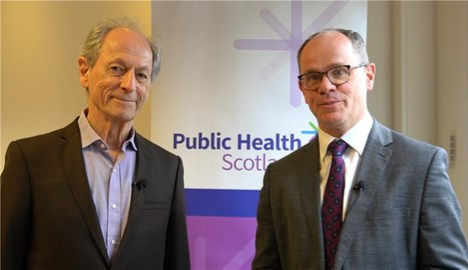
Public Health Scotland (PHS) will coordinate the so-called Collaboration for Health Equity in Scotland, joining forces with University College London’s Institute of Health Equity.
The councils and health and social care partnerships for Aberdeen City, North Ayrshire and South Lanarkshire, will help researchers better understand Scotland’s health inequality landscape, areas of progress and what still needs to be done for those whose outcomes are worst.
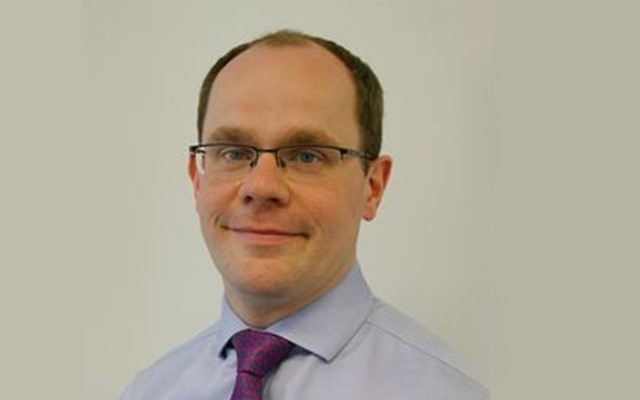
Paul Johnston, Chief Executive at PHS says the voices and experiences of health and care professionals and organisations in the three areas will be vital, adding:
“If we are to address the stark inequalities that exist in Scotland and create conditions in which people can thrive in their communities, we need to bring together partners across the whole system – the public, private and voluntary sector.
“We’re looking forward to working and learning together with a determined focus to see improvement in Scotland’s long-term health outcomes.”
This follows voluntary health leaders calls for the government to implement solutions that would shift the sector from one of crisis to essential partners.
The PHS and Institute of Health Equity (IHE) teams will collect and analyse data from local areas to provide strategic advice and coaching, to investigate how factors such as where people are born, grow, live, work and age, can shift from causing ill health and lower life expectancy to creating good health.
Director of IHE, Professor Sir Michael Marmot is the author of major reviews of health inequalities for governments in the UK and spearheaded the WHO Commission on Social Determinants of Health.
Professor Marmot says that national action plans must go hand in hand with action at a local and community level:
“Most of our health is determined by the conditions in which we are born, grow, live, work and age (social determinants of health).
“National action that improves people’s living, learning and working conditions, such as housing, education and employment, needs to be combined with local action to ensure policies are applicable to local communities.
“By drawing on the data that both the IHE and PHS hold on the drivers of health inequalities and applying the learning we have gained from working in places like Coventry and Hull, we can support local partners to develop policies and actions that work locally.”
Earlier this year researchers at the Scottish Health Equity Research Unit called on policy leaders to move beyond rhetoric to tackle inequities, revealing that Scotland lacks the transparency and data needed to see how effective policies are at improving health inequalities.
PHS says Professor Marmot and IHE, with a proven track record of working with more than 50 local authorities, the NHS, businesses and voluntary sector, are ‘ideally placed to work with us to tackle these inequalities’.
In Coventry, for example, since becoming a ‘Marmot City’ through the work of IHE, there has been an increase in life expectancy by six months.
Alongside strategic advisory work, PHS is developing a national Learning System for all local authorities across Scotland providing learnings on ‘what is and isn’t working’ to improve health and tackle inequalities.
By next spring, the collaboration says it will report on the data analysis of Scotland’s current health inequity system.
It commits to produce two further reports in 2026, one focused on the three local areas and a final report summarising recommendations, short- and medium-term implementation plans for local and national organisations.
Read more: Charities urge action on poverty’s toll on lung health; ‘Unprecedented’ crisis in community health and care; Public health leaders call for ‘systemic change’; Austerity policy harm to newborns laid bare; Medics warn pollution is risking children’s health; Watchdog: shift from crisis model for alcohol & drugs; Social inequalities worsen health for LGBT+
|