|
Podcast: Councils play key role in health and care |
Related newsFM candidates asked if they care about care Ministers launch ‘more to care’ campaign Councils justify paying themselves higher care rates Health and charity leaders join forces for NHS reform Fixing social care funding must be council “priority” Government ‘lacks urgency’ on care reforms MSPs’ ‘huge concerns’ over Scotland’s medicines system Insight: Care workers should not be commodities Insight: An unequal integration? Care staff still paid per minute despite pandemic Councils justify paying themselves higher care rates Councils confident social care is resilient 
|
|
|
||
|
||
|
The national health and social care lead for Scotland’s local authorities says he is encouraged by the closer working of health and social care teams as a result of integration.
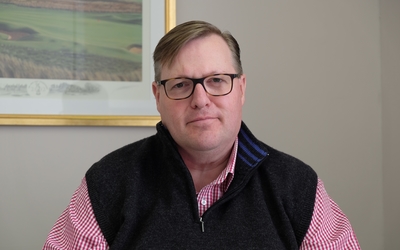
Speaking to healthandcare.scot, the health and social care spokesperson for the local government organisation COSLA, Councillor Stuart Currie, says tensions over budget timetables and different cultures are being resolved as partnership working beds in.
On the issue of commissioning of social care services, Councillor Currie says there is a strong rationale behind paying third and independent sector providers less than councils pay themselves for delivering services, suggesting councils would do all the work in-house if they weren’t able to get better terms from outside providers.
In his interview, Councillor Currie says important steps are being taken to deliver real integration of health and social care, and to close the budget-setting timing gap between when councils and NHS boards announce their funds for integration joint boards.
He also welcomes the role local authorities are to play in the new Public Health Scotland organisation.
A full transcript of the conversation is below.
healthandcare.scot's John Macgill, started by asking whether integration of health and social care is working from the perspective of local authorities across Scotland?
https://anchor.fm/podcast-b65d8c0/episodes/Stuart-Currie-Interview-ebhs14
Transcript
healthandcare.scot (hacs) Do you think that integration of health and social care is working from the perspective of local authorities across Scotland?
Stuart Currie (SC) I think it is and the reason why I know that is, as someone who has been on shadow boards and boards, people are talking and working together at a local level in a way that hasn’t happened in the past. What used to happen, many years ago, was that the health board would pitch up for a meeting with the council and everybody would tell each other why it was everybody’s responsibility to deal with the issues. Actually, now it is the same people in the same room having a joint responsibility, accepting a joint responsibility to deal with those issues. That is night and day. So it’s not about blaming people, it’s about resolving issues. That’s been really welcome. And we are seeing more and more services being repatriated from centres into local areas and then the local joint board being able to have a good discussion about those – and in public as well.
hacs: How tough is it for local authorities to deliver the service they would wish to be delivering, to communities?
SC: It has always been a challenge. People always tell me there was some period of time where there were no challenges. I was elected in 2007 and at that point the budget in my own authority, in East Lothian, was £27 million for adult social care and now is in excess of £50 million. So there have always been challenges around that: challenges around care, around young people and adults with disability. I think what the difference is, is that people are now in the same room discussing those challenges and how they resolve them instead of just saying ‘it is your fault’. That is a key issue about integration.
hacs: How would you characterise that relationship then between the councils and their local NHS boards?
SC: I think it is improving. I am not sure we are 100% there as yet. I think that would be the case, if you spoke to somebody in a health board or you spoke to someone in a local authority. I think what is key again is that people are able to discuss where there are issues of concern. Obviously you have two different cultures. You have a health culture and a local authority culture. But I think, as time goes by, we are getting to the point where people aren’t wearing different lanyards anymore with their ID badges. We are working in the same place, in the same job and, over time, it should be possible at some point to walk into an office and not know whether someone works for health or the local authority – we are all working for the partnership.
hacs: Can you improve the process of setting the budgets for integrated joint boards particularly, where the money is coming from two pots and the timelines for each setting their budget are not in sync?
SC: Funnily enough we actually had made some progress on that up until the budget being delayed. Last year we had made some progress. It used to be the case that local authorities would pretty much set their budgets in February each year and then the offer to the health and social care partnership would come a few weeks later; then what would happen would be, in June, that the health board would set its budget and it was disjointed. Last year that improved dramatically and was set to improve even more this year to get the point that it was pretty similar in terms of the offer coming through from each of the partners. The delay in the budget caused an issue this year but progress has been made and we will get to a point where the offer is coming from the health board and the local authority are pretty much the same time. The NHS now they have the medium-term financial framework which should allow them to do that. Instead of it being year-to-year, they can cast it over three years.
hacs: And would you hope the same could be done for IJBs?
SC: Yes. Most local authorities, even though they get one year figures, they do set indicative budgets for years two and year three so there should be no reason why both from a health board point of view and also local authority point of view. I accept that you get one year figures from government then you can only have absolute certainty over year one, but I have to say most of multi-year budgets, by the time you get year two, it doesn’t look much like the year two that you set 12 months previously. Things change as you go along, but I should be possible to at least give that indicative budget and that will really help IJBs to plan ahead with some a transformational change.
hacs: We are hearing repeatedly of a tension between the independent and third sector providers of social care and the local authorities, that those councils that have their own facilities and their own staff are paying a different and higher rate than they are willing to pay their contractors and providers. Is there room to meet in the middle because we do hear that some providers are finding it pretty tough?
SC: I think that is the case. But there are ongoing discussions. For example, the government has invested tens of millions of pounds to ensure that the living wage can be paid to the third and independent sector. There are some issues around that. There are some discussions going on around that. We are having a continual dialogue with Scottish Care and CCPS, a whole range of organisations, to ensure that, where there are issues, we talk about them. We don’t want people handing back contracts or saying that they cannot manage a contract, particularly in rural areas, because then what happens: the council has to come along and fulfil that need. So there are sometimes some discussions. Sometimes that happens at a local level around commissioning services and also there is ongoing dialogue at a national level and we welcome that. And it is not just COSLA and the sector, it is COSLA, the sector and government – a tripartite arrangement having a discussion around some of those issues.
hacs: What is the rationale for paying less to an independent provider and you pay to your own team?
SC: You have to remember that the terms and conditions for staff in councils is something that are built up over decades. It’s not just about pay, it’s about pensions, it’s about job training, it’s about development, it’s about job opportunities, about advancement. These are things that have been built up over decades in local authorities. Obviously, the issue in terms of the third and independent sectors is that the services are commissioned. Now, I know there is concern about ‘how can you have a competitive market when you are dealing with care’ but there’s not that many providers that come forward. There’re not 20 or 30 providers who come forward every contract. Sometimes it’s a very small number. But the rationale is you have a budget and you commission services. There is ongoing dialogue about, for example, how much an hour should be paid for a part of a contract. That’s not the amount that is paid to the individual who is delivering the service – that is why there has been support from government around the living wage. I understand those issues but, what you can’t have, people talk about coproduction, that is a phrase that comes up quite a lot, the local authority is unlikely to pay the exact terms and conditions for their own staff to people they commission services to because, if that was the case, then you would be as well doing it yourself. It’s not about the incentive, it’s about saying why would you take chance of going out to tender all the time, you would just do more of it in-house. Now, I know there are some local authorities doing more and more work in house and sometimes that is on the back of contractors handed back contracts that they can’t fulfil. There is always going to be this mixed economy, there always has been. Same as in the care home sector, there has always been this mixed economy of local authority homes and private providers.
hacs: Do you think that the mixed economy, from your own experience in East Lothian, is a good thing, that it enriches the mix?
SC: I think it does that because people come with different ideas and different views of how to deliver services. There are providers in East Lothian who have been around for decades who are pretty much a social enterprise. They were paying the living wage long before someone came along and said you need to pay the living wage. But the upside for them is that they’ve been able to retain their staff. They have not had as high a turnover, therefore had the benefit of investing in their staff. Some providers, I know for example their SVQs are at a higher level than is the requirement. So I think it is quite healthy to have that mixture because have different ideas and we can learn from each other. Local authorities do not have a monopoly on wisdom. I think it’s important that, where people have good ideas, providers delivering care on the ground, we can learn from that we can work with people and It is helpful to have a mixed economy. But that is not for every local authority. Some local authorities go heavily in-house and some local authorities it’s almost entirely outwith the local authority in terms of staffing. That’s a decision for local authorities. In some areas, it depends on wage levels and availability of staff, capacity.
hacs: We are almost on the eve of the new Public Health Scotland coming into being. What has been the role, and what will be the role, of local authorities in this new organisation?
SC: The huge change of course in public health Scotland, apart from that we are having public health Scotland, is the joint nature of accountability, where I am working very well with Joe Fitzpatrick who is the minister for public health. We take very seriously our joint approach. The sponsorship teams are joint sponsorship teams from COSLA and the Scottish government in terms of working with people in Public Health Scotland, or ‘to be’ Public Health Scotland. I think that’s the big difference. I’ve been to meetings with public health directors who will say ‘what are all these people in local government going to do?’ and I speak to people in local government who say ‘what will all these public health people going to do?’ but, actually, working together is absolutely the way forward. I think that is a different, I think it will bring it bring people together in the same room talking about public health. Talking about more than just what we are talking about at the moment – public health, pandemics and viruses – but talking about life expectancy, poverty and inequality. And the big change, in my experience so far, is the fact that, in all the discussions that we have about things like appointments, how the board is made up, local authorities are jointly, and get equal billing, at the table with the government and that’s really important. |
