|
UK care plans chance to learn from Scotland |
Related newsNew social care minister appointed Health and charity leaders join forces for NHS reform Holyrood passes Care Reform Bill Fixing social care funding must be council “priority” Delivery of dementia vision moves forward 
|
|
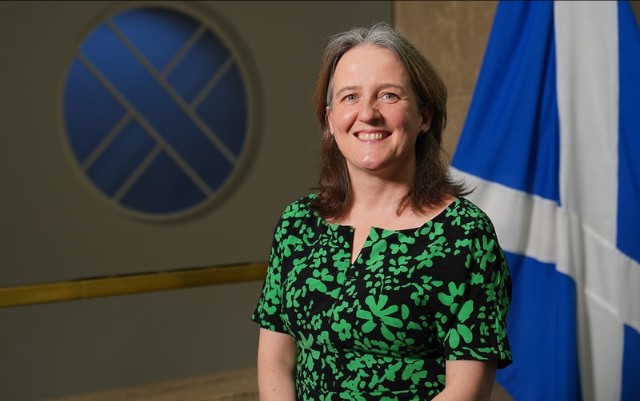
Image Credit: © Scottish government
|
||
|
||
|
Scotland’s Social Care and Mental Wellbeing Minister has told her UK government counterpart that his department could learn from the ‘good progress’ being made within sectoral bargaining in Scotland as he publishes plans for a negotiating body in social care.
Alongside protecting family leave and fair pay, the UK government’s Employment Rights Bill proposes the creation of a new body to negotiate pay and employment contracts for social care workers in England and Wales.
In a letter to the UK’s Minister of State for Health and Social Care, Maree Todd says she has asked her officials to consider how these proposals could work in Scotland.
She adds that she is keen to collaborate on the policy which seems to align well with Scotland’s ‘long-standing commitment’ to enhancing the experience of the social care workforce.
However, Ms Todd also outlines the ongoing work of the Scottish government and COSLA’s Fair Work in Social Care Group.
She writes that this group is ‘making good progress’ on developing a sectoral bargaining arrangement for social care workers as well as developing an understanding of the complex landscape’ for applying Fair Work principles.
Ms Todd has also written to the Chair of the Fair Work in Social Care group ‘seeking initial views’ from the group – adding that she would like to avoid the group’s work being ‘undermined’ in any way by the new proposals.
Fair Work is underpinned by ensuring work offers effective voice, opportunity, security, fulfilment and respect; balances the rights and responsibilities of employers and workers – and that benefits individuals, organisations and society.
Within Westminster’s new proposals, it recognises Scotland’s commitment to these principles for social care, highlighting the rise in adult social care workers pay this year – which has since been secured by children’s care workers.
However, leaders in the sector have called on the Scottish government to step up for social care and start delivering for the social care workforce which has been ‘beyond crisis’ for sometime.
The UK’s planned fair pay agreement for adult social care is likely to increase costs to local authorities and those funding their own care – but the overall cost to social care employers is currently uncertain.
In her letter, Ms Todd emphasises the need to avoid creating issues or repeating the ‘extensive work’ underway in Scotland:
‘It will be important for the work yet to be undertaken to set up a negotiating body not to duplicate or create inadvertent gaps or other issues with the activity that is well underway here in Scotland – understanding and contributing to the detail of how such a body might work for Scotland, as well as other parts of the UK, will be key to our considerations of seeking to extend the provisions in the bill to our jurisdiction.’
However, she has added that she fundamentally sees the Bill as an ‘excellent opportunity’ to break down barriers and lead positive change for social care workers and organisations across Scotland.
The minister writes that this opportunity to engage must extend to union representatives and providers:
‘I look forward to engaging constructively and meaningfully around what are shared policy goals, I also want to emphasise my clear view on the need for the active participation of key partners including local government, union representatives, providers and other stakeholders in this process.’
The new rights are proposed to come into force in autumn 2026.
Read more: Care management ‘on its knees'; Health and care workforce to be bolstered over winter; Feeley: Social care change can happen now; Carers leave a stepping stone, says minister; Neil Gray: “My door is open”
|