|
Charity: ‘Asthma care is in crisis’ |
Related newsHealth and charity leaders join forces for NHS reform Greener NHS research funding boost All public bodies must focus on health, urges charity Charting Scotland’s future health and hospital demand Probe into future of NHS Scotland’s doctors underway Health and care in the Scottish budget Treatment-resistant cancer focus of new study Enhancing independent living with robotics Law change needed for Scotland’s drug crisis Libraries offer light lift for low winter mood Medics warn pollution is risking children’s health Peer support ‘crucial’ in suicide prevention 
|
|
Image Credit: © Africa Studio.
|
||
|
||
|
A national charity has called for urgent action as the asthma death toll in the UK reaches over 12,000 in 10 years.
Asthma + Lung UK says a decade of ‘complacency’ around asthma care in Scotland and the rest of the UK has led to thousands of preventable deaths.
A decade on from a UK-wide review which found the two thirds of asthma deaths are preventable, new analysis by Asthma + Lung UK shows that little has changed for the 5.4 million people in the UK living with asthma.
The charity says a lack of political will to implement the recommendations and complacency around the condition has resulted in the annual asthma death toll rising by almost a quarter in this time.
In the last 10 years since the National Review of Asthma Deaths (NRAD), more than 12,000 have died.
Dr John Dean, clinical vice president at the Royal College of Physicians, said the 2014 “clear blueprint” for asthma care improvement has not been implemented.
The college and the charity are calling for the Scottish and UK government to take urgent action to end preventable asthma deaths.
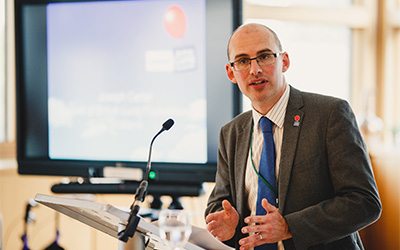
Joseph Carter, Head of Asthma + Lung Scotland said:
“Ten years after NRAD, the fact that around 100 people a year are dying of asthma attacks in Scotland is an absolute travesty, particularly when most of them are avoidable. This is not acceptable. Around 368,000 Scots have asthma, and with the proper treatment and support, they should be able to live perfectly normal lives.
“We need the Scottish government to prioritise asthma and other lung conditions, ensuring that people have the right inhalers, are regularly monitored and are empowered to self-manage their condition.”
In 2022, Asthma and Lung UK warned that people in Scotland are facing life-threatening asthma attacks – with Scotland having some of the poorest levels of asthma care in the UK.
Now, the charity is calling on the government to introduce national targets to end preventable asthma deaths and ‘dedicate sufficient funding’ to implement upcoming UK-wide guidance for the diagnosis and management of the condition, due to be published in October.
It says investment in technology is also essential for the ‘transformation of asthma management’ to help people manage their condition and recognise warning signs.
Preventable asthma deaths “scandalous”
Key risk factors for death from asthma include overuse of reliever inhalers indicating poorly controlled asthma, underuse of preventer inhalers and recent emergency hospital visits with no follow-up.
The latest National Records of Scotland figures reveal 111 people died with an underlying cause of asthma in Scotland in 2022 compared to 72 in 2014.
Sarah MacFadyen, head of policy and external affairs at Asthma + Lung UK, said these figures are “scandalous”, adding:
“Asthma care is in crisis. People are not getting the care they need and deserve. As a result the UK continues to have one of the worst asthma death rates in Europe. We don’t want to be saying the same thing in another 10 years; this is a problem we know how to fix.
“With better care and support, people with asthma could manage their condition well and avoid life-threatening asthma attacks, while investment in research and innovation to develop technology to help people self-manage their asthma, could also be transformative like it has for conditions like diabetes.
“Not only will these changes save lives and improve people’s health and quality of life, it will also reduce the impact of poorly controlled asthma on health services and help the NHS.”
This comes after the Scottish government published a quality prescribing guide for respiratory conditions, recognising early control through preventor inhalers as key.
The guidance also acknowledges that Scotland has higher rates of difficult and severe asthma compared to the rest of the UK and outlines advice on how clinicians should ‘target care’ for patients.
Dr Andy Whittamore, GP and clinical lead at Asthma + Lung UK, said:
“Too often I see people with asthma who have reached a point where they are in danger. They don’t, recognise when they need to seek help, for example when they are using their blue reliever inhaler three or more times a week.
“It shouldn’t get to the point where someone is rushed to hospital fighting for breath.
“We need a better awareness of the seriousness of asthma, and a focus on supporting people to manage their condition themselves. While healthcare professionals need to have the training, time and resources to understand each individual to ensure they get the basic care they need.
“Good asthma care can really help people get a handle on their condition, so that it has a minimum impact on their day-to-day lives.”
Variation in care
While there are some areas of good practice, asthma care still varies widely across regions, with many not receiving the care they need.
A survey by Asthma + Lung UK found that 69% of people were not receiving regular basic asthma care – like annual reviews, inhaler technique checks, and asthma action plans – as recommended by the national review ten years ago.
Follow-up care after hospitalisation was also found to be ‘woefully inadequate’ says the charity.
A recent study found many did not receive asthma management in primary care in the 48 hours following an asthma-related emergency admission, when they are most at risk of another serious asthma attack.
Furthermore, almost 40% of people who ended up in hospital did not a follow-up within even 28 days, with lower levels of care seen for Black ethnic minority patients.
Clinical vice president at the Royal College of Physicians, Dr Dean, added NHS-wide change is needed:
“Sadly, NHS care in urgent and emergency care, planned specialist care and primary and community care are unable to deliver the care they know people with asthma need. This is unacceptable.
“Each of these elements needs redesign, and integration to move with patients to a preventive approach, rather than just treating emergencies. This needs political will, and a workforce to deliver it. Clinical leaders are ready to lead that change.
“We echo Asthma + Lung UK’s calls for urgent action. It is critical that the report’s recommendations are revisited and implemented so we can improve patients’ quality of life, prevent further needless deaths, and alleviate additional pressures on an NHS workforce which is stretched to capacity.”
Read more: New green inhaler prescribing guidance; Working together for climate action and good health; Medics warn pollution is risking children's health; Blue-green prescribing for climate and public health; Regulation key to reducing obesity; A question of action; Support grows for LEZs in Scotland
Sign up to our bulletin for key health & social care updates straight to your inbox. |