|
75 years on: The birth of NHS Scotland |
Related newsScotland’s Clinical Entrepreneur initiative returns From 14 to 5 – one lesson from Denmark NHS Scotland chief named as battle lines emerge Briefing: The 5-year plan for NHS, care and science Scottish health research register celebrates 15 years Care home staff numbers increase after record low Rural alcohol and drug rehab centre opens Call to expand Huntington’s specialist care Highland GPs to reclaim vaccine services Highland to end unique health and care model Highland willing to give up its care integration model 
|
|
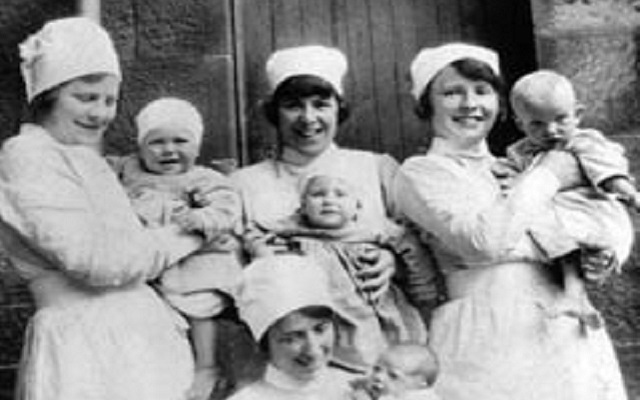
Highland nurses 1926
|
||
|
||
|
As the NHS today celebrates its 75th birthday, Chris Holme looks back at the creation of the NHS in Scotland – and the comprehensive, state-funded health service operating in the Scottish Highlands and Islands that pre-dates it by more than 35 years.
The outlook was pretty grim – a severe shortage of nurses, bitter disputes with doctors, hospitals teetering on financial collapse and colossal amounts of unmet need.
Sound familiar? This is how the National Health Service started on July 5, 1948.
There wasn’t a huge fuss – newspapers reported the occasion and Health Minister Aneurin Bevan did a photocall at Trafford Park in Manchester.
That is unsurprising because, in one sense, this day not much was different. The NHS did not create a single new nurse, doctor, or hospital. Bevan had merely nationalised virtually all the hospitals previously run as voluntary institutions or by local authorities.
The revolutionary change was that services would be free to everyone at the point of delivery.
This applied across the United Kingdom whilst recognising the distinctive features of the home nations.
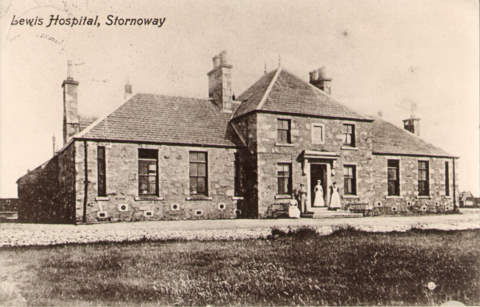
Scotland already had a state-funded, comprehensive health scheme covering half of its landmass.
The Highlands and Islands Medical Service (HIMS) had been set up in 1913 with an annual Treasury grant of £42,000.
Medical and nursing services in Scotland were either poor or non-existent in many areas within the crofting counties. Crofters did not qualify for services under the 1911 National Insurance Act.
HIMS was run directly from Edinburgh – the money was directed to basics such as a house, car, or telephone. Doctors had a basic income but could continue to treat private patients. Fees were set at minimal levels but inability to pay did not prevent people from getting treatment.
Scotland also had its own distinctive medical tradition – centred on its medical schools rather than private practice. This was recognised in the separate Scottish Bill to create the NHS – securing medical school involvement in the five new regional boards.
In the war years before the NHS, hospital building in Scotland proceeded at a pace scarcely equalled anywhere in Europe.
The Emergency Hospital Service (EHS) was set up to deal with expected casualties from enemy bombing across the UK.
A whole new range of specialities were established – seven orthopaedic centres with 2,000 beds, and a further 1,300 for plastic surgery, eye injuries, neurosurgery, and other specialties. A pathology laboratory service was inaugurated and, in 1940, the Scottish National Blood Transfusion Association was set up to co-ordinate and develop existing transfusion services.
When mass casualties did not materialise, then-Scottish Secretary Tom Johnston pulled off a stroke of genius. Rather than leave the new hospitals empty, he put them to effective use.
As he explained:
“It was obviously foolish to have the well-equipped hospitals often standing empty and their staff awaiting Civil Defence casualties – which, thank God, never came – while war workers could not afford specialist diagnosis and treatment.”
In total the EHS provided an additional 20,500 beds – an astonishing 60% increase on Scotland’s capacity.
The Treasury formula for calculating NHS spending in 1948 was based on existing hospital provision which included 13,000 EHS beds. This had a legacy which persists to this day – higher spending per head on health in Scotland than England.
Planning for the new service took three years.
The British Medical Association (BMA) fought a bitter and protracted campaign against it. In the
final ballot of BMA members in May 1948, Scottish hospital doctors and GPs, more used to state involvement in health services, voted to accept Bevan’s proposal. Their colleagues in England and Wales voted against.
There were huge challenges in meeting the anticipated demand.
The best commercial hearing aid was tested for the first NHS model and a new factory built to mass produce it. It was called the Medresco – after the Medical Research Council which did the evaluation.
From July 1948, everyone in Scotland had access to proper medicine on prescription.
Those plagued with rotten teeth were able to see a dentist for the first time. Previously deaf people could hear with new aids.
The new NHS had to be seen to be believed. Half a million Scots (one tenth of the entire population) were able to have free spectacles within four months of its inception. Half a million got free dentures in the first year.
It started as an embodiment of collective British solidarity after the sacrifices of war. Underlying this was a desire to end the horrors of what went on before – women walking around with prolapsed uteruses or men in trusses holding untreated hernias, all because they could not afford treatment.
Women, children and older people were the biggest beneficiaries – the 1911 Act was for insured workers, who were predominantly men.
Other developments chimed with the mood of collective optimism. Maternal mortality rates had gone into freefall from 1938, recording their sharpest ever fall in history. This was mainly due to sulphonamide drugs to treat childbirth sepsis, new blood transfusion services and better nutrition.
Infant mortality rates had experienced a similar drop, thanks to a UK-wide campaign for free immunisation against diphtheria. In 1940 it killed 518 Scottish youngsters. In 1950 there were just three deaths, all in children who had not been immunised.
It was the new welfare state which helped lay the foundations of the post-war British state. The NHS not only operated across the United Kingdom – it was a modern representation of it.
The NHS had got off to a flying start – but much turbulence lay ahead.
Listen to Bevan himself describing the first year of NHS in this short (2 minute) BBC Archive clip.
Chris Holme is a former Reuters Foundation fellow in medical journalism.
Read more from Chris Holme: Dr Finlay and the making of the NHS; TB and the Edinburgh physician; The father of evidence-based medicine; The Glasgow mother of the C-section; Long read: The CMO who spoke the unspeakable
Sign up to our bulletin for key health & social care updates straight to your inbox and you can follow healthandcare.scot on Google News. Tags: NHSScotland. |