|
Scotland reaches heart valve treatment milestone |
Related newsScots honoured across health and care Briefing: FM outlines health plans for year ahead Scotland’s Clinical Entrepreneur initiative returns Briefing: The 5-year plan for NHS, care and science Scottish health research register celebrates 15 years NHS researchers to explore Highland opportunities New health & social care governance initiative EU staff qualifications & registrations confirmed Westminster committee launches drug misuse inquiry "Poverty remains a problem" for children in Scotland Primary schools in breastfeeding project first Scotland’s frailty services to help address NHS waits 
|
|
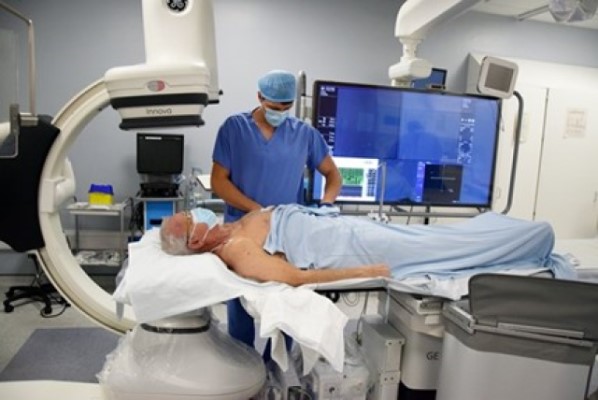
Image Credit: ⒸNHS Golden Jubilee, 2022.
|
||
|
||
|
Cardiologists from Glasgow’s NHS Golden Jubilee hospital celebrate the success of a minimally invasive heart treatment and look forward to helping more patients and learning from their clinical studies.
Four years since its introduction, 500 transcatheter aortic valve implantation (TAVI) procedures have succeeded in treating people at high-risk for open-heart surgery in Scotland.
Many more West of Scotland patients could benefit from the technology at Scotland’s largest heart and lung unit, with clinical trials showing its potential as an alternative to invasive surgery.
Dr Mitchell Lindsay, NHS Golden Jubilee Consultant Cardiologist and Clinical Director, said: “Outcomes for our patients have been a resounding success thus far, so it is promising and we are extremely happy with how the service is progressing.”
The TAVI procedure involves passing a catheter through an artery and positioning it at the opening of the aortic valve. Once in place, a small balloon attached to the tube is inflated to create space for inserting a new valve, which helps reduce the risk of heart failure and death.
Unlike open-heart surgery, patients can often return home within three days of treatment.
Nancy Dick from Cambuslang was one such patient, underwent a TAVI procedure for her heart murmur after discovering she was at risk of heart failure:
“The treatment I received was absolutely phenomenal. I know people are scared about having this type of thing done, I certainly was, but I decided it was worth doing and I was in good hands.”
TAVI presents a lower risk treatment alternative when valve replacement is required. Open-heart surgery involves stopping the heart from pumping and for some vulnerable patients this carries a high risk of complications.
With TAVI, no bypass machine is needed as the heart is not stopped, so patients can remain awake throughout without the physical strain of stopping the heart. However, there is a higher risk of stroke with following treatment. Prof Nawwar Al-Attar, NHS Golden Jubilee Consultant Cardiac Surgeon involved in TAVI clinical trials, said there is an inherent associated risk and developments are ongoing to address this:
“Refinement of the technique and use of special devices, similar to fishnets or umbrellas, help reduce the incidence by capturing the particles that can cause these strokes.”
Dr Lindsay says the NHS Golden Jubilee team are now able to perform four procedures per week and they hope to continue providing this life-saving treatment for the patients who need it most.
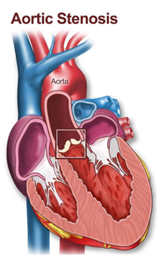
TAVI was designed to treat aortic stenosis, the narrowing of the aortic valve preventing it from opening properly. This heart condition leads to symptoms such as chest pain, dizziness, shortness of breath and fainting.
For high-risk patients, TAVI provides a new route to recovery. Professor Hany Eteiba, NHS Golden Jubilee Associate Medical Director, said:
“We are always investing in innovative ways to treat patients effectively, in a person-centred way, and TAVI has proven to be a valuable addition to our treatments for heart disease.
“TAVI is helping keep families and loved ones together through improved or better quality of life, prolonging lives and helping people when surgery is unfortunately not an option.”
Continuing procedures and assessment of patients will not only help advance aortic stenosis treatment but inform treatment for other heart valve conditions. Prof Al-Attar said:
“Studies and clinical trials are looking at expanding the use of TAVI in age groups and risk profiles beyond our current practice. Newer generations of devices are being developed with better outcomes.
"We are also working to treat valves other than the aortic, like the mitral and tricuspid valves by similar techniques, the future is fascinating.”
He explained that the ongoing studies hope to determine the utility and effectiveness of therapeutic options to guide clinicians and help inform patients. “By including our patients, we provide real-life data relevant to contemporary practice as a heart team of cardiologists, surgeons and nurses committed to treatment of heart valve disease,” Prof Al-Attar said.
As the number of people treated continues to grow, further research insights will also be gained to add to already promising clinical studies.
Read more: Possible infection risk for Lothian heart patients; Scotland ‘underinvesting' in heart disease
Sign up to our bulletin for key health & social care updates straight to your inbox. Tags: NHSScotland; Older People; Research & Innovation. |