|
GPs to lead on frailty in new NHS improvement plan |
Related newsLess than full-time – behind the NHS trend Doctors invited to shape medical workforce reforms Health and charity leaders join forces for NHS reform NHS doctors unemployment crisis despite understaffing Doctors: ‘Shocking’ A&E figures require action Doctors say GP funding boost “just the start” 
|
|

Image Credit: © lucid dream
|
||
|
||
|
The Scottish government has set out plans for how it will deliver its promise to shift the balance of care to the community, improve access to treatment, and reduce waiting times through primary care-based prevention focused first on cardiovascular disease and frailty.
With a focus on general practice as the ‘heart of our healthcare system’, the NHS Scotland Operational Delivery Plan details how £10.5m investment will see targeted cardiovascular disease interventions expanded across the country.
Building on the commitment to deliver frailty teams at the front door of every A&E by this summer, made in the initial NHS renewal plans launched by the First Minister, delivery plan says enhanced frailty services in primary care will be offered by 2026.
This government plan says every general practice will be expected to identify a frailty lead to drive improvements in frailty care through training, data optimisation, and cross-sector collaboration.
The government says it will issue the terms of this frailty programme to GPs next month.
The delivery plan also details a suite of national improvements on cardiovascular disease (CVD) risk factors, including an enhanced general practice service for CVD to begin in the coming weeks focused on identifying high-risk patients and providing early interventions to help lower that risk.
Scotland’s Cabinet Secretary for Health and Social Care Neil Gray says the key to what he says is an “ambitious but realistic” plan is to make it easier for primary care services to play a greater role:
“This plan details how the Scottish government will deliver a more accessible NHS, with reductions to long-waits and the pressures we currently see.
“We want to increase the number of appointments, speed up treatment and make it easier to see a doctor. By better using digital technology, we will embrace innovation and increase efficiencies.”
However, the plan is being published less than a week after the public sector watchdog’s findings that the government has failed to deliver on its promises for GPs, leaving GPs feeling “angry and demoralised” after systematic underinvestment in the workforce.
Flow and Hospital at Home
While the government has already announced plans for a national rollout of hospital-based frailty services to reduce NHS waits, it has now detailed wider plans to reduce hospital backlogs and improve community-based care.
As part of its wider efforts to shift the balance of care to the community, the government says it is also working alongside health and social care partners to improve flow in acute hospitals and expand Hospital at Home services.
This includes developing national benchmarking of Hospital at Home and, by summer 2025, key performance indicators for these will be produced in partnership with clinical leads.
By March 2026, the government aims to have established pathways for direct referrals to Hospital at Home from the ambulance service, flow navigation centres, emergency departments, and frailty units.
Meanwhile, a national rollout of the Digital Front Door app for health and care service is still planned for 2026, to allow people access their hospital appointments and find local services.
The government says over the next five years this app will be expanded to include social care and community health services.
Longer term, it wants the Community Health Index (CHI), the unique digital identifier given to everyone living in Scotland, to be used in social care and social work services as well as the NHS as part of efforts to integrate people’s health and social care information.
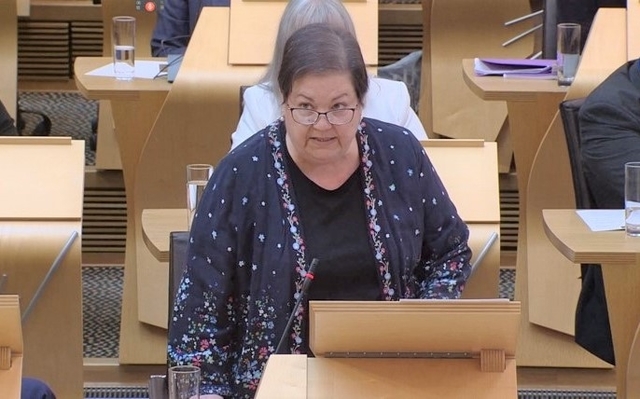
Responding to the plan, Scottish Labour health spokesperson Jackie Baillie said that much of it “amounts to recycled ideas” and “barely acknowledges” the impact of the social care crisis, and the need to increase social care capacity.
This is the first in a series of policy documents from the Scottish government, set to be followed by its long-awaited population health framework this spring.
A medium-term approach to health and social reform is set to be brought to Scottish parliament before the summer recess.
Read more: GPs in ‘moral distress’ over drug shortage crisis; NHS is not a ‘political football’, warns BMA; Labour: We’ll fix the NHS, starting with GPs; Social workers welcome care reforms; Corridor care ‘the norm’ in struggling hospitals; NHS Scotland: waiting lists and beyond; Pay and balance “crucial” to stop staff leaving; Chief medic: Innovate to tackle health & planet crises
|