|
Holyrood committee fails to back Transitions Bill |
Related newsA timeline of Scotland’s National Care Service Providers: children’s service cuts ‘devastating’ Every Moment Matters in SMA Screening Parliament urged to recognise deafblindness Adult disability review chair appointed Holyrood scrutinises self-directed support 10 years on Treatment-resistant cancer focus of new study Enhancing independent living with robotics Law change needed for Scotland’s drug crisis Libraries offer light lift for low winter mood Medics warn pollution is risking children’s health Peer support ‘crucial’ in suicide prevention 
|
|
|
||
|
||
|
An MSP leading work to ensure Scotland properly supports disabled young people in their transition to adulthood has branded a Holyrood committee’s report not backing her Member’s Bill as a “dossier of failure”.
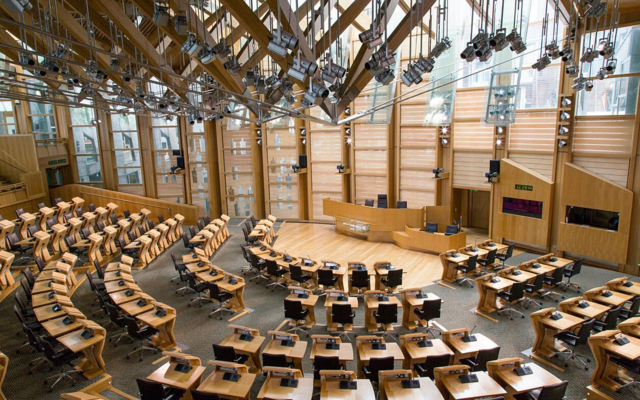
The lead committee appointed to scrutinise Pam Duncan-Glancy’s proposed legislation says it supports its intentions, but is ‘not convinced’ the Bill would resolve issues with transitions.
Members of Holyrood’s Education, Children and Young People’s Committee from across the four major Scottish parties agreed to reject the proposals.
This is despite a total of 59 MSPs from all political parties confirming their support for the Bill when it was first introduced to parliament last year.
Only Martin Whitfield, the Scottish Labour MSP who attended committee meetings as Ms Duncan-Glancy’s substitute, dissented from this statement
Findings of the committee
Pam Duncan-Glancy MSP says the committee’s report on her Disabled Children and Young People Transition Bill exposes the challenges disabled children and young people face when approaching adulthood.
The committee report details that poor experiences of transitions into adulthood for many has revealed a disconnect between children’s and adult services and poor communication across agencies.
Additionally, the committee highlights that while there is already some policy provision dedicated to this transitional period, it has ‘not had the positive that was envisioned’, stating:
‘The current legislative landscape was described by many witnesses as being complex, cluttered, and difficult to navigate for young people and their families, and, in some instances, for the professionals working to support them.’
The Holyrood committee states that it remains ‘extremely concerned’ by the evidence its heard.
Ms Duncan-Glancy’s Bill aims to improve outcomes for children and young people entering the next stage of life – from higher education to work and career options.
Inconsistent services
The committee also acknowledges that poor deployment of coordinated support plans has left service delivery and access to support inconsistent across Scotland.
Bill Scott, Senior Policy Advisor at Inclusion Scotland – which co-designed Ms Duncan-Glancy’s Bill, told healthandcare.scot last year that Scotland “desperately” needs to improve outcomes for young disabled school-leavers as they have little support to achieve their ambitions.
Now, Holyrood’s Education Committee has recognised the lack of support and implementation gap between existing legislation and policy and services on the ground.
Ms Duncan-Glancy says that while this reaffirms the very issues the Bill seeks to address, opposition from other parties across parliament has resulted in a failure of the committee to back the proposed law:
“This dossier of failure lays bare the reality of young disabled people’s lives whose dreams have been shattered because of 16 years of failure and inaction by this SNP government.
“We have long been promised action on transitions but we still have no strategy from the government and no support for councils grappling with strangled budgets – and disabled people and their families are the casualty.”
However, the Education Committee’s report states that it is ‘not currently convinced’ that Ms Duncan-Glancy’s proposed Bill will resolve the issues raised in its scrutiny sessions.
It states that several stakeholders expressed concerns about how the Bill would work in practice amid pressures on resources and staffing.
The committee adds that it is concerned about the need for children and young people to have a formal diagnosis to access support in their transition.
While this could help track how many people need and are accessing support, the committee says it believes this presents an additional barrier to support.
Yet, the committee also states that without clarity on who exactly would be entitled to a transitions plan it is not possible to accurately estimate the cost and resource implications of the Bill.
Ms Duncan-Glancy has said she is committed to continuing ongoing and productive discussions with COSLA and engaging with other key stakeholders to better understand the estimates of costs and resources.
Despite its decision to not recommend the Bill, the committee concludes that it is clear doing nothing is not an option and says the Scottish government must address these issues ‘as a matter of urgency.’
Ms Duncan-Glancy has told the committee that she is committed to finding a workable way forward with local authorities and the Scottish government.
Meanwhile, the committee recommends the Scottish government work closely with Ms Duncan-Glancy around financial estimates and to improve current services.
Read more: Independent Living Fund to reopen next year; UN told rights of disabled people in ‘crisis';New Disabled Children and Young People Transition Bill; Scotland prioritises neuro-inclusion, says government; Voices of disabled key to policy development; Glasgow project makes research accessible to all
Sign up to our bulletin for key health & social care updates straight to your inbox and you can follow healthandcare.scot on Google News. |

2.jpg)