|
Media campaign boosts community naloxone supply |
Related newsRehab centre & St Mirren FC team up for community hub Rural alcohol and drug rehab centre opens Drug harms on the rise in Scotland Unmet need in Scotland’s drug crisis revealed Scots living with liver disease set to rise by 54% Law change needed for Scotland’s drug crisis 
|
|
© Getty Images
|
||
|
||
|
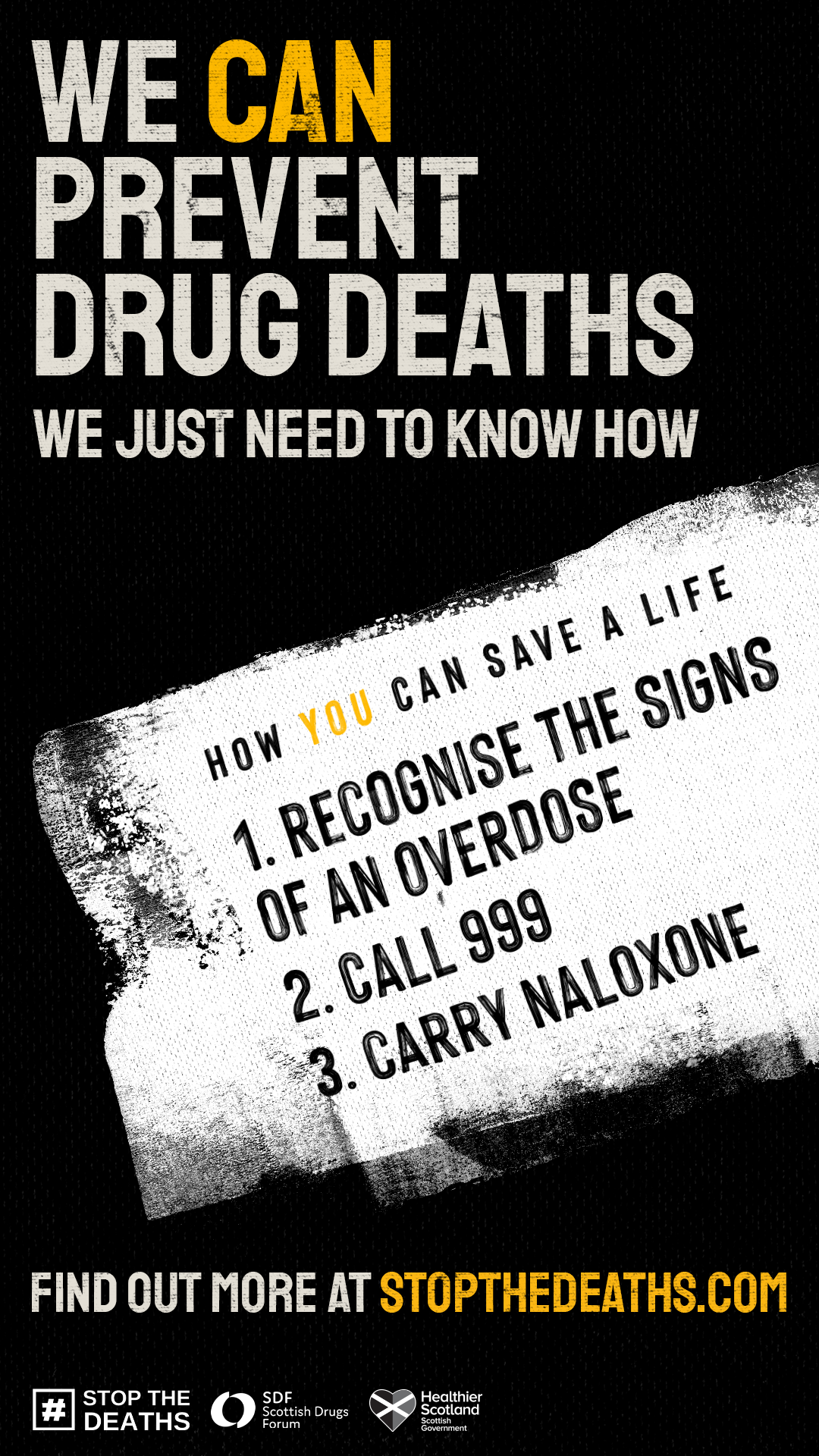
An independent evaluation of a mass media campaign on how to prevent drug deaths show it has had a positive impact on public awareness and increased the community supply of life-saving naloxone.
The Scottish government commissioned ‘How to Save a Life’ campaign led to a surge in take-home naloxone – medication which can temporarily reverse an opioid overdose – during its run time between August and October 2021.
Adverts on television, radio, social media as well as physical advertising like billboards directed the public on how to access e-learning to administer naloxone and order the kits to their homes.
The total number of kits distributed across the community in Scotland increased by 126% to a peak of 27,000 during the mass media campaign.
The media campaign – which won the Scottish Public Services Award for Communications last year – was coordinated by the Scottish Drugs Forum (SDF).
CEO Kirsten Horsburgh says the evaluation shows the real value and impact of the campaign:
“It is important to understand that many will have reached parts of the community that have not previously been reached in terms of naloxone supply.
“When naloxone kits reach the most marginalised people, are used in an emergency overdose situation and people are then re-supplied with naloxone, we see the potential for sustained impact initiated through the campaign.”
Scotland was the first country in the world to implement a national naloxone programme, which saw take-home naloxone (THN) given to those released from prison and distributed to community drug services.
Naloxone provision has since been expanded to the police, ambulance crews and even Edinburgh taxi drivers, in attempts to tackle drug related deaths which remain at historically high levels in Scotland.
Anyone in Scotland can now order a free naloxone kit from national charity Scottish Families Affected by Alcohol & Drugs (SFAD) and be trained in its use.
Although evaluation leads from the Glasgow Caledonian and Liverpool John Moores universities found fewer than 1% of those aware of the mass media campaign ordered take-home naloxone, it did lead to greater awareness among the public of drug deaths.
The researchers say their findings suggest that carefully designed mass media campaigns can be useful to respond to localised spikes in overdoses and deaths.
Another study from the researchers still under review also suggests the public felt generally positive about the messages from the media campaign and can work to boost support for drug death policy actions.
The Scottish government last month launched ‘radical’ proposals to decriminalise drugs for personal supply and set up supervised drug consumption facilities as part of its national mission to tackle drug deaths.
To come into force, Westminster will need to devolve more powers to Holyrood.
SDF’s Ms Horsburgh says increasing awareness of drug-related deaths is an important first step in tackling this public health emergency:
“Public awareness of the issue of drug-related deaths, but also that these are preventable and we can all do something to reduce them is crucial.
“We are in a public health emergency and public awareness and understanding is crucial.”
To find out more about Naloxone, please visit the Stop the Deaths campaign website. |