|
Insight: Why I chose psychiatry |
Related newsStrategy to make mental health services peer-led Pressures on psychiatry leaving posts unfilled NHS is working to address “unacceptable” abuse Pharmacy’s road to stigma-free drug dependency care Medical trainee abuse reports ‘shut down and silenced’ ‘Whole-system shift’ needed on ADHD and autism support Charity: Create national standards for SDS option 2 Water Safety Scotland calls for caution amid heatwave MSPs’ ‘huge concerns’ over Scotland’s medicines system Insight: Care workers should not be commodities 
|
|
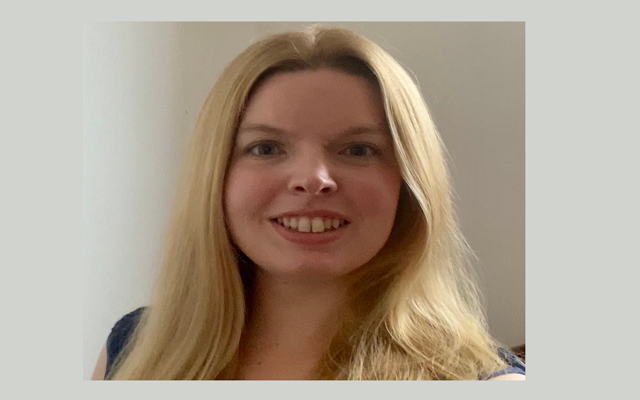
Dr Rosemary Gordon
|
||
|
||
|
Mental health services in Scotland are creaking: national targets for psychological therapies waiting times have never been met, children and young people are waiting up to two years to be seen, and 1 in 10 psychiatry posts lies empty.
Dr Rosemary Gordon, chair of the Royal College of Psychiatrists (RCPsych) Trainees Committee, speaks to healthandcare.scot about her unusual route into psychiatry and how training has to keep up with changing preferences.
Statistics released by NHS Education for Scotland show almost 56 unfilled whole time equivalent consultant general psychiatry posts across the country, the highest vacancy level of all medical specialisms.
The Health Secretary announced in October that an additional £32m would go toward increasing trainee posts in key specialities, including core-psychiatry.
These 139 posts created for 2022 are almost double the number of new traineeships added the year before, but it is unclear how the money will be spent and how much this will benefit psychiatry.
“It takes six years to get through training, and people take time out for different things – to do research or other training or to start families – so it’s not quite as simple as recruit a psychiatrist and six years later you’ll have a consultant,” Dr Gordon explained.
“I don’t think this is psychiatry-specific – lots of people now are taking time out to figure out what they want to do, and the evidence shows they do come back.
“It’s not that we’re losing doctors, it’s that the way we’re training has changed a huge amount, even in the last 10 years.”
General Medical Council research suggests Scotland’s NHS particularly struggles with this issue. Along with Wales, Scotland has a much lower rate of doctors passing directly from their foundation programmes to start core and specialty training the following year, and many more opt not to return or to move elsewhere in the UK for training, compared to the other UK nations.
Dr Gordon, who had her first experience in psychiatry during her stint at Edinburgh medical school, also took a non-standard route to the specialism. Her six-week psychiatry placement was not enough to convince her of psychiatry’s allure, and instead opted to enter general practice.
A further six-month psychiatry posting during her GP training reignited the spark and, after GP exams in 2017 and completing a year’s staff grade post in the specialism during her time as a locum GP, the pull of psychiatry became too strong to resist.
Initially daunted by the prosect of six more years as a trainee, Dr Gordon eventually took the plunge and returned to start on the journey to become a consultant psychiatrist the following year.
Now in her fourth year of speciality training– her 15th year since starting medical school and with another two to go – Dr Gordon says she has no regrets:
“It’s been totally worth it and I wouldn’t change the way I’ve done it. I’m older, more mature now. I had a very sheltered upbringing and I’m in a much more experienced place now to be able to help.
“I think sometimes people feel a bit shoehorned and they want to finish training and I totally get that. But I’m proof that, if you want to, changing specialities is an option.”
GPs entering psychiatry later in their career seems to be an increasingly common phenomenon, says Dr Gordon. Of the 12 people who embarked on core training (CT1) in Southeast Scotland in 2018, two had previously trained in general practice; the following year, another GP opted to retrain.
Dr Gordon believes her general practice experience has stood her in good stead for a career in psychiatry:
“A third of GP appointments are to do with mental health so I was able to gain skills in lots of different things that have been useful in my Psychiatry training. Ultimately, I’m a doctor first, just now one who specialises in psychiatry.”
Dr Gordon says the focus for her and the rest of the representatives on the RCPsych’s trainee committee is now to increase the profile of psychiatry. Through their #ChoosePsychiatry campaign, the college hopes to encourage more doctors – from medical school right up to their foundation training – to gain experience within the specialism.
“I think a lot of the time people think they won’t enjoy it but when they do get a psychiatry job it’s often not what they imagined.
“You don’t really get much input from medical school to encourage you into psychiatry, so the college play a really important role in raising awareness of how rewarding a career it is. There’s lots of scope of improvement and lots of research to get involved in.
“Regardless, having that psychiatric knowledge is useful no matter where you end up working.”
A survey by the Royal College of Psychiatrists in Scotland found almost eight in 10 Scots foresee demand for mental health services will increase after the pandemic, and more than half think current services are inefficient.
Psychiatry has changed a great deal in the last 20 years, with services increasingly being offered in the community since the 2002 Community Care Act. But there are concerns that the push to close beds might have gone too far.
“It was that fear of institutionalisation which is why beds were cut across the country,” says Dr Gordon, whose current role is in a mixed inpatient/outpatient setting. “But if you were to ask 100 psychiatrists what their biggest problem is, one of the answers would be there are no beds.”
Read more: Shortfall in key mental health staff as workload rises; Health staff mortality rate ‘lower in Scotland’; Government misses GP link worker target
Sign up to our bulletin for key health & social care updates straight to your inbox. Tags: Mental Health; Staffing & Workforce. |
