|
‘Rhetoric-reality’ gap on National Care Service |
Related newsSceptical response to government’s care proposals Scotland’s IJBs becoming "financially unsustainable" Bid to block IJB voting rights extension Users to get voting rights at IJB meetings Search on for permanent Care Board chair 
|
|
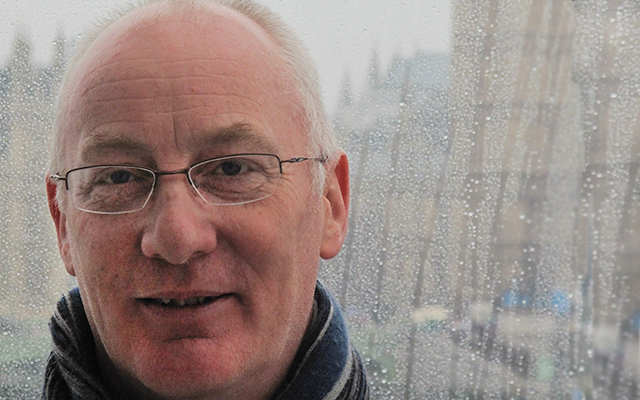
Professor James Mitchell
|
||
|
||
|
A public policy expert who sat on the Christie Commission says he is concerned that ministers are raising false expectations about a National Care Service (NCS).
Professor James Mitchell said the funding envelope allocated by government to set up an NCS and carry out wider reforms was “optimistic at best”.
A consultation on the plans closed last month and ministers say it will be up-and-running by 2026.
But there are question marks over whether the government has set aside enough funding to deliver its commitments.
Earlier this week an independent thinktank said the final bill would likely be close to twice as high as the £800m pledged by the Scottish government.
Finance secretary Kate Forbes will lay out the Scottish government’s budget for the year ahead on Thursday.
Speaking to healthandcare.scot, Professor Mitchell suggested ministers were in danger of fuelling false expectations about the new care system and said “we certainly need to be prepared for the cost to rise”.
“There is a gap between the ambition and promise from Scottish Ministers and what they are willing to commit and deliver. This rhetoric-reality gap is now a running theme in so much from the Scottish Government.”
The Edinburgh academic added: “I worry about the rhetoric suggesting that the NCS is some kind of equivalent to the NHS and the consequent expectations. There is much to admire about the NHS but I don’t believe it would be created in the same way today as back then. We need to approach this in a more personalised manner. The rhetoric about the NHS is largely party-political campaign spin.”
Nicola Sturgeon has pledged to set up a NCS “to match the post-war National Health Service”.
Speaking to healthandcare.scot earlier this year, Professor Mitchell suggested proposals to set up a NCS were evidence of a ‘ministers know best’ mentality; he says subsequent events have not changed his mind.
“Scotland has experienced a re-assertion of top-down, centralist thinking in recent years. What appears to have happened is that the Scottish government has drawn more power to itself in a vain effort to gain control when it needs to let go, decentralise.
“Some expertise in social policy exists inside Scottish government but far more, especially in terms of the crucial matter of delivery, exists outside Scottish government.”
In contrast to policies like free personal care for the over-65s introduced in 2002, this round of care reforms will take place during a period when the Scottish government faces its own budget pressures.
Analysis by the Fraser of Allander Institute suggests ministers will face tough decisions about what services to prioritise in the coming years as the block grant from Westminster flatlines.
Professor Mitchell said: “When fiscal times are good, we tend to throw money at problems and hope some of it hits the target. When money is tight – as now – we need to be more innovative. Regardless of fiscal context, we should be more imaginative.
“My view is that we should look at this from the perspective of individual needs rather than top down.”
Read more: Yousaf: NCS blueprint not ‘fait accompli’; Budget: “Challenging” outlook for NHS & social care; National Care Service budget ‘far too small’
Sign up to our bulletin for key health & social care updates straight to your inbox. |
