|
Workforce “missing” from cancer recovery plans |
Related newsLongest NHS waits a funding priority, says government Scottish radiologist shortage harming patients Why resident doctors’ wellbeing app matters Pressures on psychiatry leaving posts unfilled Two thirds of doctors experiencing burnout Researching food options for cancer patients 
|
|
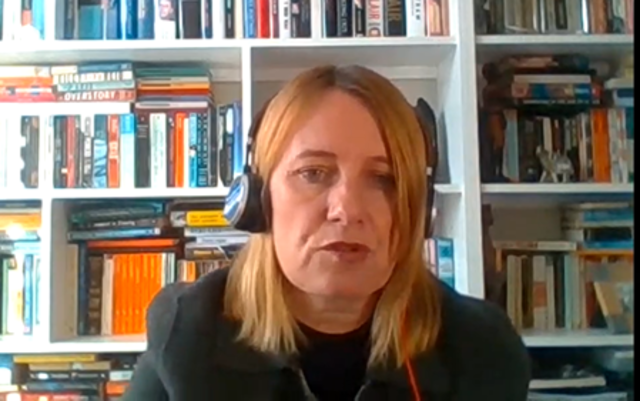
Cancer Research UK CEO Michelle Mitchell
|
||
|
||
|
Gains from cancer diagnosis and treatment innovations will “never really be fully realised” without action to address staff shortages, the head of Cancer Research UK has said.
Michelle Mitchell said there were no plans in place to address a lack of treatment and diagnostic staff, which she said was having a “very real impact” on patient care.
Speaking today at the Scottish Cancer Conference, health and care secretary Humza Yousaf said a government expert group is currently mapping future workforce needs for the disease.
New early cancer diagnostic centres, currently located in three health boards, would play a “key role” in driving improvements, Mr Yousaf said. The scheme will be evaluated by the University of Strathclyde to inform a wider rollout.
Macmillan Cancer warned earlier this year of a “perfect storm” as many experienced cancer nurses retire and called for a “fully-funded and clearly mapped out [recruitment] plan”.
A five year workforce strategy was promised in the NHS Recovery Plan, which was criticised for having little to say on the twin challenges of recruitment and retention.
The document is set to be published before the end of this year.
In late 2020 the Scottish government set out a cancer recovery programme promising to carry forward innovations and ensure a more consistent approach to treatment across the country.
It included the setting up of three new cancer early diagnostic centres that offer patients with non-specific symptoms fast-track tests for several cancers.
Public Health Scotland figures released earlier this month revealed the proportion of stage one diagnoses for bowel, lung and breast cancer fell in 2020 to the lowest level since 2012.
The share of these cancers diagnosed at stage four, the latest and most serious point, was at its highest level since 2014.
Ms Mitchell said there were shortages of professionals in areas including radiology, endoscopy and oncology, and called for cancer treatment and diagnostic staff to be “front and centre” of any workforce plan.
She told the conference: “Almost 12 months ago now the cancer recovery plan was published. We saw there was £3m for early cancer diagnostic centres, awareness campaigns for lung cancer, investment in new kit, and bringing important new innovations like cytosponge and colon capsule endoscopy into the NHS.
“All of these of course are very important steps… I think the key thing that is missing from it is workforce.
“For all of the innovations, the new kit, the new pathways we can bring in, the impact for people affected by cancer will never really be fully realised without the staff to run the tests, detect the disease and deliver the treatment plans.
“Planes need pilots, the NHS needs staff to help us recover and transform cancer survival in Scotland.”
Read more: Praise for new strategy’s focus on deadliest cancers"; Staggering" fall in cancer diagnoses over lockdown; Ayrshire & Arran launches its first PillCam service
Sign up to our bulletin for key health & social care updates straight to your inbox. |
