|
Insight: Understanding the gendered costs of care |
Related newsNew social care minister appointed Health and charity leaders join forces for NHS reform Holyrood passes Care Reform Bill Fixing social care funding must be council “priority” Government ‘lacks urgency’ on care reforms Health and care workforce to be bolstered over winter 
|
|
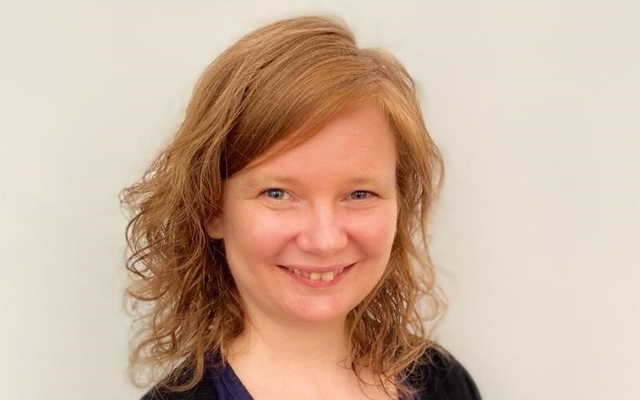
Sara Cowan from the Scottish Women’s Budget Group
|
||
|
||
|
As Scotland seeks to invest in covid-19 recovery, politicians and civil servants are being warned that they risk discriminating against more than half of the population if they fail to assess the impact of their spending decisions properly.
Sara Cowan from the Scottish Women’s Budget Group is one of the panellists in a session examining Putting People at the Centre of the Scottish Economy at the ALLIANCE conference on Monday.
She has been telling healthandcare.scot that budget decisions often fail to consider gender inequalities – meaning existing problems continue to be “hidden under the radar”.
“When making budget decisions,” says Sara Cowan, “we need the government and parliamentarians to ask the question: will this policy affect women and men differently? How will it affect different groups of women differently? For example, will investment in social care affect women and men differently? Will investment in certain Social Security policies affect women and men differently?
“It’s only by doing this analysis, by asking the questions, that we will see greater gender equality achieved through the budget process. At the moment, we don’t see enough gender analysis within budget processes – and that means that existing inequalities continue to be entrenched, hidden under the radar.
“At the crux of this is that most people assume that budgets are gender neutral, so you can make a decision on spending, and it will affect men and women just the same. It is really important to challenge that assumption and to show the different impacts that budget decisions can have on women and men.”
As Scotland builds back better after the pandemic, Sara says some of the more popular, headline-grabbing initiatives are not the fairest:
“Time and time again, not just in Scotland but across the UK and around the world, governments decide on recovery budgets that are all about investment in big infrastructure projects: in those ‘hard hat industries’. And these industries tend to be male dominated sectors. So, what we’re really hearing about is investment in lots of money going into projects that are going to benefit men.
“What we would love to hear more about in a recovery budget is investment in social infrastructure as well – investment in social care, investment in childcare and care jobs. These are, women-dominated sectors and would be investment in women’s work as well as men’s.”
The Scottish Women's Budget Group campaigns for more consistent and effective analysis of spending decisions for their impact on women.
Sara says the Scottish government and parliament should be recognised for their work in this area: the publication by the Scottish government of its ‘Equality and Fairer Scotland’ budget statement alongside its annual budget, seeks to draw attention steps being taken to invest in tackling inequality.
Having women in the roles of First Minister and Cabinet Secretary for Finance and the Economy is positive, she says, but the responsibility to analyse and scrutinise spending proposals and decisions needs to be shared by every parliamentarian and civil servant.
Sara accepts that, at the height of the first wave of the pandemic when decisions were being made at speed, it was challenging to assess the detailed gender impact of every decision. But she argues what happened was still unequal:
“If we look at the impact the pandemic had on women, there has been a huge increase in unpaid work, the role that unpaid carers have had to take on when other services have had to cut back, social care packages reduced and the closure of respite services.
“With women making up the majority of unpaid carers, that change in services had a significant impact on women and it has been hard to see measures that recognised fully that additional load that women were taking through the pandemic.
“So, if you take unpaid care as a concrete example of where gender budgeting could have an impact, it would look at the different impact of the reduction in services on women and men and consider how to make greater investment in services supporting people who are in unpaid care roles.
It would also be about looking at the benefits that are available to support people to care and the changes that can be made at Scottish level in terms of Carer’s Allowance: who can access it and how much do they receive. And, in the longer term, looking at how we better share the responsibility for care, reallocating the cost of caring by investing in public care services and family-friendly work policies.
Sara points out decisions about social security disproportionately affect women, as women are more likely to live in poverty. Analysis suggests UK government changes to social security made under austerity have had greater impact on women.
By contrast, she praises Social Security Scotland for seeking to deliver a dignified system based on principles of human rights and is pressing ministers to double the Scottish child payment to £20 a week, a move, she says, that would have an important impact on the lives of women.
“I think the covid recovery process is a really crucial time to look at how to do things differently and how to tackle inequalities through the investments that are made.
“Central to this is considering what we value in our economy and ensuring that we are investing in those values – how we can create a more caring economy that puts gender equality, wellbeing and sustainability at its heart.”
The session: Putting People at the Centre of the Scottish Economy, part of a week-long programme of events at the ALLIANCE Equally Connected Equally Valued conference brings together the Scottish Women’s Budget Group, Scottish Human Rights Commission, Health and Social Care ALLIANCE Scotland, Glasgow Caledonian University and Wellbeing Economy Alliance to explore different economic models and what they mean for people.
You can register for the session here.
healthandcare.scot is pleased to be the media partner for the conference. |
