|
Insight: Scapegoating care sector not the answer |
Related newsCOVID findings must be ‘mandate for lasting change’ NHS Scotland chief named as battle lines emerge Sceptical response to government’s care proposals Donald Macaskill: Where is Scotland going? Briefing: The 5-year plan for NHS, care and science One precedent, inconsistently applied 
|
|
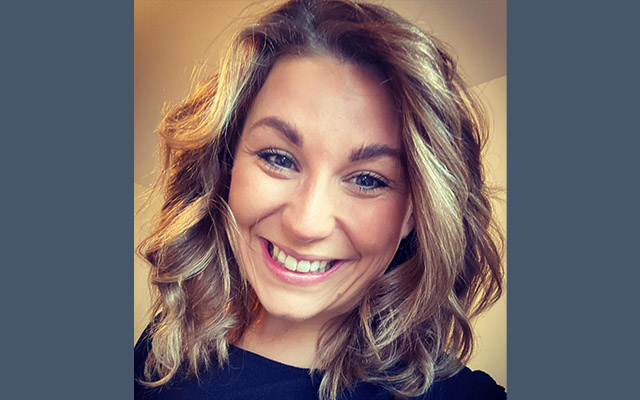
Highland care home owner and manager, Libby Eavis
|
||
|
||
|
Care home owner Libby Eavis describes the past twelve months as a ‘constant fire fight’ for her and her team as they tried to keep residents of their two care homes in the Highlands safe from covid and the impacts of isolation.
In the wake of the pandemic, significant changes are now being promised for social care by all political parties ahead of the May election.
Recently the Scottish government pledged extra funding to guarantee all adult social care staff providing direct care would be paid at least the Real Living Wage of £9.50 an hour. A welcome commitment to some, but to others it is a poor reward for what care staff have been through over the past year.
Scottish Labour has been pushing for a pay rise to £15 an hour – not an unreasonable ask given the nature of the job, says Ms Eavis in the first half of a two-part interview.
“When you run a home the way we do, you’re in it all the time, you know the families of the clients, you know the families of your staff.
“It’s really personal and to see what has happened over the last 12 months first-hand is really awful; to see people really distressed, lonely, wanting physical contact, wanting to hug each other and not being able to do that is awful and I think, if you are a small provider, you feel that and you see it.
“At the start you couldn’t have families in to sit with their loved ones when they were dying so it was the staff sitting in for those last moments, and while we would have done that before, that puts a lot of pressure on our staff to think well okay, Mr Smith’s wife can’t come in and sit with him when he is dying so I am going to stay late today and sit with him and hold his hand.
“That is the real dedication of our staff, that they do go, and have gone, that extra mile to be the extended family. They have always been that extended family, but I think they feel it a lot more now. Their responsibilities are much greater because they are the only physical contact, they are the only communication.
“If this wasn’t a female dominated sector, would we see apprenticeships in care the way we do in the trades? I think we probably would"
“I think when you think about all of what the staff go through it’s reasonable to pay more.
“And when you think about the trades – apprentices are paid a lower rate while they go through that training but then they are on £12, £15 or more an hour. What’s the difference between them and a carer?
“They are doing there SVQ level two, level three and they aren’t treated in that same way.
“If this wasn’t a female dominated sector, would we see apprenticeships in care the way we do in the trades? I think we probably would.
Amid murmurs that independent care providers – who, alongside the third sector, make up 80% of care provision in Scotland – should pay more out their own pockets to increase wages, Ms Eavis says scapegoating the care sector is not the answer.
“Providers on the whole are not trying to line their pockets with gold – we are just trying to deliver a good service and pay our staff adequately – that is really all we are trying to do.
“Our staff aren’t on a level playing field with the NHS and that’s awful. The job is hard and difficult whether you work for the NHS or us – it should be down to provider choice as to whether you pay more than the Scottish living wage, but we should all be in a position to pay all of our staff that.
“…Most providers at the moment are lucky if they are breaking even – we are all struggling across the board I would say…Yes, we are funded to pay direct care staff the Scottish Living Wage, but we aren’t paid to give that to all staff, so housekeepers, office staff and others are left out.
“We are an accredited Living Wage Employer but that means our wage percentages are through the roof in order to do that – it’s not a smart business decision.
“We are not greedy profiteers. People need to stop thinking of profit as such a dirty word. We have to make profit to be able to invest in our buildings, to invest in being able to access further funding down the line"
“They have agreed the Real Living Wage for all staff in the NHS, but they haven’t agreed it for all health and social care staff in the third and independent sectors.
“You can probably count on one hand the number of providers who have offshore accounts and so on. We aren’t even in a league where we could go to a place where a company might have an offshore account.
“We are not greedy profiteers. People need to stop thinking of profit as such a dirty word. We have to make profit to be able to invest in our buildings, to invest in being able to access further funding down the line.
“Part of any banking loan agreement those small businesses might have will stipulate that we have to make a profit every quarter. You can’t not be profitable – there would be no private providers left because, for one thing, the banks wouldn’t lend out any money.”
“I think what the bitter pill is that we are all trying to swallow is that health boards and local government are paying their own care homes nearly twice the amount they pay us...
"We aren’t asking for any grand gesture; we are just asking for a fair playing field"
Scotland’s councils occupy a rare position in social care as the sole buyers in what is effectively a monopsony – a market with only one purchaser – meaning they have significant power when it comes to setting standards and deciding how much they are willing to pay external providers.
They both provide care – around 20% of care in Scotland – and commission a majority of care services. Councils often pay their staff higher wages than what they are willing to agree to in contracts with independent providers.
The practice was defended by COSLA lead Councillor Stuart Currie, who told healthandcare.scot there was a ‘strong rationale’ behind paying third and independent sector providers less than councils pay themselves.
“I think what is difficult and what the bitter pill is that we are all trying to swallow,” explains Ms Eavis, “is that health boards and local government are paying their own care homes nearly twice the amount they pay us, and their terms and conditions of employment are far superior because they can afford that.
“But to say the budget isn’t there is a grey area – the budget must be there if they can afford to pay their own care homes at that level.
“Certainly in Highland the NHS care homes – the majority are small care homes – under 20 beds…They are paying themselves something like between £1,000 and £1,200 per week per bed, where as they are paying us between £600 to £700. That doesn’t make sense.
And if there was no extra cash made available but payments were levelled up, Ms Eavis says that would suffice for what many providers have been calling for.
“We aren’t asking for any grand gesture; we are just asking for a fair playing field between the NHS and us so that we can pay our staff the same terms and conditions as the NHS.
“That’s what we are looking for; if we want a gold standard level of care – we will provide that if they pay us the same level that they pay themselves – the majority of providers will meet that criteria.
“…There is so much to the job and the pay needs to reflect that. But we have to stop bashing the provider around the head and telling us that we are greedy – that’s not the case in the vast majority of situations.
“It’s about being paid fairly for the work you do.”
Follow us on twitter for the next part of the interview.
Read more: Podcast: Councils play key role in health and care; Insight: valuing Scotland’s care workforce; Insight: The true cost of care
Sign up to our bulletin for key health & social care updates straight to your inbox. Tags: Social Care. |
