|
Review: Has covid changed voluntary health forever? |
Related newsUnmet need in Scotland’s drug crisis revealed New collaboration to tackle health inequalities Concerns for ‘significant pressure’ on mental health PHS: Poor transport is widening health gaps Awards celebrate great link working GPs are the solution to NHS crisis, says College 
|
|
|
||
|
||
|
Covid-19 is affecting everyone but not – as was suggested by some at the start of the pandemic – equally, by any stretch of the imagination.
Much of what has happened over the past year has unequivocally made health inequalities in Scotland worse.
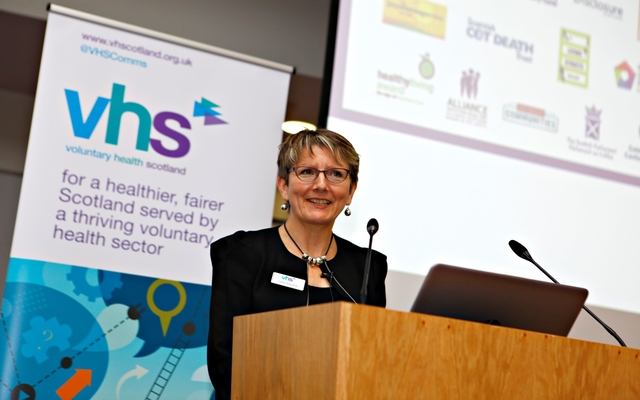
Claire Stevens leads an organisation that was, pre-covid, already at the forefront of the fight to tackle health inequalities. Many of her organisation’s members have found themselves centre stage in the efforts to help people through what continues to be an extraordinarily difficult time.
With over 400 members, Voluntary Health Scotland is the national network for voluntary health organisations and as 2020 draws to a close, its Chief Executive tells healthandcare.scot what the past year has been like and what her hopes are for the future.
“It has been an extremely challenging year – as it has for all sectors,” says Claire Stevens. “I think overall we have been totally amazed, impressed and humbled by just how quickly and imaginatively the third sector has risen to all the challenges.
“I think there have been a lot of unsung heroes in the third sector this year. If you go right back to the very first lockdown, it was interesting that it was probably the smaller, very local voluntary organisations that immediately leapt into action, sorting out emergency responses to issues like food and essential goods for people and that sort of thing.
“If I look back over our membership, the bigger national charities and smaller organisations were really very swift to sort out online services – things like helplines and social media groups, online befriending groups and information online and by phone.”
“We have been totally amazed, impressed and humbled by just how quickly and imaginatively the third sector has risen to all the challenges”
“Some of our smaller member organisations commented on the ability during the crisis to slash red tape and bureaucracy when it was needed – they said that was a breath of fresh air…that bureaucracy can be made to stand aside in order to get a good job done and to achieve outcomes in a crisis. Do we have to go back to the old ways and jump through bureaucratic hoops?
“I think the sector’s response has been remarkable. I think what is now difficult is – as it will be for everybody – that it has gone on for so long that workforces are absolutely exhausted.
“I think the adrenaline and that commitment kept people going through the lockdown and then beyond that; but I think the strain is really starting to show now.
“We saw that at our annual conference in November where we had an agenda about building forward better out of covid, and there is a strong public health theme, but what really came across strongly from our delegates was just the strain and exhaustion that their workforces are now under.”
At VHS’s annual conference one of the main messages was that there is now a “monumental opportunity” to embed public health within both health and social care.
Ms Stevens says she is “very hopeful” that people are coalescing around that cause.
“VHS was involved in the whole public health reform process from the start,” she explains, “from the original public health review and through the whole process of helping to develop what became Public Health Scotland.
“I would say throughout those years of quite often feeling like a lone third sector voice in the public health reform process, we felt we had our work cut out getting the message across to all partners, and indeed our own sector, that public health is what our sector does.
“Public health is about community health, it’s about population health – it not something esoteric and mysterious; it’s about what our sector does at a very grassroots community level.”
“The voluntary health sector has an immense amount to contribute to public health, but we need to be in there as a full partner… We want Public Health Scotland to ensure collaboration does mean with our sector as much as with anybody else”
“But we don’t describe it as that, and the public health reform process frequently referred to our sector as part of wider public health. Nobody in our sector ever described themselves as being part of the wider public health workforce. So we were on a journey there to try and build relationships and understanding in both the conventional and traditional public health sector, and our own, to say the voluntary health sector has an immense amount to contribute to public health – but we need to be in there as a full partner.
“The pandemic has changed all of that – there isn’t a soul in the land who doesn’t know what public health is now. In terms of the general public, they probably didn’t know what public health was previously and I think it has been an enormous opportunity to raise people’s awareness about what public health is.
“I’m much more confident that our sector has a much better grasp of where it sits and where it fits in terms of public health, and I think that is a silver lining to the cloud that is the pandemic.
“And there is that opportunity about building back better – if we can hang on to that let’s not go back to the divisions and silos that we have often experienced in the past – let’s go forward.
“One of the words that runs through the Public Health Scotland three-year strategy published recently is ‘collaboration’ – we want Public Health Scotland to ensure collaboration does mean with our sector as much as with anybody else.”
Voluntary Health Scotland’s conference in 2018 focused on health and the arts and culture. Asked whether the pandemic has had any impact on where the arts stand in terms of their application and proximity to health and wellbeing, Ms Stevens explains primary care practitioners have recently been making the case for the third sector being integral players in this arena:
“Since 2018 we have been part of what has become the Arts, Culture, Health and Wellbeing Scotland Network (ACHWS) – a network of arts and health practitioners, from the independent cultural sectors, the voluntary sector and from the NHS.
“The network features as a key player in the Scottish government’s culture strategy which was published in March of this year – a few days ahead of lockdown. The strategy recognises the part that arts and culture play in people’s health and wellbeing, and it says that moving forward this needs to be embedded across health.
“It says Public Health Scotland is another key player in shifting the agenda and raising awareness to embed arts and culture much more in health and wellbeing.
“Because of the pandemic this has been a difficult year…so a lot of the work we hoped to do to build and develop has been slow but none the less we have held three online engagement events bringing arts, culture and health together in conversations around the pandemic, and the role of arts and culture in terms of people’s health and wellbeing and in terms of public health.
“That I think is a very live agenda, and I am really ambitious and hopeful that next year we will be able to do much more on that front.”
A concrete example of that Ms Stevens cites are the relationships that have been developed through VHS between community link workers deployed in Edinburgh by the Health and Social Care Partnership, and arts and culture organisations that didn’t necessarily know about community link workers or how they would engage with primary care.
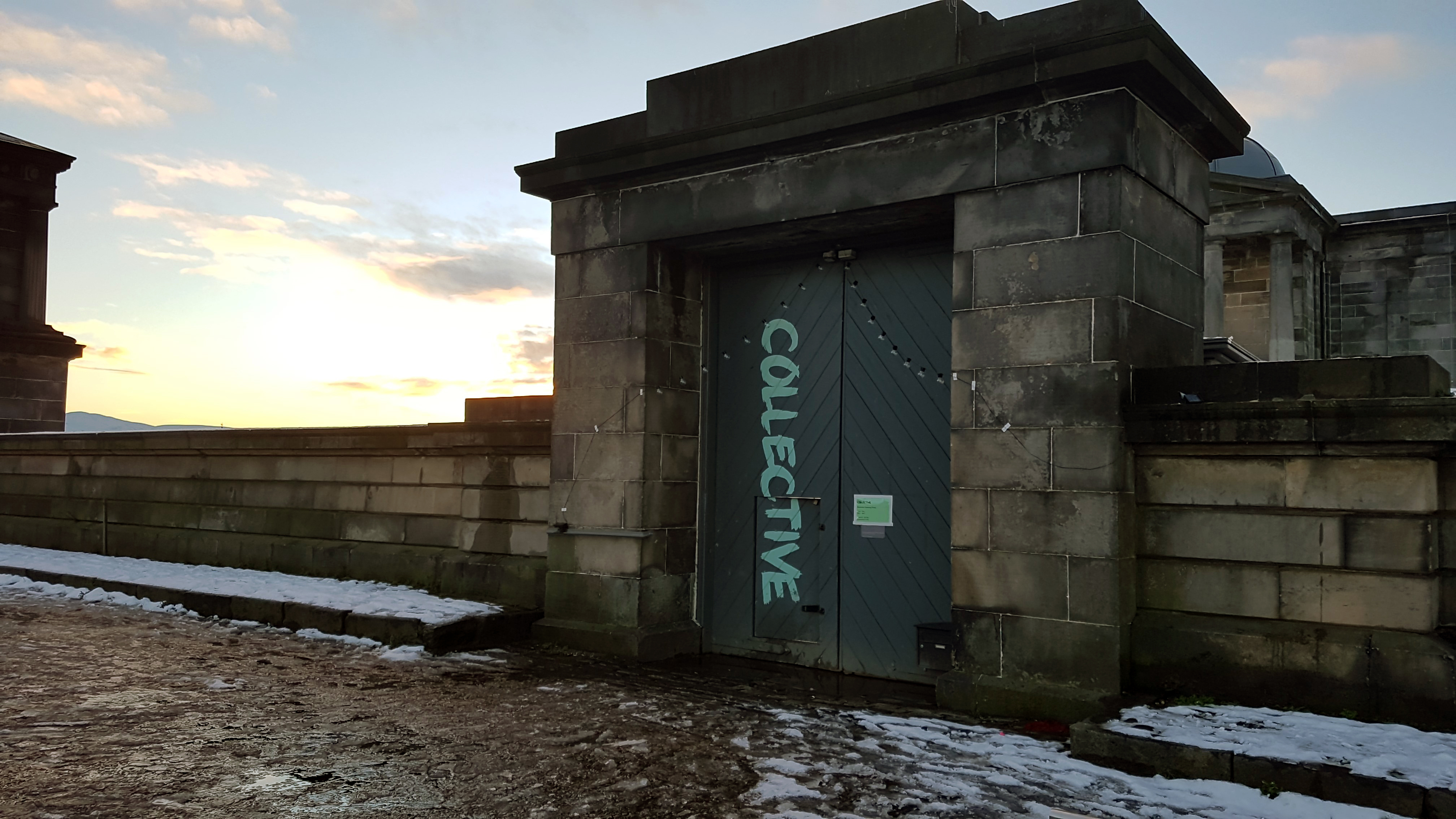
There are signs that is leading somewhere fruitful, Ms Stevens says, demonstrated by the Collective Gallery in Edinburgh, nestled on the top of Calton Hill, that is offering continuing professional development sessions on arts and health for the community link workers.
“That is just one – very positive – example,” she concludes.
Despite many people working in the arts and culture sector – a large proportion of them self-employed – seeing their work dry up without the option of furlough, a significant number have adapted what they do to keep people connected, Ms Stevens says.
“What our online engagement has shown is that even in the most difficult personal circumstances they have still been working to help people’s health and wellbeing whatever way they can.
“There is something about the arts and culture offer though that recognises the human being in each of us and what the pandemic is doing to us emotionally and psychologically. They are giving people the space and the resource to explore that and work it through themselves”
“There have been lovely stories of organisations ensuring the people that would normally benefit from their service have still remained connected – through art packs being sent home or social media groups being set up – that kind of thing.
“In the pandemic it has felt like the world has divided into those of us who have almost never been busier with work and then other people whose work has disappeared; their world has been turned on its head. Maybe they have had to shield or have a long-term condition and actually they have an awful lot of time because their normal activities and groups were stood down. Some people have become a lot more socially isolated but with more time on their hands.
“I think what the arts offers is a more spiritual and emotional offer. A lot of charities have done things like taken meals to people, done their food shopping, got their prescription for them; very practical things and there is all sorts of online support.
“There is something about the arts and culture offer though that recognises the human being in each of us and what the pandemic is doing to us emotionally and psychologically. They are giving people the space and the resource to explore that and work it through themselves.
“I think that has very much been there throughout the crisis…not as visible as we would like to see it but it is certainly there – there are green shoots there that make me very hopeful for what’s to come as we come out of the pandemic and reach the other side.”
As for 2021, Ms Stevens’ immediate hope is for a successful roll out of the virus vaccine across the country.
“I’m interested in the role that our sector can play in that – which could be a role for volunteers to get involved directly in the delivery programme because we know there is some talk of that.
“But also the role our sector can play in the communities we serve in terms of helping them understand why the vaccine is important, to convey messages about how and why the vaccine is safe and how and why it is a good thing to have it.
“My hope is for the vaccine to be effective so that by this time next year we will be back to some more normal way of living.
“In terms of our sector I still feel the voluntary sector has not had as much public attention and awareness about what our sector has done through all this – I’m hoping that won’t be forgotten.
"There is an overwhelming sense coming from the primary care practitioners that the third sector absolutely has to be a key partner in changes going forward"
“Voluntary Health Scotland sits on a new group in the Scottish government called the Inequalities Short Life Working Group which is looking at what the lessons learned from the pandemic are so far, and what do we need to build on and what do we need to change.
“That group is arguably dominated by primary care practitioners, particularly GPs. What is really heartening in that group is there is an overwhelming sense coming from the primary care practitioners that the third sector absolutely has to be a key partner in changes going forward.
“If you look at how primary care has responded to the pandemic and how it is going to change going forward, there is a really strong sense that the third sector has to be a part of that, particularly if we are going to ensure health inequalities are not going to be exacerbated even further and that we actually have some hope of them being tackled.
“That group gives me hope…I suppose it is small steps but being a third sector voice in those sorts of groups, trying to shape recovery for the future that has collaboration and partnership at its utmost heart – my hope is that sort of work will come good in the new year.”
When it comes to volunteering, Ms Stevens says there are concerns as a lot of volunteers during the pandemic had to be stood down, despite the public perception that “vast armies” of volunteers stepped in to volunteer.
“Not all of those of offers were taken up,” she explains. “For example, when it was for the NHS – they actually had to stand down nearly all hospital volunteers and they have still not got back to anything like the levels they previously had.
“There is real concern the very progressive steps to make volunteering more inclusive have been set back; that the advances made in recent years extending volunteering so that disability, age, income or geography and any of those sorts of things should not be a barrier to you being able to contribute and volunteer with an organisation in society, may be lost.
“That is something the whole of our sector and the NHS will be wanting to look at because we don’t want to lose the progress that had been made.
“The benefits for volunteers, not just those they are serving – in terms of social connectedness and having purpose and having a status and role, building relationships and networks – a lot of that disappeared for more vulnerable volunteers this year
“That is a real worry and something that can’t be ignored.”
For more from Claire Stevens, Charities' vital role in covid response 'must be recognised' can be read here.
Sign up to our bulletin for key health & social care updates straight to your inbox. |