|
QEUH super-hospital defects increased infection risk |
Related newsNHS is working to address “unacceptable” abuse Doctors: ‘Shocking’ A&E figures require action Less than full-time – behind the NHS trend Drug harms on the rise in Scotland Scotland to work with UK on Physician Associate reform Government to merge two national NHS boards Glasgow district nurses ready to strike Glasgow LEZ success sparks call for expansion Government to act on A&E failures Watchdog criticises homelessness health service cuts Community support ‘vital’ to asylum-seeking families 
|
|
|
||
|
||
|
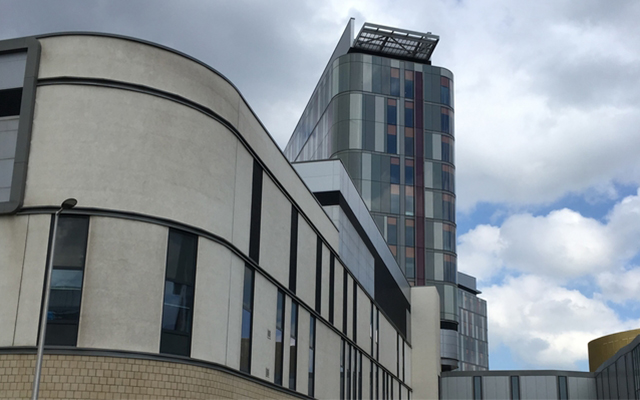
An independent review examining the building of Glasgow’s flagship super-hospital has found defects increased infection risk, but “no clear evidence” of a link to avoidable patient deaths.
Experts said while the Queen Elizabeth University Hospital (QEUH) provides a “safe environment”, adults and children being treated for cancer had been exposed to a risk that “could have been lower”.
The QUEH and Royal Hospital for Children (RHC) opened in 2015, but concerns were raised over patient safety after infections were linked to deaths.
Review chairs Dr Andrew Fraser and Dr Brian Montgomery were asked to investigate if the management and execution of the QEUH project increased the risks of healthcare associated infection.
Following more than 100 hours of interviews with medical staff, contractors and some affected patients and families, they said they had “not established a sound evidential basis for asserting that avoidable deaths have resulted from failures in the design, build, commissioning or maintenance of the QEUH and RHC”.
The review also concluded the QUEH and RHC now have in place the “modern safety features and systems” expected in a hospital of this type.
But Dr Fraser said: “While the hospital provides a safe healthcare environment for patients, staff and visitors, as the review progressed our findings caused us to focus on those clinical places caring for children and adults with cancers including leukaemias.
“These specific groups have been exposed to risk that could have been lower if the correct design, build and commissioning had taken place.”
A separate public inquiry announced last year into maintenance and design issues at the hospital campus, including water quality and ventilation systems, is yet to report..
The review highlighted that NHS Greater Glasgow and Clyde (NHSGGC) is still working on improvements to wards for cancer treatment, including replacement of water, drainage and ventilation systems.
It said the level of independent scrutiny and assurance throughout the design, build and commissioning phases was “not sufficient”.
The effectiveness of infection prevention advice was “undermined” due to leadership problems and external communication about the serious problems with the building and links to infection was “inadequate and reactive”.
Dr Montgomery said: “We found a complex story with a variety of perspectives and views. Undoubtedly and with hindsight, the health board, groups within it, and the design and build contractor could have reached different decisions and produced results that would have reduced infection risk.
“We have tried to concentrate on learning from the experience in a way that will avoid repetition of mistakes and enhance future projects.”
Responding to the report Jane Grant, Chief Executive of NHS Greater Glasgow & Clyde, apologised for a “very difficult period” for patients, their families and staff.
She said: “The findings highlight several areas of learning for NHSGGC. We remain fully committed to applying the learning from this experience.
“We also remain focused on remedying any ongoing consequences of decisions and actions taken when designing, building and commissioning of the hospitals and in their maintenance.”
Health secretary Jeane Freeman said the report would provide a “wealth of information” for the forthcoming public inquiry, which will also look at construction issues with the Royal Hospital for Children and Young People in Edinburgh.
She said: “The patients and families most affected by the issues raised in the report will be understandably concerned and distressed by some of the findings of the Independent Review.
“I have been clear that those who have been affected deserve answers to the many questions they are entitled to ask – and this review is an important step in delivering that.”
Sign up to our bulletin sent twice a week so you don’t miss out on the latest health and social care news. |
