|
Older people’s care decisions made without their input |
Related newsConcerns at rise in care home dementia drugs Failure to understand social care ‘unsurprising’ Health Secretary: No double standards on NHS and care ‘No chance’ of £500 carer bonus before Christmas Winter battle plan drawn up for social care Covid care home discharge report ‘not the full story’ 
|
|
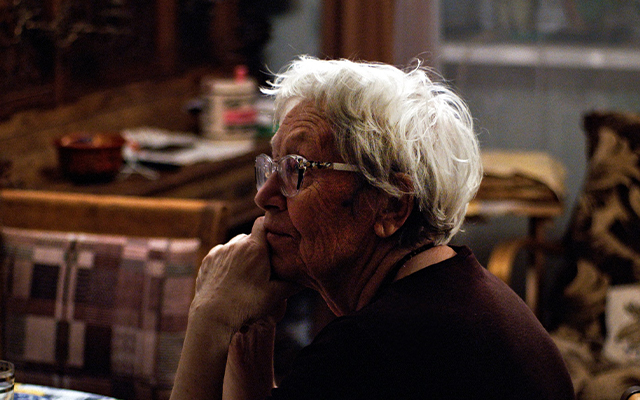
Artem Labunsky on Unsplash
|
||
|
||
|
Older Scots with conditions like Alzheimer’s and dementia are having decisions about their care – and potential medical treatment – made without input from their families, MSPs have been told.
Adam Stachura of Age Scotland said there were examples of people who do not have full mental capacity leaving hospital with Do Not Attempt Resuscitation orders “slipped into their discharge notes”.
Speaking to Holyrood’s equality committee, Mr Stachura revealed one care home had been told all residents would only get end-of-life care if they fell ill.
“Not everybody in a care home has the same capacity,” he said. “Some have guardianship or have given power of attorney, and there would be a deprivation of their liberty if that was to happen.”
“We have a particular concern that the potential for access to medical treatment is being restricted without conversations happening with the power of attorney or guardian about what will happen in the care home or hospital setting.
“It is a complicated picture, but there are certainly things that are not helping, and I have heard from people who are very concerned about that.”
Judith Robertson, from the Scottish Human Rights Commission, voiced concerns that vulnerable people – for example with learning disabilities or dementia – were being cut out of decisions about their support.
She warned the committee that people could end up with “inappropriate or inadequate” care plans because guidance from the Scottish Government requiring local authorities to assess their needs was not clear enough.
“People are not being supported adequately to participate in the process when decisions are being made on their behalf, which is a key principle of the UN Convention on Rights of Persons with Disabilities,” MSPs were told. “That is undermining people in this kind of climate.”
Ms Robertson added: “We reiterate our concern that the recording of both the decisions that are being made and the way in which they are being made is very patchy, if it is happening.”
The Scottish Government is updating clinical guidance for covid-19, which includes advice on DNRs.
It followed the Sottish Human Rights Commission and its UK counterpart both issuing warnings that the guidelines could potentially lead to certain groups being discriminated against.
Sign up to our bulletin sent twice a week so you don’t miss out on the latest health and social care news. |
