|
Adapted ventilators aid coronavirus response |
Related newsA&E call-ahead changes go live across Scotland Support for Scots suffering long-term covid impact Over 300 patients treated at temporary covid hospital Mental health support pledge for covid survivors NHS Louisa Jordan ready to receive patients Scottish firms support NHS ventilator production Glasgow district nurses ready to strike Glasgow LEZ success sparks call for expansion Government to act on A&E failures Watchdog criticises homelessness health service cuts Community support ‘vital’ to asylum-seeking families 
|
|
|
||
|
||
|
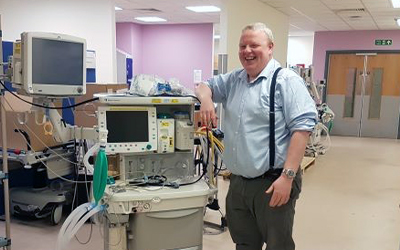
More than 200 anaesthetic machines have been adapted to be used as ventilators for critically ill coronavirus patients in Scotland.
The machines, normally used within operating theatres, will help supplement the stock of specialised ventilators in intensive care units.
The total includes 100 anaesthetic machines which were converted by a team of 12 technicians responsible for maintaining medical equipment in NHS Greater Glasgow & Clyde (NHSGGC).
The adaptation involves changing the machines’ inner tubing to use air instead of oxygen to operate the ventilator.
Ted Mullen, head of medical equipment management at NHSGGC, said: “These ventilators will help out frontline staff treat patients with coronavirus.”
Experts have previously warned that tough decisions may have to be made about “the best way to use critical care places” when the virus escalates.
First Minister Nicola Sturgeon said: “Expert NHS clinicians, medical physicists and technicians have worked tirelessly, particularly over the last few days, to increase the ventilation capacity in our NHS by repurposing anaesthetic machines in response to covid-19.
“Their remarkable work means our NHS has not just doubled ICU capacity, but has tripled it, ahead of the arrival of the additional ventilators we have ordered.
“We are now working to quadruple ICU capacity for covid-19 patients to beyond 700 ICU beds, as soon as that can be achieved.”
|
