|
Report reveals Glasgow child cancer infection spikes |
Related newsScotland’s Clinical Entrepreneur initiative returns Robotic surgery shows pioneering path to the future Glasgow A&E introduces digital triage check-in Appeal for people to give “amazing gift” Why resident doctors’ wellbeing app matters Glasgow district nurses ready to strike "Landmark" newborn test rollout begins in Glasgow Scots to benefit from new NHS heart treatment Glasgow LEZ success sparks call for expansion Government to act on A&E failures Watchdog criticises homelessness health service cuts 
|
|
|
||
|
||
|
Infections among child cancer patients at a Glasgow hospital were ‘higher than would be expected’ at certain points over the last three years, an expert review has found.
Health Protection Scotland, which published the report, said the reasons behind the spikes are unclear and need further investigation.
The Scottish Government and the health board have reassured the public current infection levels at the Royal Hospital for Children are normal and the cancer ward is safe.
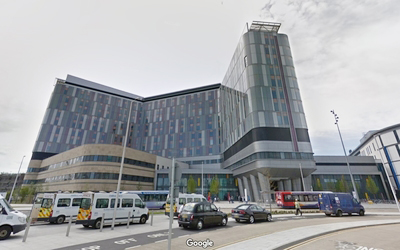
Investigations were launched earlier this year after failings relating the ventilation system at the linked Queen Elizabeth University Hospital led to patient deaths.
But a whistleblower then came forward saying issues stretched back to 2017.
As a result NHS Greater Glasgow and Clyde was placed in special measures by the Scottish Government.
Analysis of blood samples among children being treated for cancer published today found an ‘upward shift’ in samples testing positive for infection from March 2017.
This was followed by breaches of the acceptable number of infections for a certain type of bacteria in several months up to September 2019.
Patients being treated for cancer can be more susceptible to infections because some treatments suppress the immune system and the body's ability to fight off bacteria.
NHS Greater Glasgow & Clyde says the facilities are safe and rigorous testing has found no sources of infection on the wards in question.
Chief executive Jane Grant said: "We completely understand this has been a distressing time for families and staff and we sympathise with them given the anxiety this has caused.
“Unfortunately there will always be a small number of patients who develop infections because of the seriousness of their illness and we are fully committed to supporting them and their families when this occurs.
“Families should be reassured that Infection rates at present are within expected levels and the hospital is safe."
The board's full statement can be read below.
NHS Scotland national clinical director Professor Jason Leitch said: “Firstly we would again like to express our deepest sympathies to the families affected by the issues at the Queen Elizabeth University Hospital and the Royal Hospital for Children.
“We can’t begin to imagine the pain experienced by those families who have lost loved ones.
“The review by Health Protection Scotland was commissioned by the chief nursing officer in September to determine if the numbers of positive blood samples for infections among child cancer patients were higher than expected.
“The report identifies months in which rates of infection exceeded the trigger point requiring further investigation.”
Prof Leitch said action had been taken over the 2018 infections while the revelations about incidents the previous year were “part of the reason” for the board being placed in special measures.
He explained: “This means a Scottish-Government-led oversight board will help strengthen the measures already in place around infection prevention, management and control. It will also ensure the recommendations of this report are actioned.
“The present infection rate at the children’s hospital is normal and the cancer ward is safe. However, anyone who still has concerns is urged to talk directly to a member of their care team for reassurance.”
Statement from NHS Greater Glasgow & Clyde:
Following recent events, we would like to reiterate how sorry we are to the families who may have been caused additional pain and distress and we’d again like to share our condolences to those who have suffered the tragedy of losing a child.
Today’s independent report from Health Protection Scotland is welcome and demonstrates the Queen Elizabeth University Hospital/Royal Hospital for Children is safe.
The report provides reassurance for the many families and the public who will have had concerns about the safety of the unit.
From the Health Protection Scotland review of the data on test results of blood samples over the past six years, their report finds:
The purpose of the Health Protection Scotland report was to independently assess rates of infection in the haemato-oncology unit of the RHC over a number of years to help inform NHSGGC investigations into recent infections at the hospital and potential links between these infections and the ward.
The report considered six years of laboratory data during which period the unit has seen more than a thousand patients, with 2,894 admissions.
The report’s findings are fully in keeping with our own Incident Management Team investigations that concluded the unit is safe.
We have fully tested the water supply and ward surfaces in Ward 6A and also reviewed individual infections and found no links between individual infections and no source of infections in the ward.
On the basis of the IMT investigation’s findings and the results from the Health Protection Scotland review, the ward re-opened to new patient admissions on Thursday.
Jane Grant, Chief Executive, NHS Greater Glasgow and Clyde, said: "We completely understand this has been a distressing time for families and staff and we sympathise with them given the anxiety this has caused.
“Unfortunately there will always be a small number of patients who develop infections because of the seriousness of their illness and we are fully committed to supporting them and their families when this occurs.
“Families should be reassured that Infection rates at present are within expected levels and the hospital is safe.
“We continue to support families affected at this time and we welcome the opportunity to work with parents and Professor Craig White, who has been appointed by the Cabinet Secretary for Health, to improve our performance in this area.
"We are all fully committed to ensuring that questions are answered fully and parents reassured." Tags: Hospital & Specialist. |
