|
Children lose ‘right’ to autism diagnosis |
Related newsADHD linked to childhood tantrums Inpatient CAMHS care too variable Skin test could predict self-harm Antibiotic may reduce schizophrenia risk Childhood adversity health impacts felt at 50 revealed 
|
|
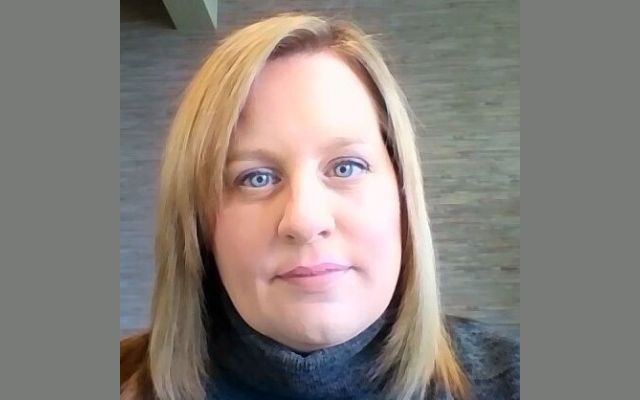
Angie Ferguson, CEO of Perth Autism Support
|
||
|
||
|
A voluntary sector organisation serving children and young people with autism says it was overlooked by NHS Tayside when the board decided to close a pathway for children with autism and ADHD – a move that has increased the support group’s caseload and raised concerns those who would benefit most from its help may now slip through the net.
NHS Tayside says it has taken the decision to halt all new referrals for ADHD and autism to its child and adolescent mental health services (CAMHS) neurodevelopment (ND) pathway as it was being overwhelmed by a 400% increase in referrals in recent years, a situation exacerbated by a shortage of staff.
In a briefing note shared with healthandcare.scot in response to a request for comment, the board says there are currently around 4,500 children and young people under the CAMHS ND umbrella, 2,500 of whom are waiting for a first appointment.
The board says, with demand for the service outstripping capacity sixfold, a child added to the waiting list now would probably be too old for the service by the time they got an appointment.
Tayside CAMHS will now only take referrals for young people with mental health conditions.
The CEO of one of the voluntary sector organisations impacted by the decision, Perth Autism Support, says, while she understands the background to the decision, the NHS board did not engage with third sector services who would be directly affected by it.
CEO Angie Ferguson says the closure of the ND service to new patients deprives them of a basic right to diagnosis and care:
"We recognise that CAMHS is a mental health service and that autism, ADHD and neurodevelopmental conditions are not necessarily mental health conditions. But the challenge is that, if that service isn't the right one to host these children and young people, they must be given an alternative.
"You can't just remove a service and provide no other option, no alternative pathway.
“Young people have a right to a diagnosis, not least for their sense of self and to help them understand who they are and why they might be experiencing life in a different way from their peers.
"There was no consultation, no impact assessment that I know of, and I assume that their legal team was consulted because the decision is clearly discriminatory."
Support without diagnosis
In its briefing, NHS Tayside says “clinical teams have been working extensively” with partners in primary care and education on a redesigned pathway that shifts the focus away from diagnosis towards "a needs-based support model".
"Fundamentally,” the briefing says, “this means that individuals can receive the necessary support and interventions for their condition regardless of any formal diagnosis."
It adds that children and young people who do not have a mental health condition will instead be able to access other forms of support and intervention.
However, Angie Ferguson says that without a diagnosis – or at the very least the process of gathering information – it is difficult to be sure which of the ten new referrals a week that her organisation receives from schools, GPs and families are best suited to the service they offer:
"Whilst our team are working in an autism specialist service, many of whom have lived experience, and/or education, social care and health backgrounds, we’re not clinicians," says Ms Ferguson..
"We do not make a diagnosis and, even with all the information that we can get from other professionals, the young people and their families, we may be missing children and young people who would benefit from our support – not least those put off from having to wait longer now to access our service."
Perth Autism Support has been working with children and young people from across Perth and Kinross for 14 years, providing a service up to the age of 24 to both those with a diagnosis and awaiting assessment.
With that in mind, Ms Ferguson says, if NHS Tayside has been consulting on the changes, then it hasn't been reaching out far enough – and now it needs to include the third sector partners who are providing the majority of community based support for children and young people, such as Perth Autism Support, Perth and Kinross ADHD Support Group and Dundee and Angus ADHD Support, on a short life working group the board is setting up to plan for the future:
"It's about us being able to have a conversation with NHS Tayside and being a partner at the table with them to be able to talk about what their decision looks like for children and young people, to ask: what is the alternative pathway?"
Raised in the Scottish parliament
NHS Tayside’s decision was described in the Scottish parliament recently as “beyond comprehension”.
Local MSP Murdo Fraser asked the Scottish government, against a background of severe staffing shortages across Scotland, what ministers are doing to ensure children are “able to access the help that they desperately need”.
First Minister John Swinney, himself MSP for Perthshire North, expressed concern at how the plans had been communicated by the health board, saying that reducing pressure on mental health services has to include early intervention services which, he suggested, “were somewhat missing from the NHS Tayside announcement”.
Meanwhile a process is underway to remove people from the Tayside CAMHS waiting list.
NHS Tayside says that over the coming months a senior clinician will go through the files of all children and young people currently waiting, to see whether they now "meet the criteria for CAMHS or not", after which they will be pointed to other services available to them should their status have changed.
NHS Tayside adds that details of support services are available in an online library of resources at www.taysidecamhs.scot.nhs.uk.
Read more: CAMHS target met, but long waits remain; ADHD linked to childhood tantrums; Providers: children’s service cuts ‘devastating’; Concern as human rights absent from government plan; Tags: Child Health; Mental Health; Neurological. |