|
Scheme for GPs to help lost patients extended |
Related newsChief Medical Officer: ‘Critical connections’ priority All public bodies must focus on health, urges charity Doctors say GP funding boost “just the start” Health and charity leaders join forces for NHS reform Call for ‘urgent’ review of ADHD and autism services Change course on GPs, says College 
|
|

Image Credit: © Monkey Business_
|
||
|
||
|
A programme to help GP teams to reach people in their communities who aren’t engaging with healthcare services is to get additional funding after showing it is helping practices engage with ‘lost’ patients.
The Scottish government’s Inclusion Health Action in General Practice (IHAGP) was first established in 2023 to improve primary care in disadvantage areas and addressing health inequalities.
An early evaluation has revealed it has already led to improvements in staff training and outreach work – but also that there are outstanding challenges to meet patient needs.
The programme provided funding to 66 individual general practices in NHS Greater Glasgow and Clyde towards helping patients with the greatest need, and proactively engaging with those ‘lost’ to the system.
In the first evaluation of this work, the creation of patient engagement and participation groups as well as additional staff training and provision of consultation and outreach appointments for patients were highlighted as key outcomes.
Staff training spanned across health inequalities, trauma-informed practice, gender-based violence, suicide prevention, service signposting and medical coding as well as abusive behaviour and conflict negotiation.
The programme has been delivered to more than 200 staff members, while over 7,000 extended or outreach consultations were provided for patients with complex health needs or missing from healthcare across Glasgow.
Practice staff described less stress and pressure and increased moral and job satisfaction, reporting both improved understanding of their patient populations and better relationships with patients.
With the new funding, the programme will look to expand efforts providing targeted, early interventions for patients.
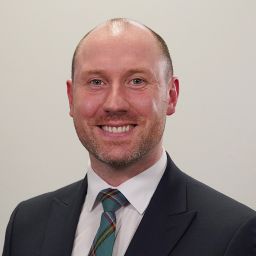
On a visit to Keppoch Medical Practice last week, Cabinet Secretary for Health and Social Care Neil Gray, said the programme is beginning to achieve its goals:
“The IHAGP programme is a vital part of our reform strategy and our efforts to tackle health inequalities in Scotland, I was pleased to see firsthand the positive impact the programme is having at Keppoch Medical Practice.
“The positive evaluation of the programme underscores its importance and effectiveness in providing enhanced care to those who need it most. Our continued funding of the programme demonstrates our dedication to evidence-informed policy and practices and we look forward to building on the successes of the programme to date.”
This follows a recent call from researchers for policy change to address patient missingness in Scotland and across the UK, which highlighted the complex and varied reasons for missed appointments.
University of Glasgow researchers explained that policy work to better reach patients by understanding the causes and consequences of missed appointments in widening health inequalities.
The early evaluation of this IHAGP programme says it not only enhanced patient care and bolstered staff training but also strengthened community links.
The funding for 2024-25 will support practices to engage in extended consultations, promote staff training on health equity and trauma, build on improvements to practice policies and strengthen connections with community groups.
So far, these consultations have been found to lead to better contact with ‘missing’ patients and improved health outcomes for many individuals alongside improved patient knowledge of the healthcare system and their own role in health improvement.
The evaluation highlights that barriers remain in terms of the workings, outlining the need for staff cover during training time, as well as limited access to training providers and time for longer outreach work.
It says that with activity delivered through IHAGP is unlikely to be sustained without continuation funding and the potential for the impact of work already delivered by IHAGP to endure is variable across the 66 practices.
The report concludes that while the scale of work needed to address health inequalities is ‘vast’ and some factors remain outwith GP control, there is ‘no doubt that more could be achieved’ through long-term continuation of the programme.
With greater funding and longer timescale commitments, it states that the learning and impacts generated by IHAGP could be ‘significantly enhanced.
Neil Gray added:
“The Scottish government remains committed to the long-term goals of IHAGP. While the current funding is set at £1m, the positive impacts demonstrated by the programme pave the way for potential future expansions.”
Beyond recommending the continuation of this work, the evaluation says that other partners should be involved in addressing the unmet need generated through this programme, for example in wider public health literacy.
It calls for ongoing research to capture and share examples of effective approaches with practices working with similar patient populations across Scotland, and for the government to focus on longer-term monitoring and evaluation to assess the impact for patients, practices and the wider healthcare system.
Read more: Glasgow joins street drug-checking scheme; Breastfeeding in Glasgow: A collective responsibility; Economic change needed for Scotland's health inequalities; ‘Unprecedented' crisis in community health and care; Physical inactivity increasing threat to adult health; Researchers: policy needed for patient ‘missingness'; Rural health inequalities focus of £1m study
|