|
Rural health inequalities focus of £1m study |
Related newsAI for lung cancer care to help tackle “hidden killer” Home adaptations – council spend will prevent NHS cost Ten-year low in Scots healthy life expectancy Scotland to open four new commercial research hubs Physical inactivity increasing threat to adult health Rapid cancer diagnostic network improves outcomes MSPs’ ‘huge concerns’ over Scotland’s medicines system Insight: Care workers should not be commodities Insight: An unequal integration? Care staff still paid per minute despite pandemic Podcast: Councils play key role in health and care Councils justify paying themselves higher care rates 
|
|
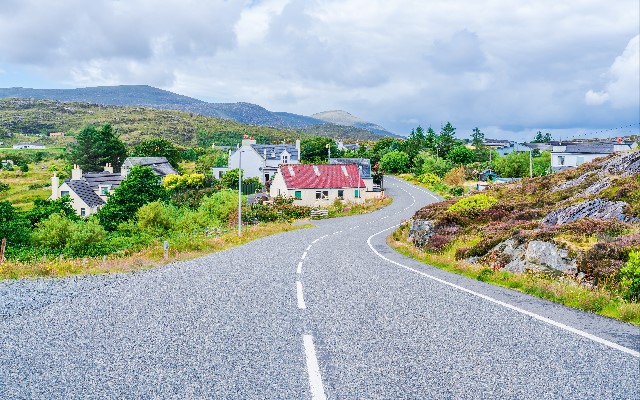
Image Credit: © beataaldridge Tarbert Isle of Harris
|
||
|
||
|
Health and care inequalities experienced by people living in the rural and island areas of Scotland will be the focus of a five-year project to begin this year, led by University of Aberdeen researchers.
The work, with nearly £1m funding announced by the Cabinet Secretary for Health and Social Care Neil Gray earlier this month, will focus primarly on cancer, musculoskeletal conditions and frailty.
While previous research has linked social deprivation throughout different life stages to a greater risk of frailty in old age across Lothian, researchers are yet to explore compare the trends seen in urban areas with those in remote and rural areas of Scotland.
With the government-backed funding, the Aberdeen researchers are looking to investigate this relationship and more, taking a multi-discplinary approach that combines expertise from clinical medicine, health service research, health economics and human geography.
Researchers hope to uncover how these health inequalities are caused, and effective ways to address them.
The project will also be informed by a patient, Michelle Stevenson, who lives in remote rural Scotland and has lived experience of chronic long-term health conditions.
Ms Stevenson says she decided to get involved in the project to share her own experiences, saying:
“I wanted to get involved in this project because addressing rural inequalities in health is very important to me, my family and my community.
“I have chronic inflammatory arthritis for which I receive strong medication to suppress my immune system. As a result, I recently developed an infection in my hip which was very serious and resulted in an emergency admission to hospital over an hour from my home in the Highlands.
“I needed to continue strong intravenous antibiotics at home but because there were no local district nurses I had to travel 120-mile round trip three days a week to receive this.”
Now receiving regular intensive rehabilitation in Dingwall, Michelle is an inpatient for three weeks at a time, taking her away from her family.
She says this has brought home the real, complex challenges faced by people living in rural communities to access health and social care.
Aberdeen’s Professor of Primary Care and co-principal Investigator of the project, Professor Peter Murchie, says a multidisciplinary approach will help the team develop recommendations for the future:
“People who live in rural and island communities can receive less or different healthcare from those living in urban areas, resulting in poorer health.
“Significant research gaps remain in our understanding of what care is available in different places, how this affects patients and how healthcare services could better meet the needs of rural and island areas.
“Our research will involve patients, healthcare professionals, those who plan and manage healthcare services and the wider rural population which will allow us to develop evidence-based recommendations for the future.”
This comes after researchers from the University of Aberdeen, also led by Professor Murchie, revealed that patients in Orkney and Shetland experience worse cancer outcomes than those in urban areas.
Funding for the new project was announced by health secretary Neil Gray, alongside four other projects to advance NHS Scotland reforms through “the transformative potential of scientific innovation.”
Mr Gray said the projects have the potential to “make a significant impact” and play a vital part in ongoing work to deliver for the NHS.
The research team say insights will be gained into acute and longer-term conditions across different age groups, in the hope of being able to better understand how different types of health conditions are treated both locally and in specialist centres.
Over the term of the project, the team will use interviews and data analysis to determine how people living in rural and island Scotland experience health services and identify when they are disadvantaged.
Existing local, national and international policies that support care delivery in rural areas will also be examined to create guidance to support local and national service planning.
Lorna Philip, Professor of Human Geography at the University and collaborator in the project, says:
Read more: Inside Scotland's widening health inequalities; Challenging medicines in beautiful places; RADAR system to spot drug death risks; Cancer outcomes worse for rural patients; Can Scotland make health fairer?; Rural communities experience less loneliness
Sign up to our bulletin for key health & social care updates straight to your inbox and you can follow healthandcare.scot on Google News. |
